
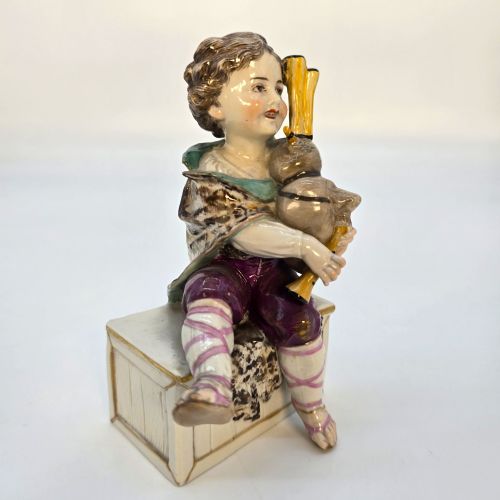


Victorian Musician Figurine
These Victorian musician figurine examples capture players and performers in bronze, porcelain, and earthenware.
Victorian Musician Figurine
The objects appearing on this page span several material categories and stylistic revivals. You encounter porcelain figures alongside cast bronze examples, earthenware pottery, and bisque porcelain groups depicting pipers, harlequins, and seated figures.
Makers and origins vary widely within the selection, featuring English potteries alongside continental European factories. Pieces range from single standing figures to pairs and complex multi-figure groups.
Materials and production methods
Makers employed materials such as cast bronze, hard-paste porcelain, bisque porcelain, and earthenware to shape these figures. Many items incorporate surface embellishments including enamel painting, glaze, and gold leaf highlights applied to ceramic bodies.
Metal pieces utilise bronze casting techniques to render fine details of garments and instruments. Ceramic works combine moulded clay bodies with hand-finished decorative elements, polychrome enamel painting, and specialised firing processes.
Materials appearing in current stock include bronze, porcelain, earthenware, bisque porcelain, and marble.
Assessing quality in musician figures
Quality depends upon the crispness of the modelling and the precision of the surface decoration. Superior pieces display finely rendered facial expressions, detailed costume folds, and delicate handling of musical instruments.
The application of hand-painting, enamel colours, and gold leaf distinguishes exceptional works from standard production. Material choice and the complexity of the figure group, such as paired figures or musicians with animals, also influence the standing of an item.
Volkstedt Rudolstadt Factory·Alfred Grevin·James Hadley
The Victorian Musician Figurine Glossary
- Bisque porcelain
- Unglazed porcelain with a matte, tactile surface resembling marble. It became popular during the nineteenth century for detailed figural sculpture.
- Enamel
- Opaque vitreous material fused to metal or ceramic surfaces through firing. It provides vibrant, permanent colour decoration on figures.
- Gold leaf
- Extremely thin sheets of beaten gold applied to decorative surfaces. It highlights borders, garments, and accessories on ceramics and bronzes.
Victorian Musician Figurine: Frequently Asked Questions
What materials are these figures made from?
The listings on this page include pieces formed from cast bronze, hard-paste porcelain, earthenware, and unglazed bisque porcelain.
Many examples feature additional surface treatments such as hand-applied enamel colours, glossy glazes, and gold leaf accents.
How do I identify the period of a figure?
Dating relies on stylistic markers, manufacturing techniques, and factory marks recorded across the nineteenth century.
Pieces frequently reflect design movements like Rococo Revival, Neoclassical, or Victorian Orientalism that help narrow down their date of origin.
Where were these figures produced?
Production locations span English potteries alongside continental European factories and workshops.
English works include Staffordshire earthenware and Royal Worcester porcelains, while continental examples represent German and French foundries and porcelain works.
How were musician figures used in the period?
These decorative objects served as mantelpiece ornaments and tabletop display pieces within Victorian homes.
They reflected contemporary tastes for theatrical subjects, exotic figures, and musical themes in interior decoration.