
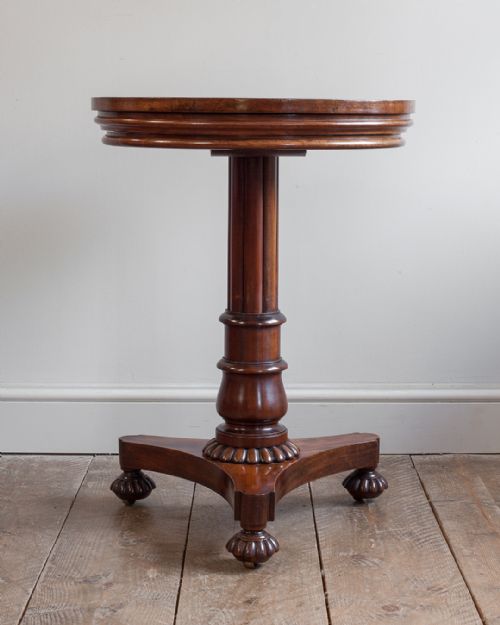
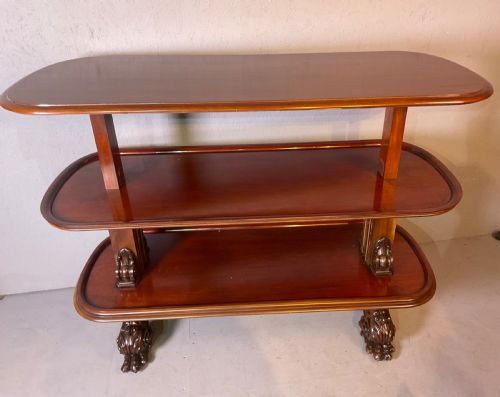


Victorian Metamorphic Table
A victorian metamorphic table conceals dual functions within ingenious timber mechanisms, offering both compact daily utility and grand formal capacity.
Victorian Metamorphic Table
A victorian metamorphic table transforms from one form of furniture into another, shifting between dining tables, serving tables, desks, and reading surfaces. These items combine clever engineering with practical domestic utility, designed to save space in nineteenth-century interiors.
Mahogany and walnut appear frequently across the selection, taking shape as dumb waiters, occasional tables, sewing tables, and large dining tables. Many pieces date from the nineteenth century, including specific years like eighteen hundred and fifty and eighteen hundred and sixty, alongside later Edwardian examples.
The most common formats met here are dumb waiters and dining tables, often constructed with multiple tiers or expanding sections. These dual-purpose objects reflect the inventive domestic requirements of the period, executed in dense timbers.
What Varies in Quality
The sophistication of the mechanical action separates standard pieces from exceptional examples. Superior items feature fluid, balanced transitions between forms that operate without binding or excessive manual force.
The choice of timber grain and the precision of the cabinetwork define the upper tier of the range. Figured mahogany and carefully matched walnut veneers indicate a higher grade of manufacture.
The Victorian Metamorphic Table Glossary
- Metamorphic table
- An item of furniture designed to transform from one functional form into another through mechanical ingenuity. These pieces shift between dining formats, reading desks, and serving tiers.
- Dumb waiter
- A multi-tiered serving piece utilised for holding dishes or utensils during meals. In metamorphic formats, these tiers often adjust in height or configuration.
- Jupe table
- A specific type of expanding circular dining table engineered with a patent mechanical leaf system. This design opens outward to increase seating capacity while maintaining a round perimeter.
- Needlepoint textile
- Hand-stitched canvas work incorporated into decorative items such as fire screens. It adds colour and texture to domestic interiors.
Victorian Metamorphic Table: Frequently Asked Questions
How do metamorphic tables work?
These tables utilise concealed brass mechanisms, tracks, and pivoting joints to alter their physical configuration. Users can raise, lower, or expand the timber framework to change the function of the piece.
Such engineering allows a single item to serve as a compact occasional table or a large dining surface. The transformation relies on balanced counterweights and sliding sections.
What materials are used?
Construction primarily relies on dense hardwoods such as mahogany, walnut, rosewood, and oak. These timbers provide the structural integrity needed for moving parts.
Secondary materials include brass for hinges and patent mechanisms, alongside occasional additions of marble, glass, and needlepoint textiles.
Where were they used?
These items served various rooms within Victorian homes, including dining rooms, libraries, and drawing rooms. Their dual-purpose nature suited spaces requiring efficient furniture arrangements.
Dining tables and dumb waiters functioned primarily in entertaining spaces, while reading tables and desks served private studies.