

Antique Tiered Dumb Waiter
An antique tiered dumb waiter brings multi-level serving utility to a dining room, combining practical tiered surfaces with period cabinetmaking.
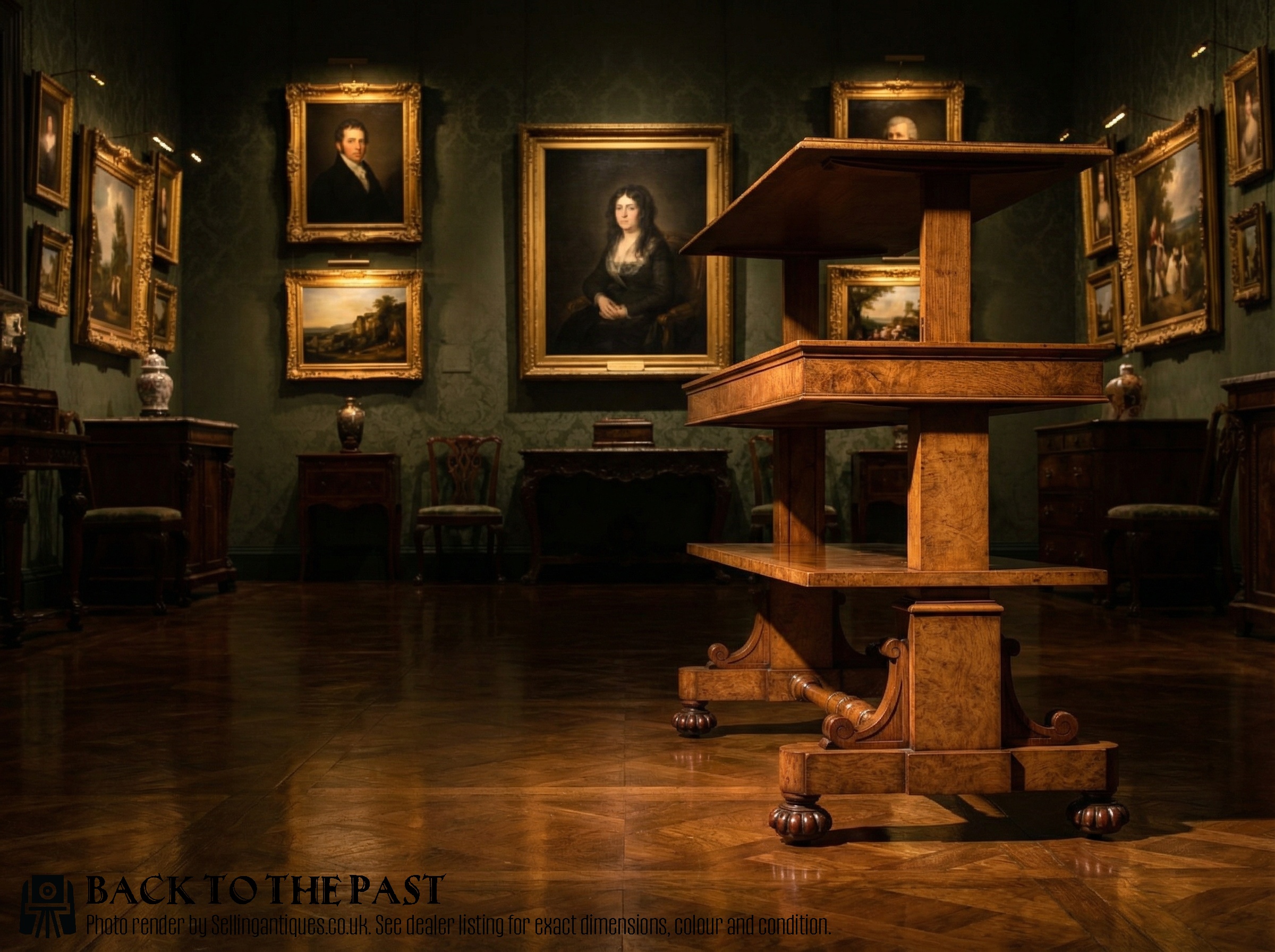
Antique Tiered Dumb Waiter
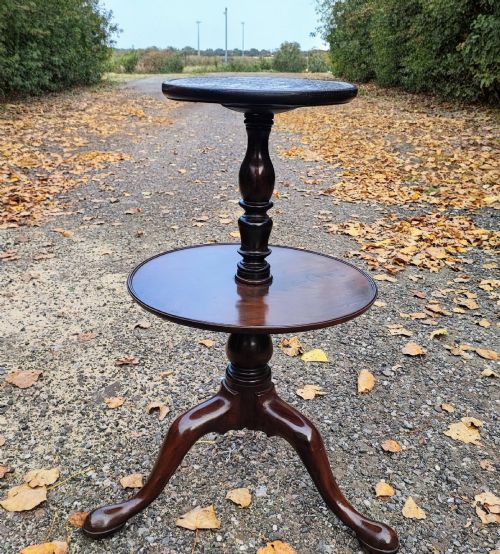
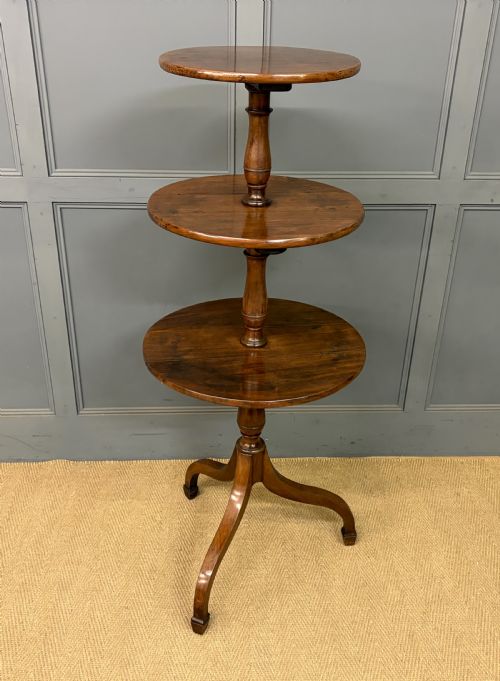
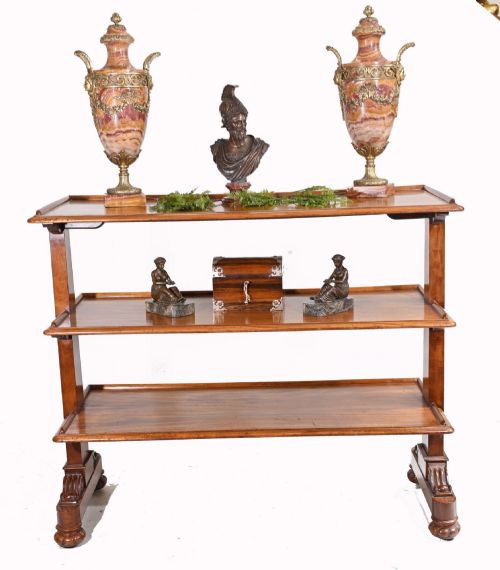
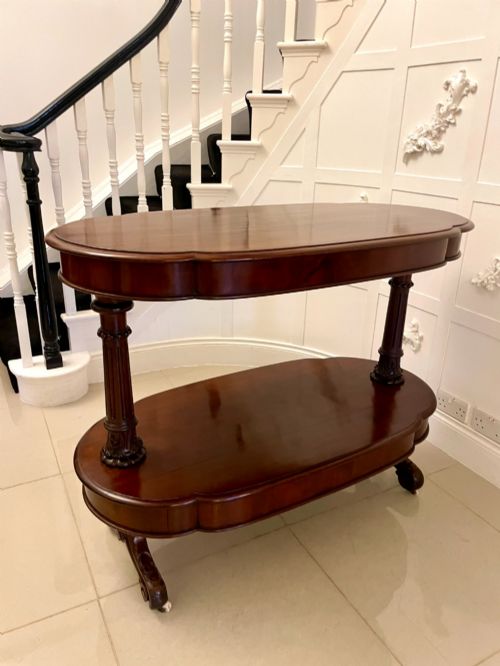
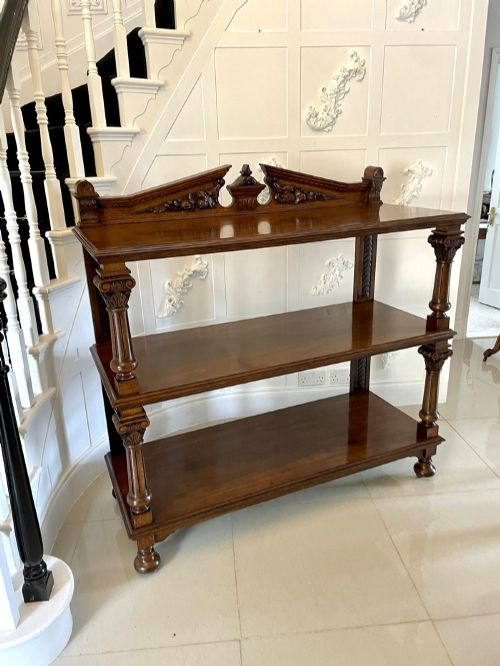
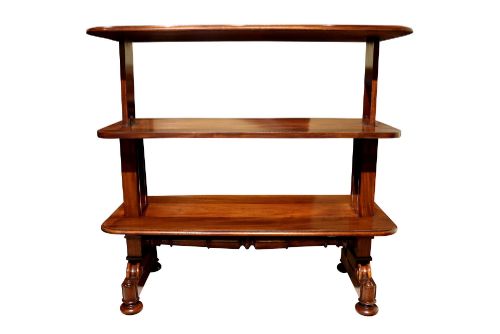
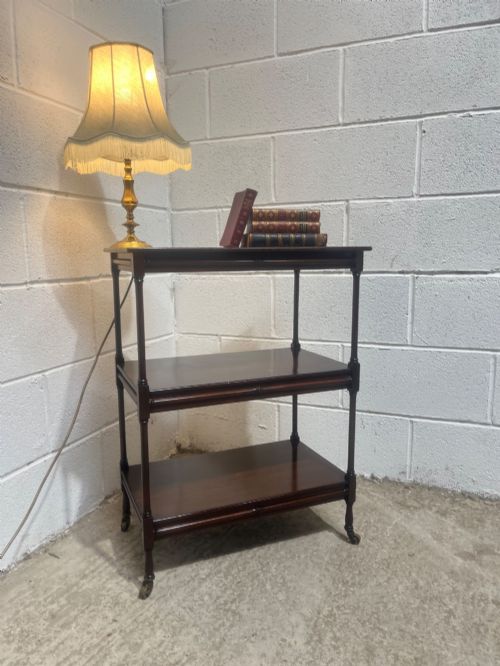
An antique tiered dumb waiter functions as a multi-level serving piece designed to hold dishes and silverware near a dining table. Buyers encounter circular revolving tiers, rectangular three-tier buffets, and tripod etageres spanning the Georgian, Regency, and Victorian periods.
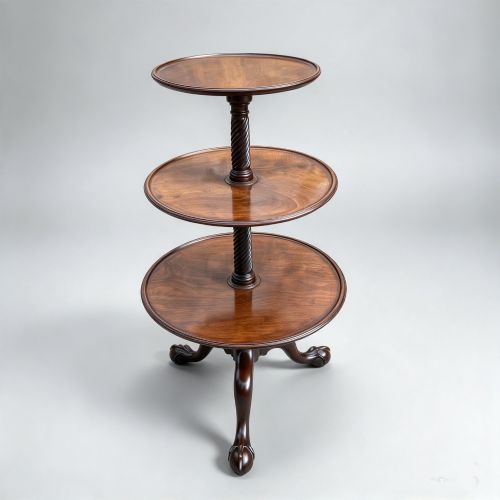
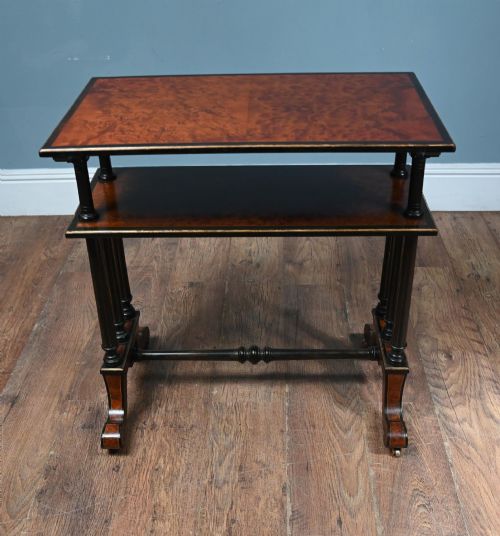
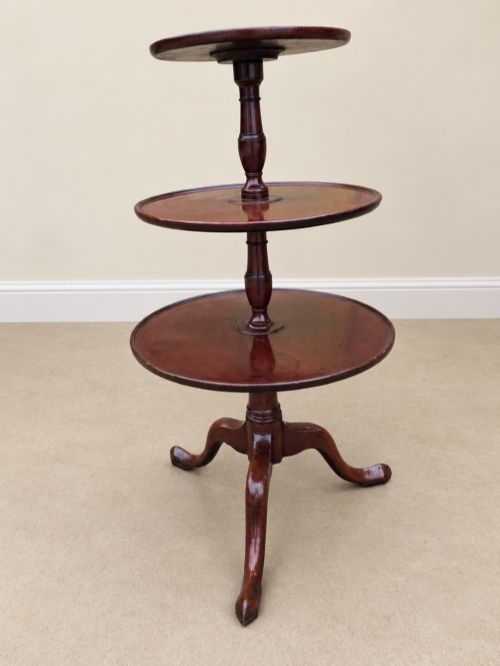
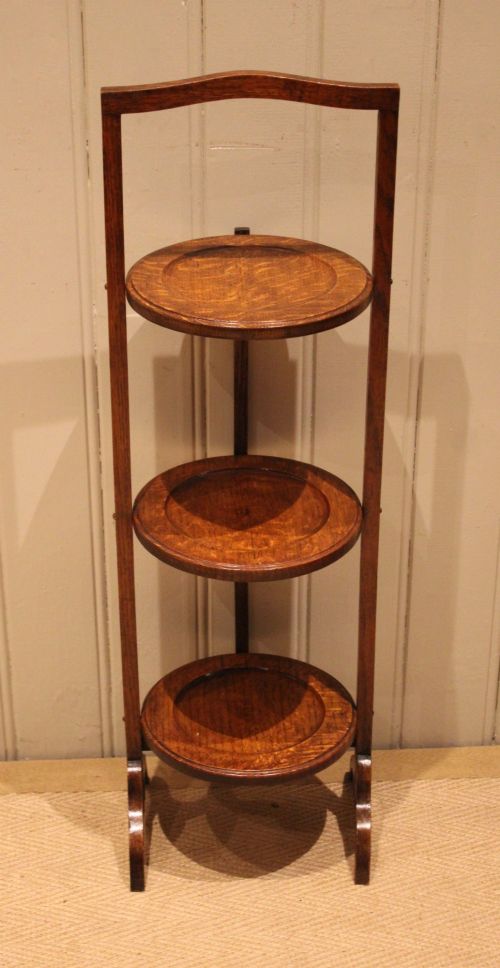
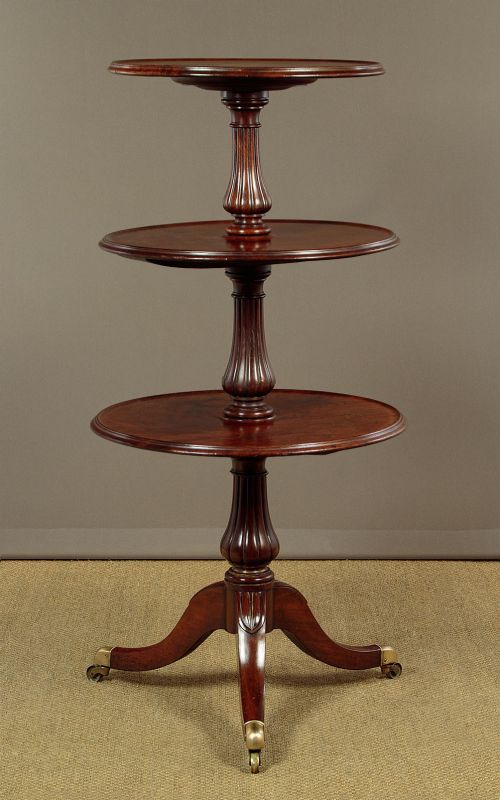
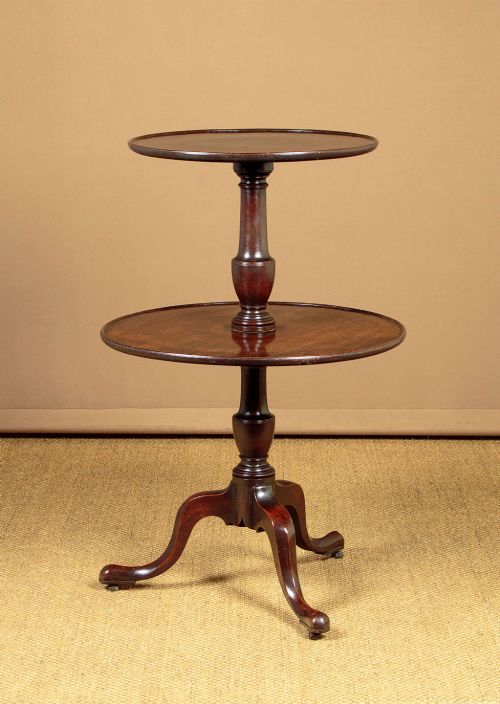
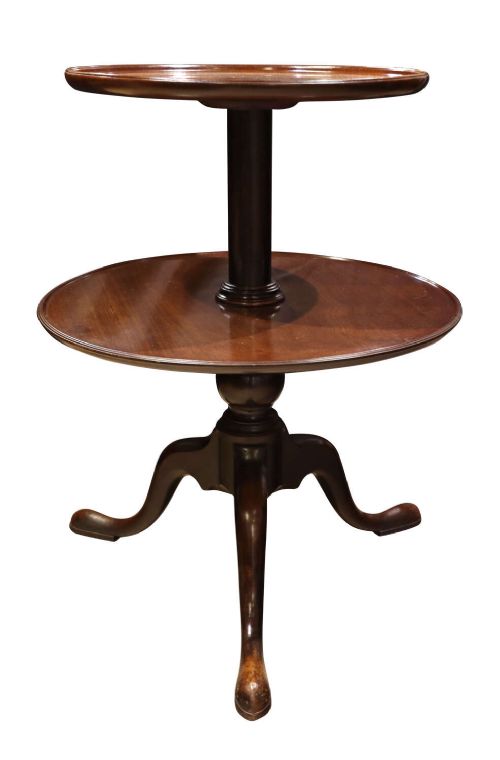
The common iterations on this page include mahogany George III designs with graduated circular trays, alongside later Victorian rising mechanisms and walnut or oak variations. These pieces range from compact two-tier tables to tall multi-level serving stands.
Originating as practical dining room furniture, these tiered structures served meals without requiring constant attendance from household staff. Today, they function as display stands or occasional serving surfaces in domestic settings.
Materials and construction methods
Makers utilised solid mahogany, walnut, oak, and burr walnut for the structural tiers and central columns, frequently pairing them with brass castors and fittings. Timber selection dictated the weight and visual presence of each piece.
Construction involved turned pedestals, tripod base supports, and graduated circular trays fixed to central spindles or revolving mechanisms. Cabinetmakers employed precise joinery to ensure the stability of stacked tiers.
Antique Tiered Dumb Waiter Retail Price Guide 2026
Typical asking prices for tiered dumb waiter among the pieces listed under this phrase on Sellingantiques today, from the lower quarter to the upper quarter. They describe what is for sale here now, not the wider market.
Listings feature mahogany, oak, walnut, and rosewood across Georgian, Regency, and Victorian periods.
Distinctions in craftsmanship
The standard of timber selection and carving depth separates finer examples from standard production, particularly in the figuring of mahogany or burr walnut veneers. Superior pieces display crisp mouldings and well-balanced proportions across every tier.
Mechanical complexity defines another tier of quality, seen in smooth revolving actions, telescopic rises, and original brass castors. Better examples maintain structural rigidity across multiple levels without wobble in the central shaft.
The Antique Tiered Dumb Waiter Glossary
- Dumb waiter
- A multi-tiered piece of dining room furniture designed to hold food, plates, or drinks without service staff present. These stands feature stacked circular or rectangular trays on a central pedestal.
- Tripod base
- A three-legged support structure commonly found beneath the central pedestal of Georgian and Regency dumb waiters. This design provides stable floor contact on uneven dining room surfaces.
- Etagere
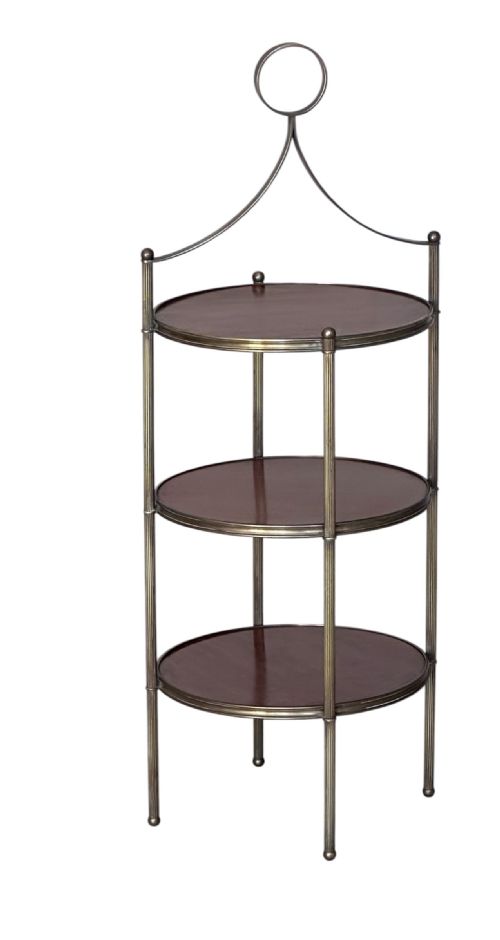
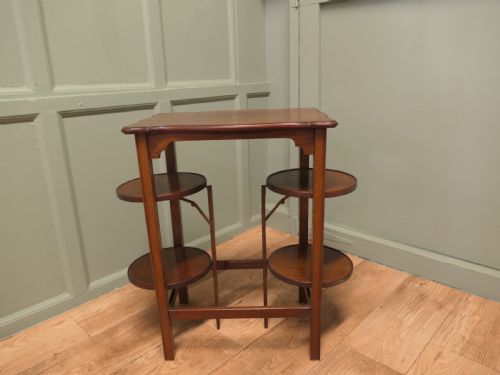
- A piece of furniture consisting of a set of open shelves for displaying small objects or serving items. These tiered stands appear in walnut, mahogany, and ebonised wood across the nineteenth century.
- Rise and fall
- A mechanical feature allowing tiers to adjust in height via a central screw or ratchet mechanism. This functional element appears on select Victorian and William IV examples.
- Castors
- Small wheels attached to the base of furniture legs to facilitate movement across floors. Original brass castors indicate untouched period hardware.
Antique Tiered Dumb Waiter: Frequently Asked Questions
How did people use a dumb waiter?
Dining rooms utilised these tiered stands to hold extra plates, dishes, and wine bottles during meals. The revolving trays allowed diners to reach food independently.
Servants placed courses on the lower and upper tiers to reduce the need for constant attendance during private dinners.
Where should I place a dumb waiter?
These tiered stands fit well in dining rooms beside a main table or sideboard as a functional serving surface. They also serve as display units for ceramics in living spaces.
Placing a tripod table in an empty corner utilises its vertical tiers without obstructing room walkways.
How do I identify a Georgian dumb waiter?
Georgian examples typically feature solid mahogany timber, graduated circular trays, and tripod pedestal bases dating from the eighteenth century. Their construction emphasises clean turned columns and subtle mouldings.
Later Victorian versions often introduce mechanical elements like telescopic rises or denser woods such as burr walnut and amboyna.
What is the difference between a dumb waiter and an etagere?
Dumb waiters traditionally served a dining function with revolving tiers for food and tableware during meals. Their design focuses on heavy pedestals and circular trays.
Etageres function primarily as open display shelving for decorative objects, spanning rectangular and multi-tier formats in woods like walnut and ebonised finishes.