


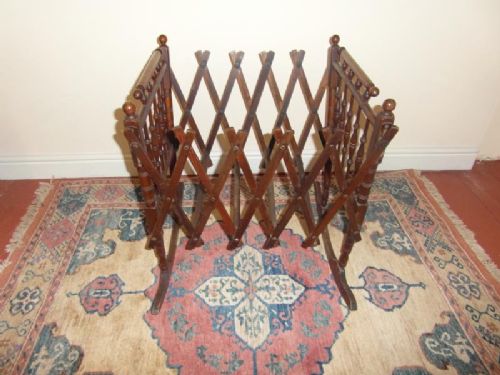


Victorian Metamorphic Furniture
Victorian metamorphic furniture is ingeniously dual-purpose timber pieces that transform from one form to another, saving space and serving multiple domestic needs.
Victorian Metamorphic Furniture
When you search for Victorian metamorphic furniture, you encounter clever transformer pieces designed for nineteenth-century domestic efficiency. These dual-purpose items shift function, turning library chairs into steps or dining tables into larger settings.
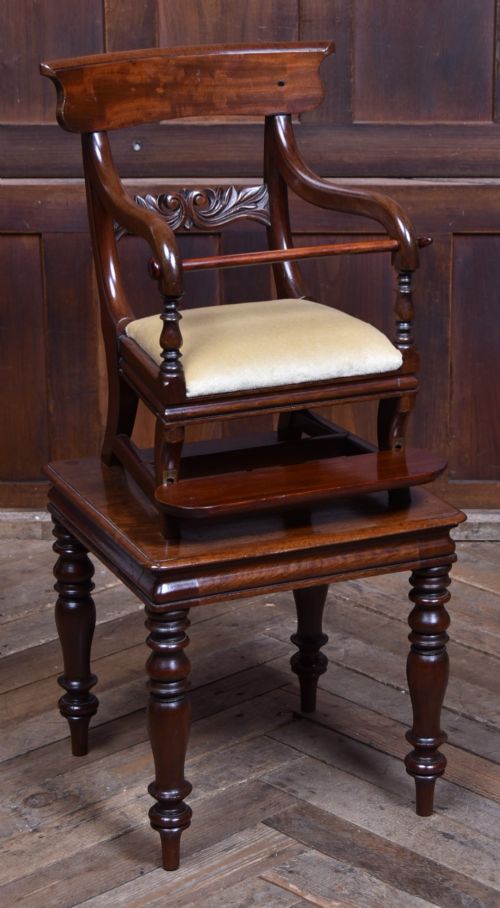
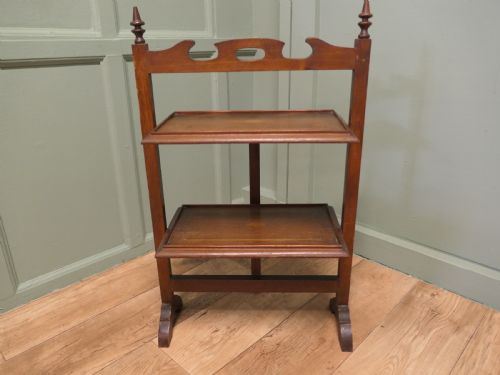
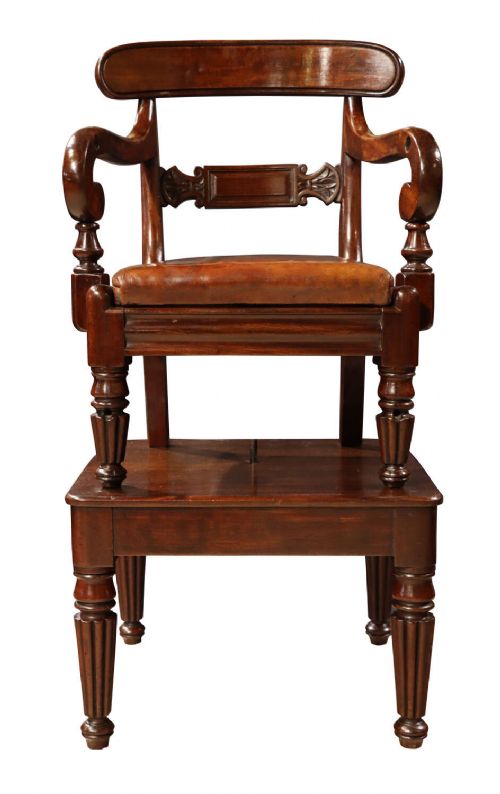
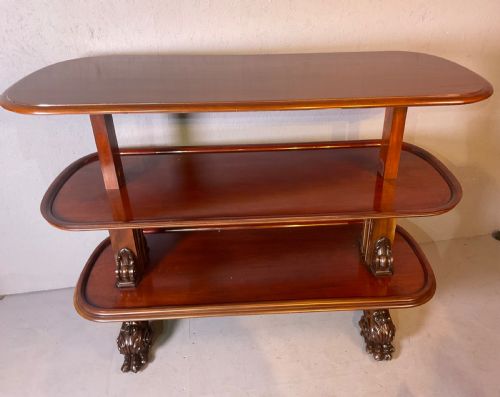
The pieces on this page span the nineteenth century and the Edwardian era, taking forms such as library steps, dumb waiters, children's chairs, serving tables, dining tables, writing desks, reading tables, and cots.
Mahogany and walnut predominate among the timbers, supplemented by oak, beech, brass, leather, and iron. You are likely to meet library steps and dumb waiters most frequently in these listings, alongside convertible seating.
How they were made
Cabinet makers utilised dense hardwoods like mahogany, walnut, and oak to build frames robust enough to withstand daily mechanical adjustment. These timbers were selected for both their structural stability and their figured appearance.
Working mechanisms relied on brass and iron hinges, pivots, and ratchets to allow smooth conversion between states without jamming. Leather was often incorporated into writing surfaces and seating inserts.
Secondary timbers such as beech provided internal framing support, while skilled joinery ensured that joints remained rigid despite constant movement.
Victorian Metamorphic Furniture Retail Price Guide 2026
Typical asking prices for victorian metamorphic furniture among the pieces listed under this phrase on Sellingantiques today, from the lower quarter to the upper quarter. They describe what is for sale here now, not the wider market.
Some Victorian children's high chairs transformed into nursery rocking chairs, keeping restless toddlers amused while parents dined.
What varies in quality
Quality rests upon the precision of the mechanism and how smoothly the piece shifts between its forms. A superior conversion mechanism operates without catching, whereas lesser construction leads to stiff or wobbly joints.
The choice of timber grain and the crispness of the cabinet work also determine value. Well-figured mahogany and walnut with integrated brass hardware represent the upper tier of production.
The integrity of the original hinges and leather inserts influences how successfully a piece has survived decades of mechanical use.
The Victorian Metamorphic Furniture Glossary
- Metamorphic furniture
- Pieces designed to transform from one distinct article of furniture into another. This clever engineering allows a single item to serve multiple functions in a room.
- Dumb waiter
- A tiered serving table or stand used for holding dishes and cutlery. Metamorphic versions can adjust in height or configuration.
- Library steps
- A set of steps designed to reach high bookshelves. Metamorphic versions frequently fold down into a library chair.
- Figured mahogany
- Timber cut to reveal an attractive grain pattern such as flame or feather. Cabinet makers reserved this for visible exterior surfaces.
Victorian Metamorphic Furniture: Frequently Asked Questions
What is metamorphic furniture?
Metamorphic furniture is a dual-purpose design that physically transforms from one object into another, such as a chair turning into library steps or a table expanding.
These clever items were engineered to save space and serve practical domestic functions in nineteenth-century homes.
How do library steps convert?
Library steps in this category typically utilise concealed brass hinges and pivoting frames that unfold from an armchair configuration.
The user simply lifts and rotates the backrest downward to reveal a sturdy flight of steps for reaching high shelves.
What woods were used?
Cabinet makers built these pieces using solid hardwoods such as mahogany, walnut, oak, and beech.
Visible surfaces often display figured mahogany or walnut veneers, while internal mechanics rely on brass and iron fittings.
How do I care for the mechanisms?
Keep the moving brass and iron joints clean and free from dust, and operate the transformations gently without forcing them.
Treat timber surfaces with appropriate wax polish and protect leather inserts from direct sunlight.