





Convertible High Chair
These convertible high chair pieces are dual-purpose nursery items that transform into low tables, keeping a child safe and seated.
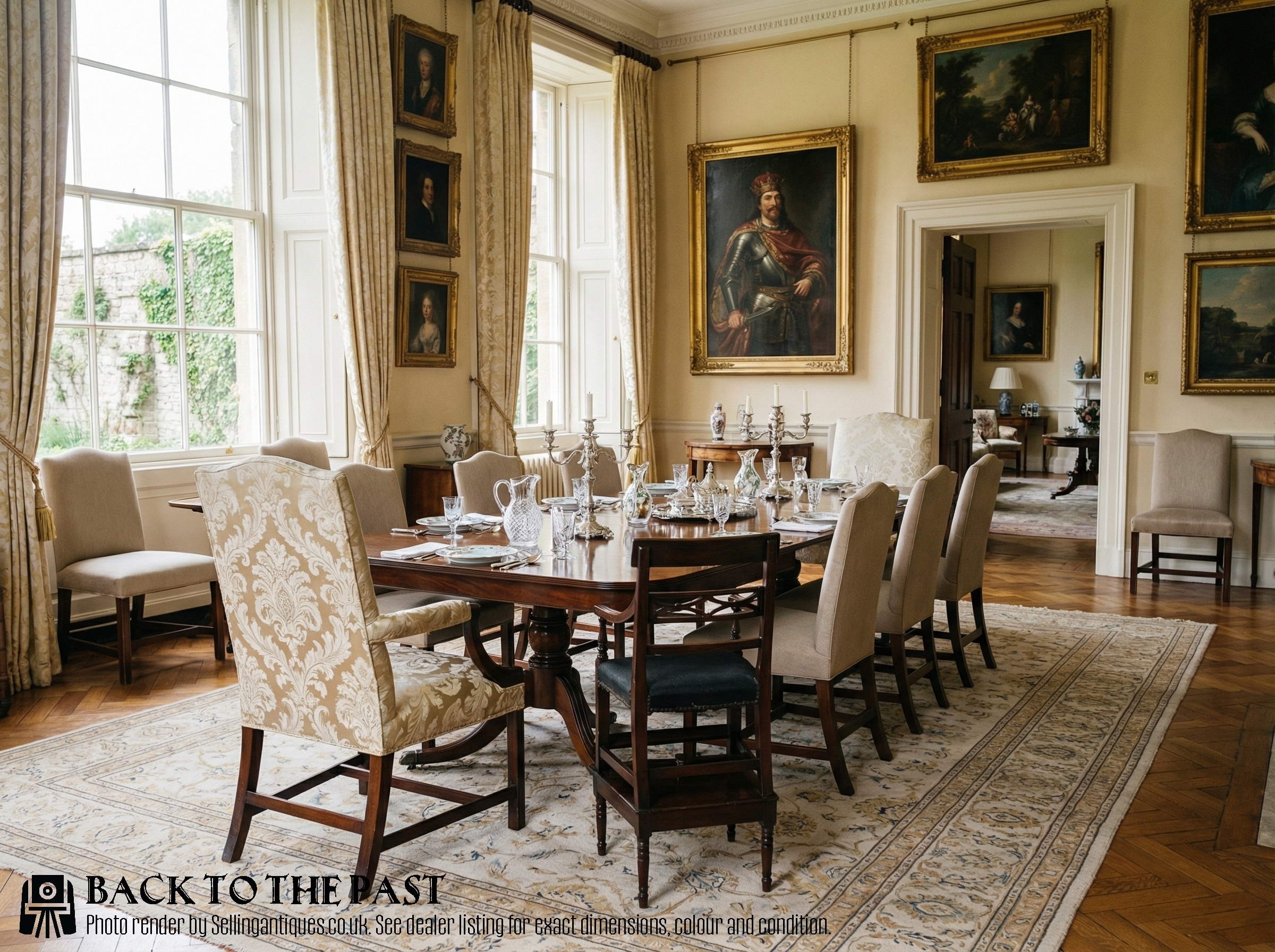
Convertible High Chair
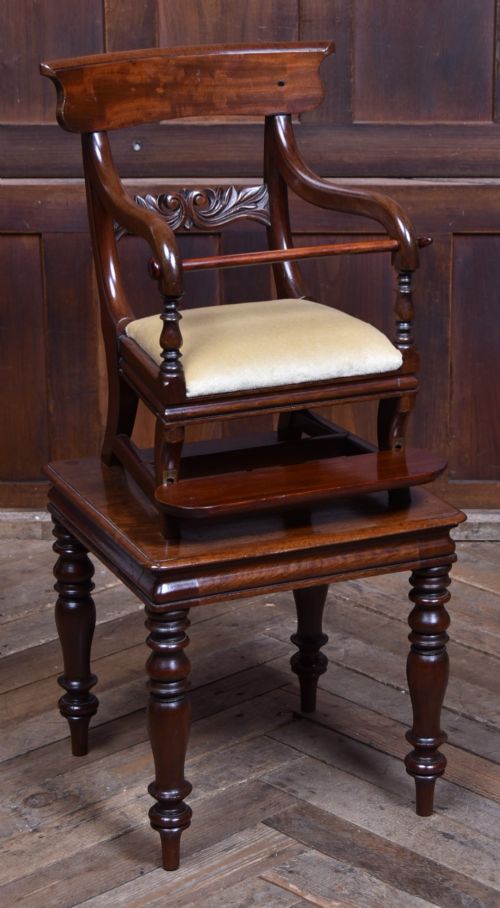
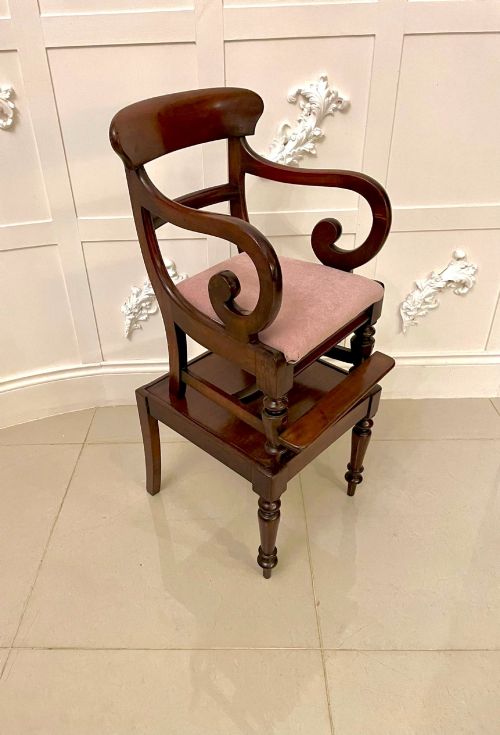
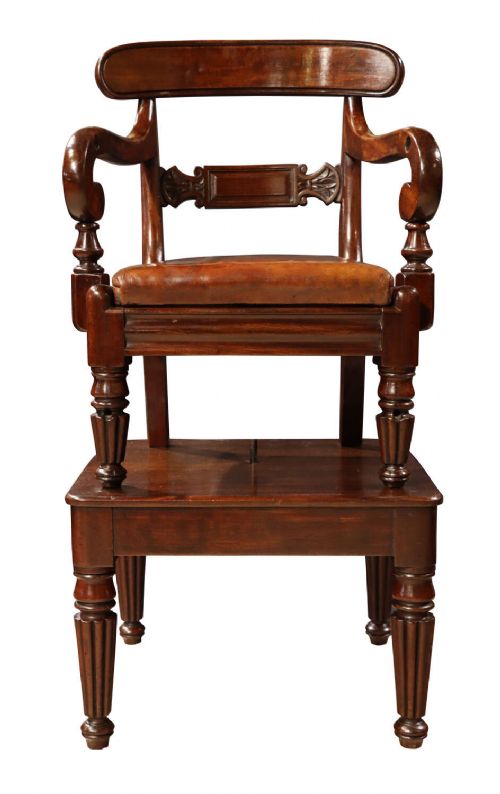
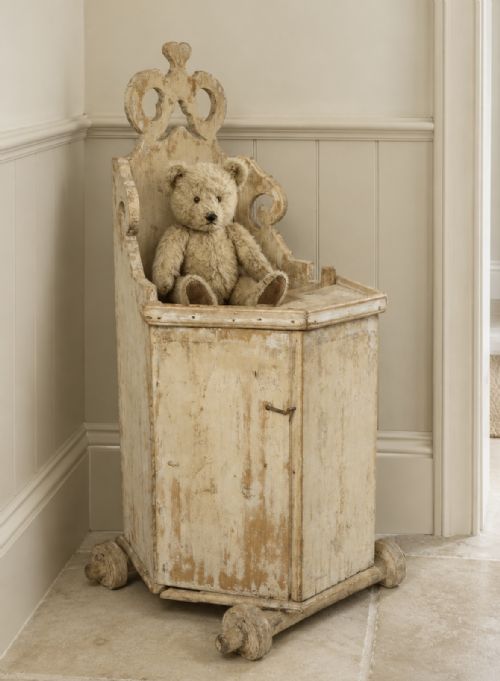
A convertible high chair functions as both a dining seat for an infant and a separate play table when reconfigured. These domestic pieces appear across the Georgian, Regency, William IV, and Victorian eras, alongside 19th-century Scandinavian country examples.
Materials and construction
Makers built these pieces primarily using solid mahogany, alongside beech and painted pine for certain regional country examples. Structural stability was paramount, requiring sturdy joinery to support a child safely whether assembled as a tall chair or lowered onto a standalone frame.
Interlocking stands, brass hinges or pins, and caned or upholstered seats in leather, fabric, and tapestry appear across the listings. Cane seating and padded inserts provided comfort, while iron elements sometimes reinforced the transforming mechanisms.
Convertible High Chair Retail Price Guide 2026
Typical asking prices for convertible high chair among the pieces listed under this phrase on Sellingantiques today, from the lower quarter to the upper quarter. They describe what is for sale here now, not the wider market.
Several listings feature clever multi-part frames that let a towering nursery seat quietly become a tiny table and chair for tea.
Quality variations
The standard of timber selection and the cleverness of the metamorphic mechanism dictate the quality of a convertible high chair. Superior examples utilise dense, richly figured mahogany and smooth-fitting stands that convert without straining the joints.
Refinement in turning, original caning, and intact brass hardware elevate certain pieces above simpler provincial versions. The survival of both original components, such as the chair and its matching base table, defines the better specimens.
The Convertible High Chair Glossary
- Metamorphic
- An item of furniture designed to transform into another functional object. In children's seating, this allows a high chair to convert into a separate chair and table.
- Caned
- Woven rattan or cane material used for seat panels. This technique creates a lightweight, breathable surface that appears frequently on 19th-century examples.
- Stand
- A supporting wooden base frame that elevates the child's seat to table height. The chair lifts off this base to form a lower seating arrangement.
- Regency
- A British design period spanning the early 19th century. Pieces from this era often feature clean classical lines and refined proportions.
Convertible High Chair: Frequently Asked Questions
How do these chairs convert?
The upper seating section detaches from the supporting base frame. Once separated, the base acts as a low table while the seat functions independently on the floor.
This dual-purpose design allowed families to save space in the nursery. The conversion relies on fitted joints rather than complex hidden machinery.
What woods were used?
Mahogany is the predominant timber found across Georgian and Victorian examples. Beech and painted pine also appear in regional pieces such as Scandinavian country chairs.
Cabinetmakers selected these hardwoods for their strength and durability. Dense timbers ensured the furniture could withstand daily nursery use.
Are original seats common?
Original seating surfaces include woven cane, leather, fabric, and tapestry. Many pieces retain their early upholstery or cane work, though some have been rewoven over time.
Inspect the seat frame to see if the webbing or cane channels show period construction methods. Original materials add significantly to the character of the piece.
How do I date these chairs?
Dating relies on stylistic markers from periods like George III, William IV, and Victorian eras. Cabinetmaking techniques and timber choices also help place a piece in the 18th or 19th century.
Comparing the turning on the legs and the construction of the stand provides further clues. Documentation from regional workshops sometimes confirms the exact decade of manufacture.