



Vintage Childs Armchair
These vintage childs armchairs scale down adult forms for younger occupants, offering sturdy domestic seating shaped by centuries of regional craftsmanship.
Vintage Childs Armchair
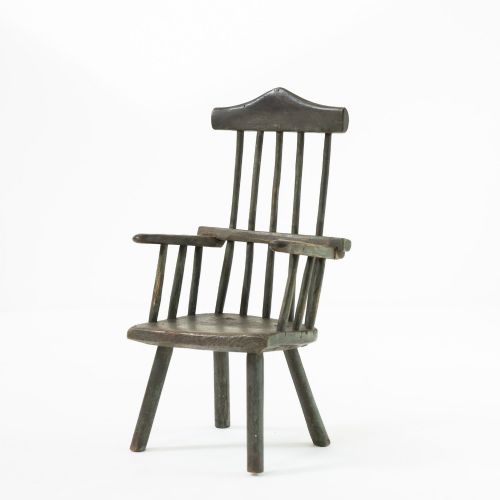
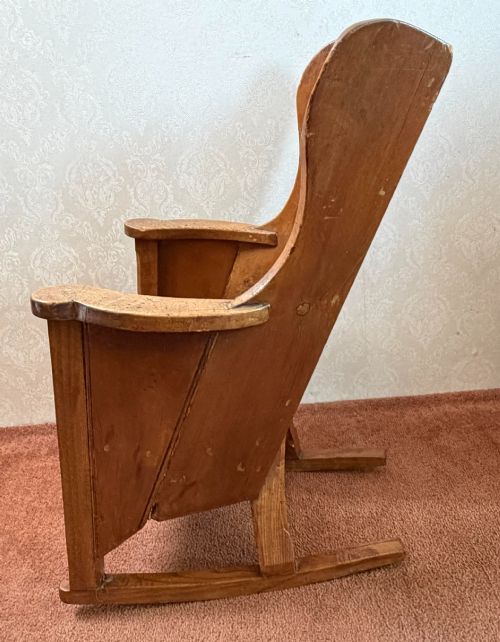
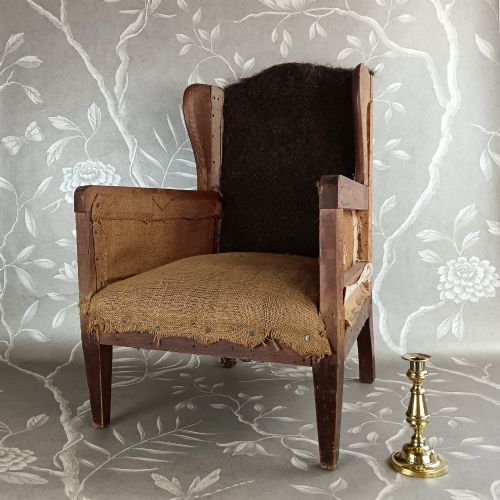
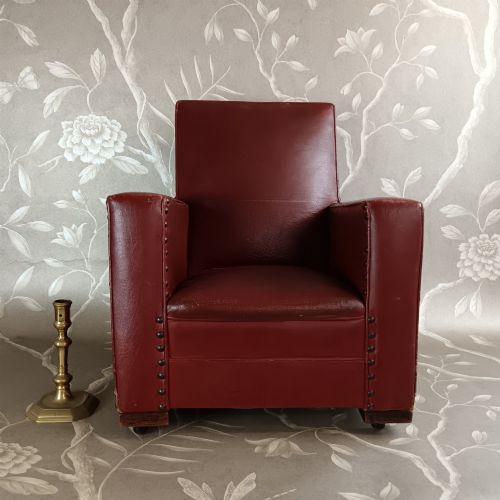
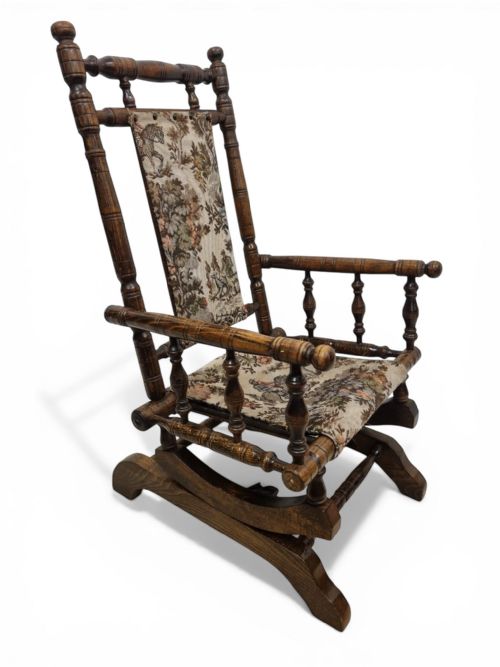
Makers adapted full-sized domestic seating into miniature formats, producing specialised forms such as commode chairs, potty chairs, wingbacks and upholstered club chairs. Alongside traditional wooden frames, versions emerge with rush seats, cane panels, tapestry upholstery and leather coverings.
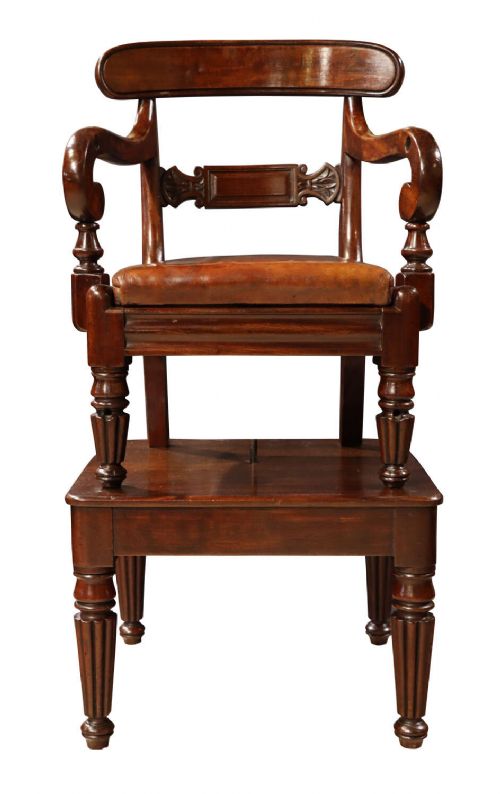
Meticulous scaling defines these pieces, mirroring the joinery and stylistic vocabulary of adult furniture from the same periods. Collectors encounter both utilitarian country pieces and refined mahogany examples influenced by William IV, Queen Anne and Art Deco styles.
Materials and construction
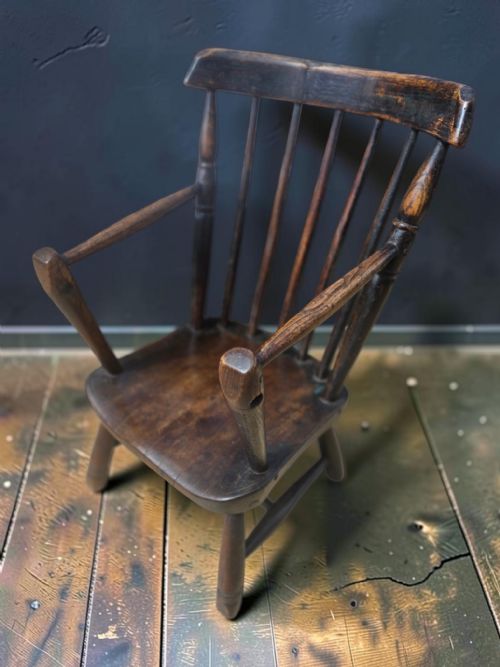
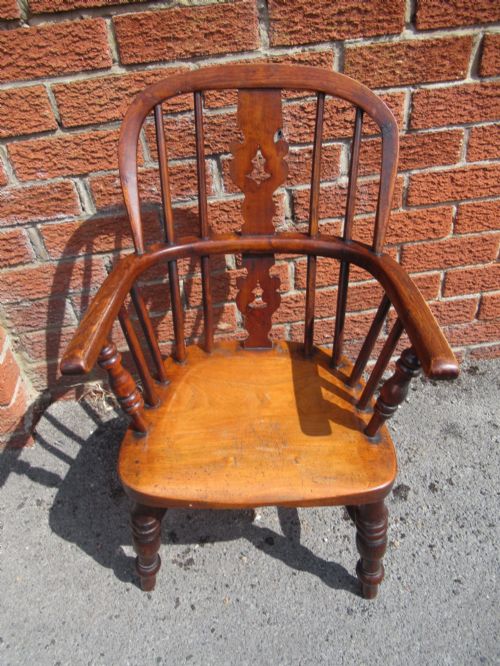
Cabinetmakers and country joiners utilised native timbers including elm, ash, oak, mahogany, walnut and yew, often combining woods within a single frame for structural strength. Windsor and stick-back varieties relied on steam-bending and spindle-turning techniques to shape hoops, legs and arm supports.
Upholstered variants integrated fabric, leather, tapestry and cane seating into wooden armframes, secured with traditional tacks and webbing. High chairs and metamorphic designs incorporated functional stands, trays and locking mechanisms built to withstand active nursery environments.
Vintage Childs Armchair Retail Price Guide 2026
Typical asking prices for vintage childs armchair among the pieces listed under this phrase on Sellingantiques today, from the lower quarter to the upper quarter. They describe what is for sale here now, not the wider market.
The listings demonstrate strong representation of 19th-century elm, ash and mahogany examples alongside Georgian and Victorian vernacular forms.
Craftsmanship and proportion
Quality rests in the fidelity of proportion and the integrity of the joinery, distinguishing finely turned spindles and tight joints from clumsy later repairs. Superior examples retain original surface finishes, patination and uncompromised timber frames without excessive replacement parts.
The sophistication of the design sets individual pieces apart, ranging from rustic vernacular stick backs to sophisticated mahogany carvers with carved details and specialist seating materials like cane or leather.
The Vintage Childs Armchair Glossary
- Windsor chair
- A wooden chair constructed with a solid saddle-shaped seat into which the back and legs are bored directly. These chairs frequently feature bentwood hoops and shaped spindles.
- Stick back
- A vernacular seating form where turned wooden spindles form the backrest, fitted into a solid wooden seat. This construction method typifies English country furniture.
- Metamorphic
- Describing furniture designed to transform its function, such as a high chair that converts into a low chair and stand. These clever pieces served multiple domestic purposes in the nursery.
- Commode chair
- A seating item enclosing a chamber pot beneath a lidded or opening seat. Victorian examples often disguised this practical function within a conventional armchair frame.
- Bergere
- An enclosed upholstered armchair featuring cane-work panels on the back and sides. This French-influenced style appeared in scaled-down children's versions during the nineteenth century.
Vintage Childs Armchair: Frequently Asked Questions
How were these small chairs used?
These seating pieces served daily nursery life, providing a secure place for young children at meals or firesides.
High chairs and metamorphic designs elevated infants to table height, while rocking chairs and low armchairs offered relaxation and play seating.
How do I date a childs armchair?
Dating relies on examining the timber species, joinery techniques and stylistic markers associated with specific historical periods.
Georgian and Victorian examples display the turning styles, wood choices and construction methods standard to adult furniture of those decades.
Can children sit in vintage armchairs?
Many sturdy wooden and upholstered pieces remain structurally sound for gentle everyday use by young children.
Delicate cane-seated or antique vernacular items require careful supervision to preserve fragile historical materials.