

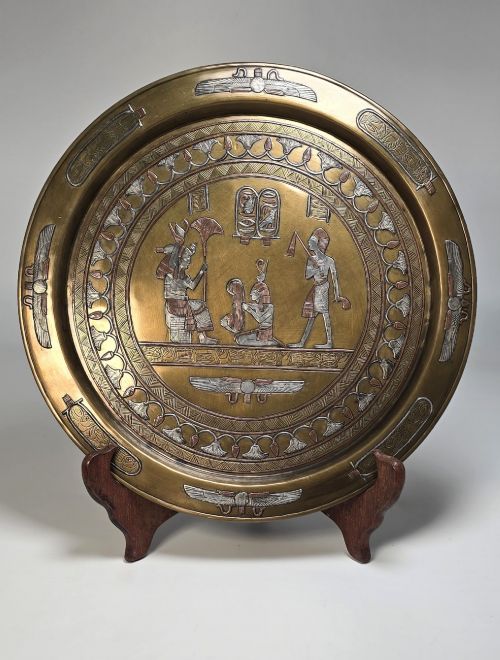


Victorian Metal Platter
A victorian metal platter brings weight and intricate surface detail to a room, ranging from grand copper chargers to silver plated serving trays.
Victorian Metal Platter
A victorian metal platter encompasses a diverse group of serving trays, decorative chargers, and wall plaques produced primarily during the nineteenth century. Buyers searching this phrase encounter substantial pieces designed for formal presentation or elaborate wall display, spanning domestic serving ware and grand tour souvenirs.
The selection on this page leans heavily towards large circular chargers, oval serving trays, and reticulated platters. These items frequently incorporate classical portraits, mythological scenes, or intricate botanical motifs across their surfaces.
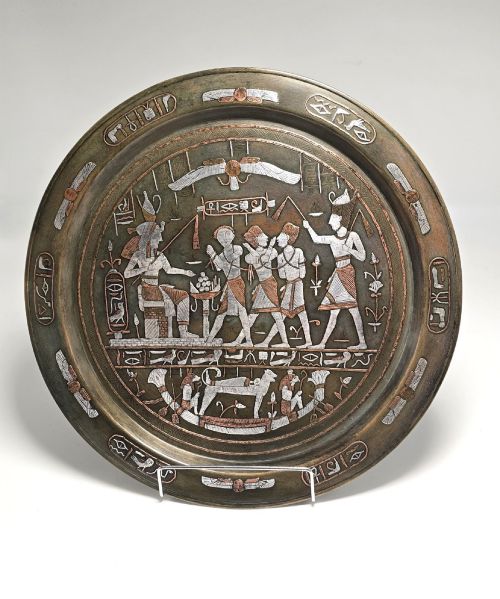
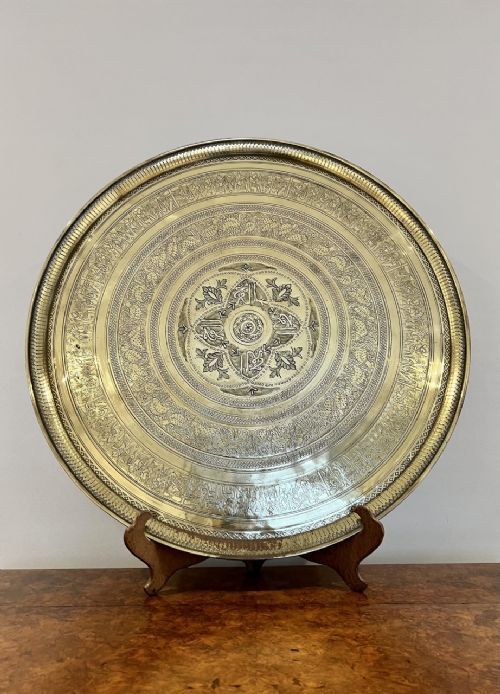
Origins stretch beyond standard British Victorian production to include Anglo-Indian Raj work, Kashmiri copperware, Egyptian Cairo Ware, and Japanese export pieces. This global reach means buyers find both heavy European bronze work and hand-pierced Eastern metalwork within the same category.
What Varies in Quality
The sophistication of the engraving and the integrity of the silver plating or mixed metal inlay determine the upper tier of the range. Maker attribution and specialised regional techniques, such as targeted Cairo Ware silver work or Newlyn hammered textures, elevate individual pieces.
Victorian Metal Platter Retail Price Guide 2026
Typical asking prices for victorian metal platter among the pieces listed under this phrase on Sellingantiques today, from the lower quarter to the upper quarter. They describe what is for sale here now, not the wider market.
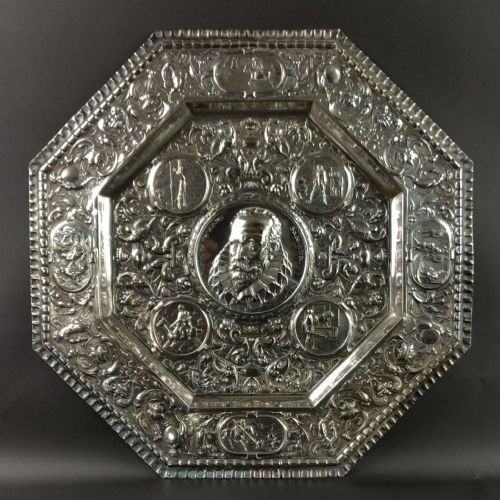
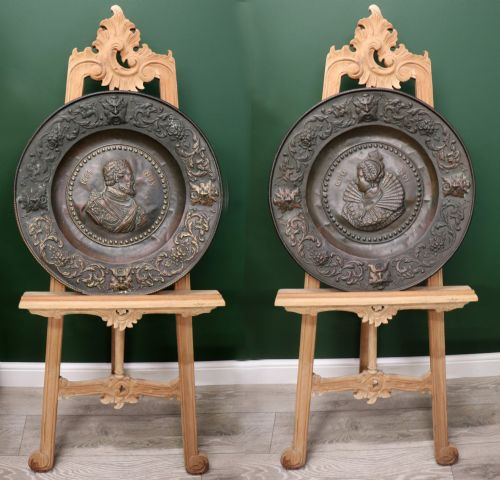
Some platters depict Miguel De Cervantes, while others feature Henry IV or Diana the Huntress in hammered metal.
Elkington and Co·Padley Parkin·Peters Hamburg·Fenton Russel·J.H. Potter
The Victorian Metal Platter Glossary
- Repoussé
- A metalworking technique where a design is hammered into relief from the reverse side. This method allows artisans to build complex, three-dimensional portraits and floral motifs onto copper and brass platters.
- Charger
- A large decorative plate or platter utilised primarily for ceremonial display or wall hanging rather than standard dining service. These pieces frequently feature mythological or historical scenes.
- Electrotype
- A replica or object formed through the electrodeposition of silver or copper onto a mould. This nineteenth-century process enabled makers to duplicate intricate sculptural metalwork with high precision.
- Salver
- A flat tray, typically manufactured from silver plate, utilised for serving drinks or presenting cards. Examples often rest on small feet and display detailed surface engraving.
- Reticulated
- Pierced or openwork metal decoration formed by cutting away sections to create a net-like pattern. This technique appears on serving trays to lighten the visual weight of the metal.
Victorian Metal Platter: Frequently Asked Questions
How were metal platters used in Victorian homes?
These items served dual purposes as functional serving ware for afternoon tea and formal dining, alongside decorative display pieces mounted on walls or placed on centre tables as chargers.
Larger heavy bronze and copper variants often anchored sideboards or acted as presentation pieces, while silver plated salvers carried visiting cards and beverages.
What is the difference between a tray and a charger?
Trays generally feature handles, rims, and a flattened base designed for carrying food, drinks, or visiting cards across rooms.
Chargers are substantially larger decorative plates intended strictly for display on walls or resting flat on furniture to showcase intricate repoussé portraits and mythological scenes.
How do I care for antique copper and brass?
Maintenance requires minimal intervention to preserve the historic patina built up over generations. Dusting with a dry, soft cloth prevents particulate buildup.
Avoid abrasive chemical polishes that strip away the aged surface character and soften the crisp hand-engraved or repoussé details.
Are these pieces safe for serving food?
Most antique silver plated and metal platters are intended for display, decorative service, or dry presentation rather than direct contact with acidic foods.
Silver plate layers can wear thin over decades of cleaning, exposing the base metal beneath and making them better suited for holding fruit or decorative items.
How do I identify the period of a metal platter?
Stylistic clues such as Gothic Revival, Neoclassical, or Egyptian Revival motifs point directly to nineteenth-century design movements and Grand Tour influences.
Examining the manufacturing method, such as early electrotyping or hand-hammered Newlyn execution, alongside any maker marks helps narrow the date of production.