

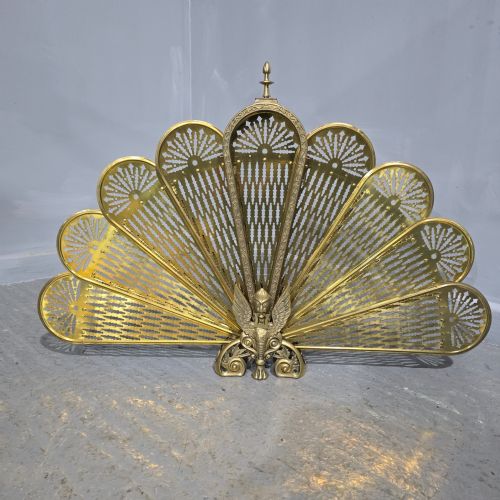

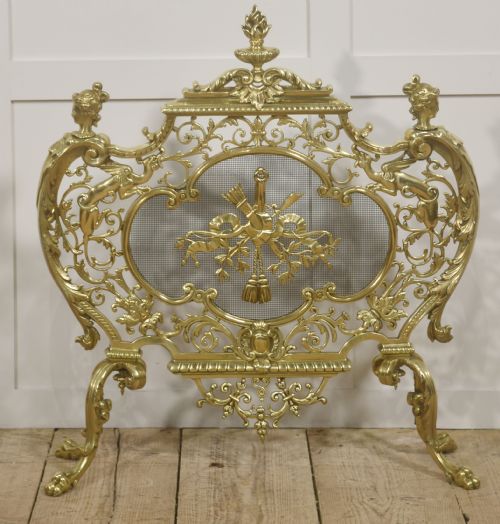
Victorian Metal Fire Screen
A victorian metal fire screen shields the room from glowing embers while adding architectural presence to the hearth.
Victorian Metal Fire Screen
A victorian metal fire screen acts as both a practical spark guard and a decorative focal point before an unlit hearth. The selection available spans the nineteenth century and the Edwardian era, alongside specific interpretations from the seventeen hundreds through to the nineteen twenties.
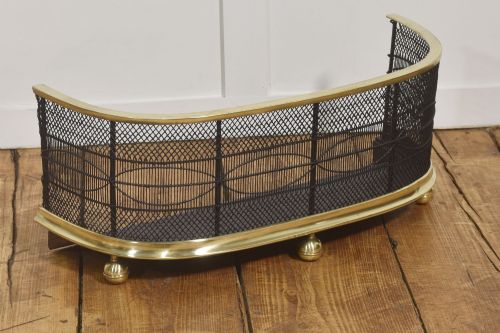
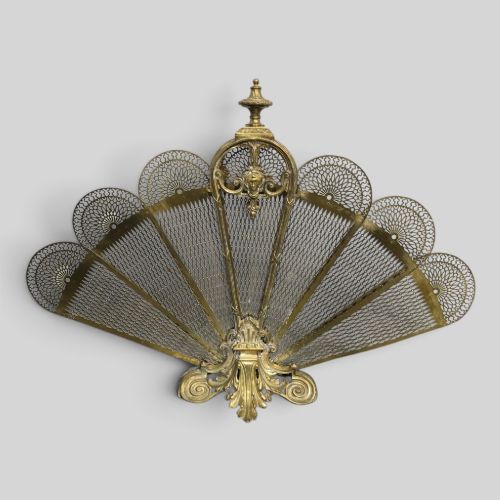
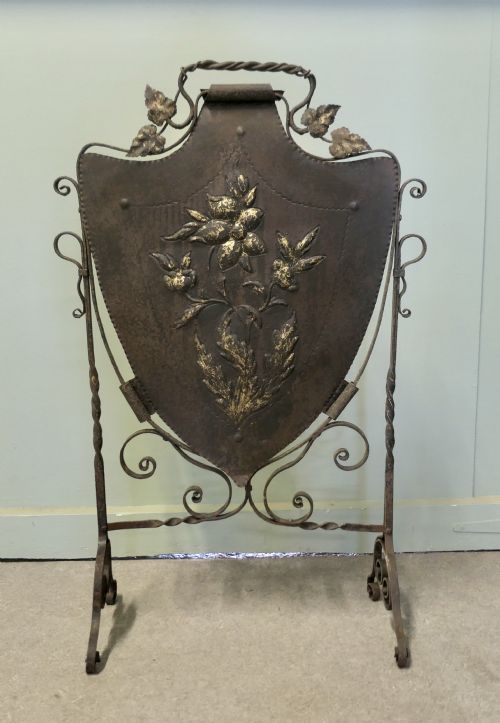
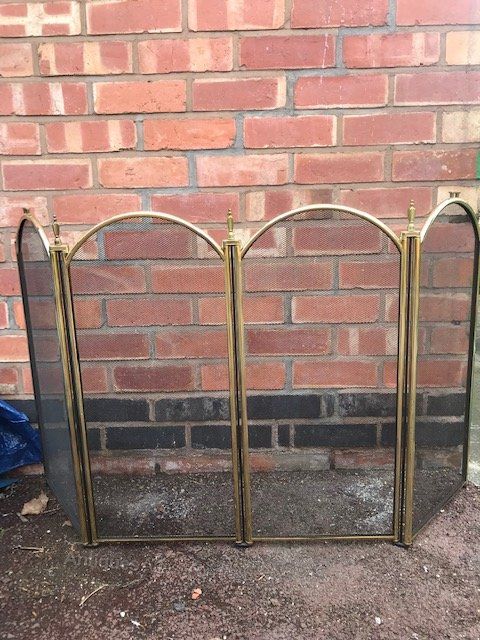
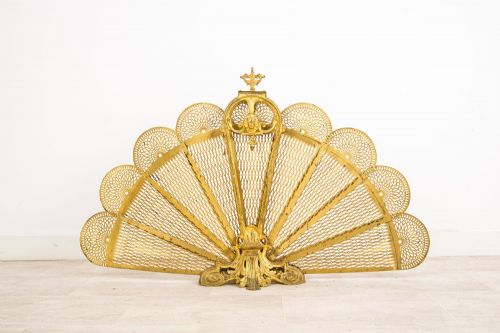
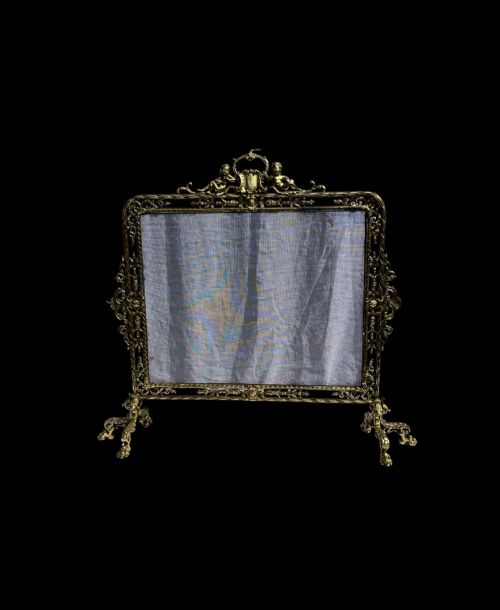
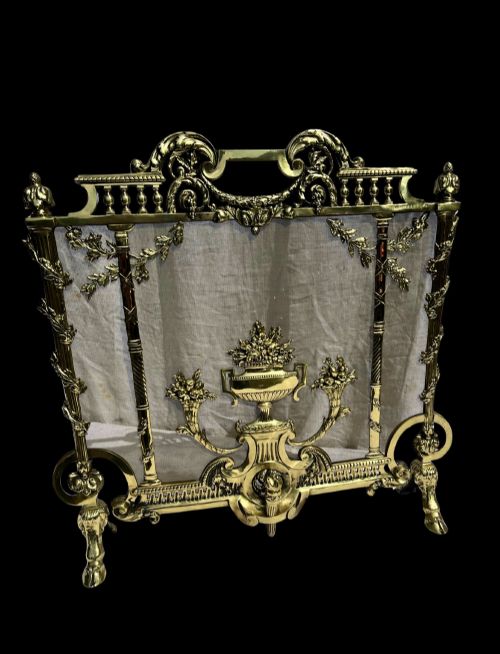
Most pieces encountered on this page take the form of upright brass or iron screens, ranging from simple wire mesh guards to elaborate folding panels. Peacock fans, ornamental shields, and framed wirework dominate the domestic forms created to manage hearth safety.
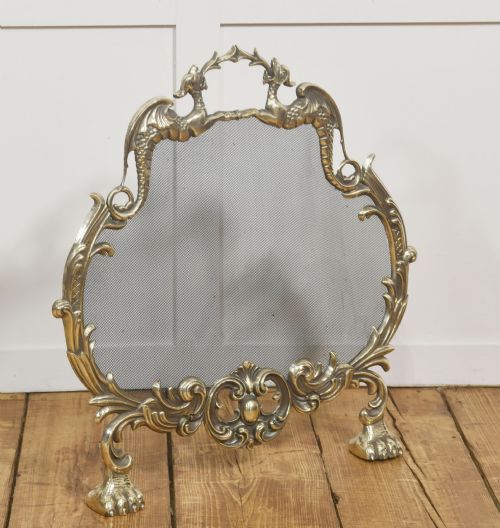
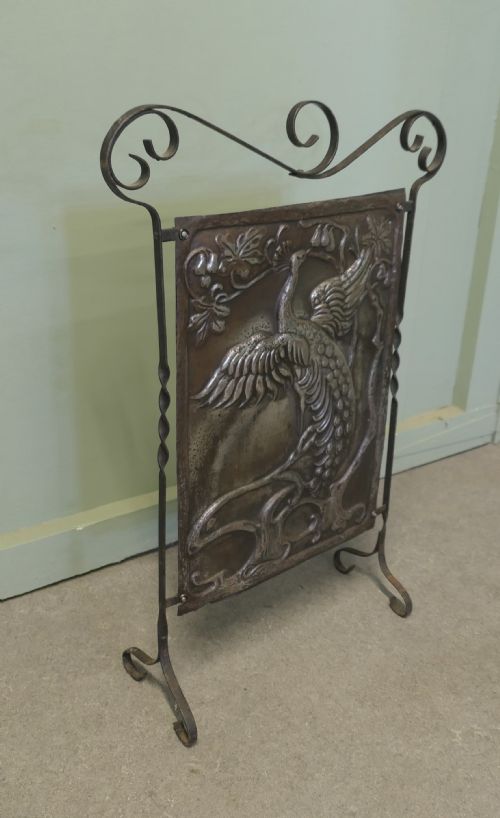
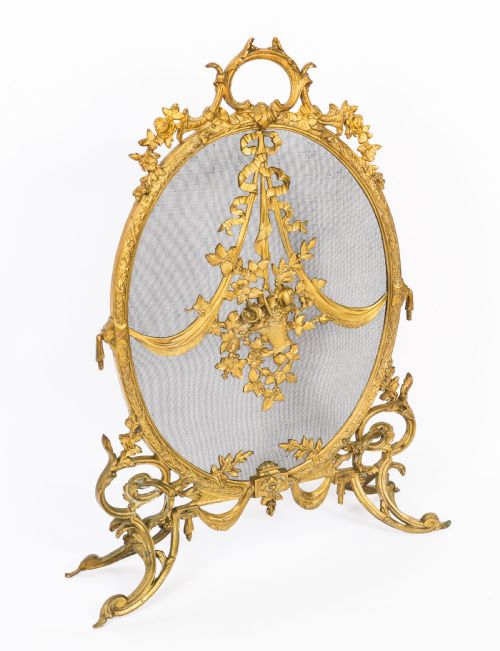
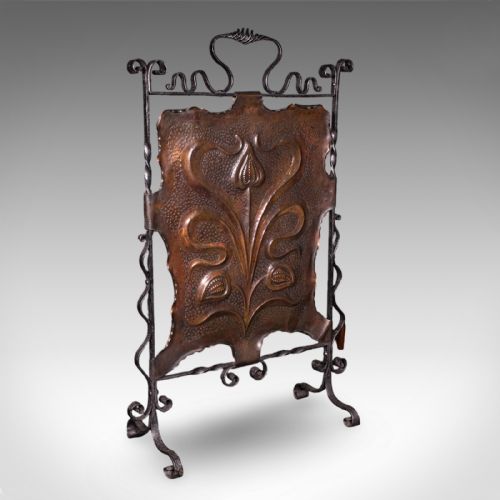
Makers drew upon diverse historical revivals and contemporary movements, producing French Rococo scrolls, Gothic ironwork, and linear Arts and Crafts copper designs. These pieces originate from domestic settings where open coal fires required reliable protection alongside stylistic complement.
Materials and Construction
Makers constructed these pieces primarily from brass, wrought iron, and copper, often combining solid sheet metal with delicate wire mesh or iron mesh. Frames were assembled using riveted joints, forged hinges, and heavy metal bases to ensure stability before the fireplace.
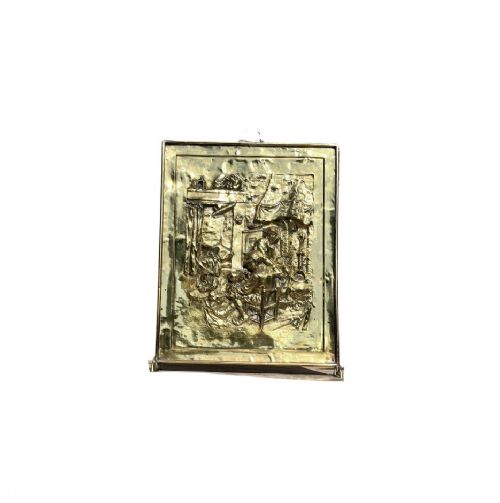
Decorative detailing involved chasing, embossing, and piercing the metal surfaces to create rich surface patterns and coats of arms. Gilt finishes and black treatments were applied to enhance the contrast of the metalwork against surrounding hearth furnishings.
Some nursery fenders included integrated clothes rails for warming small garments beside the hearth fire.
Craftsmanship and Weight
Quality reveals itself in the substantial gauge of the metal and the firmness of the folding sections rather than superficial decoration alone. Heavy wrought iron and thick cast brass components maintain their structural integrity under daily domestic use.
The refinement of the hand-chased details and the precision of the pierced brass panels distinguish standard workshop production from ambitious exhibition pieces. Original mesh screens and integrated folding mechanisms show the deliberate care invested by the original maker.
The Victorian Metal Fire Screen Glossary
- Peacock fan
- A folding fire screen composed of radiating metal blades that expand like a tail. These open to cover the fireplace opening completely and fold flat when not in use.
- Nursery fender
- A low protective metal barrier enclosing the hearth to keep children and pets at a safe distance from the fire. They frequently incorporate wire mesh panels and sometimes include a clothes rail.
- Spark guard
- A functional screen designed specifically to catch flying embers from open coal or wood fires. They utilise dense wire mesh or iron mesh for maximum visibility and safety.
- Rococo revival
- A nineteenth-century design style mimicking the asymmetrical scrolls, shell motifs, and naturalistic curves of the eighteenth century. It appears frequently in polished and cast brass screen frames.
- Embossed and chased
- A dual technique where metal is hammered from the reverse to raise a relief pattern, then refined with fine chisels on the front. This creates textured coats of arms and pictorial panels.
Victorian Metal Fire Screen: Frequently Asked Questions
How do I use a fire screen safely?
Place the screen firmly on the hearth floor directly in front of the active fire to catch spitting embers. Ensure folding sections are angled correctly to provide a stable barrier.
Keep combustible materials away from the metal frame during use. Allow the metal to cool completely before attempting to move or clean the guard.
What is the difference between a screen and a fender?
A fire screen stands upright to block radiant heat and sparks from the room. They are often moveable and feature decorative panels or folding wings.
A nursery fender creates a low protective perimeter around the hearth on the floor itself. Some designs combine both elements into a single integrated unit.
How do I date an antique metal screen?
Examine the manufacturing techniques, such as hand-forged ironwork versus later machine-stamped joints. Material choices and stylistic revivals like Gothic or Art Nouveau provide primary chronological clues.
Consult the recorded period markers in the title evidence to cross-reference similar construction methods. Patina and wear patterns on the brass or copper also indicate age.
How do I clean antique brass and copper?
Dust the metal surfaces regularly with a soft, dry cloth to prevent grime accumulation. Avoid harsh chemical cleaners that strip the historic patina.
Preserve the aged surface character rather than polishing the metal to a bright shine. Specialist conservator waxes can protect iron and brass from further oxidation.