



Victorian Mechanical Wall Clock
A victorian mechanical wall clock brings precision timekeeping into domestic and public spaces through weights, springs, and pendulum movements.
Victorian Mechanical Wall Clock
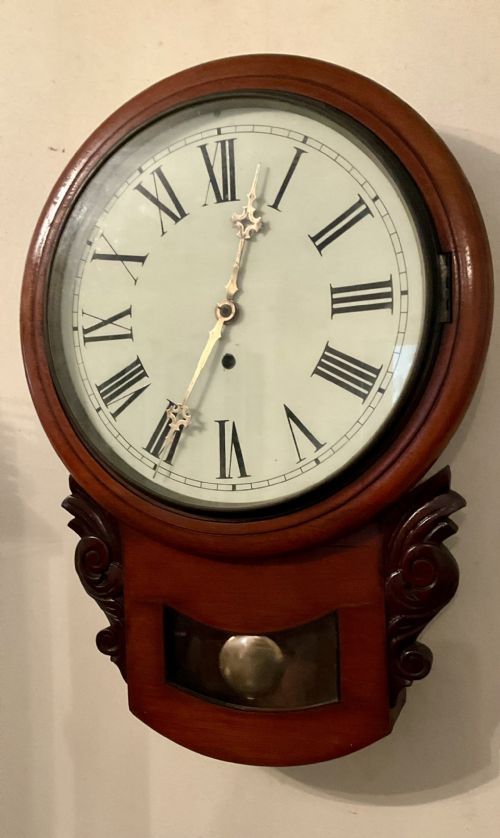
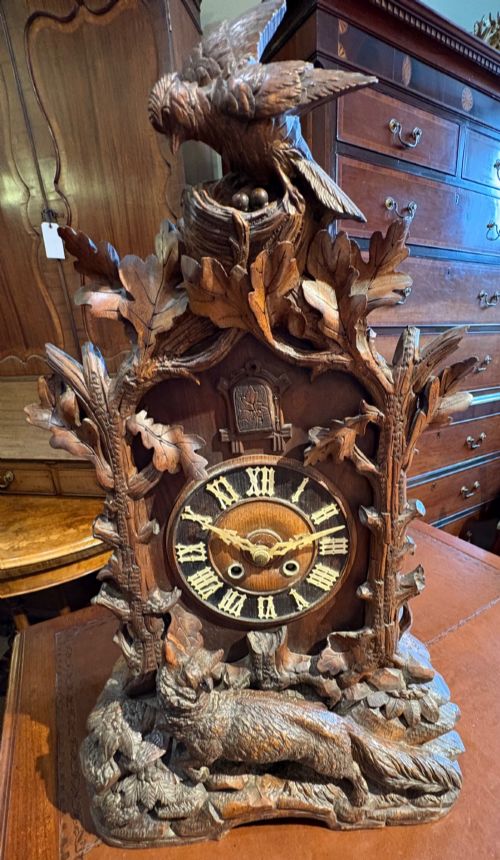
A victorian mechanical wall clock encompasses sturdy railway timepieces, carved wooden cuckoo clocks, and refined fusee dial clocks mounted in round or octagonal frames. These items originated across nineteenth-century Britain, Germany, France, and America to serve station platforms, offices, and parlours alike.
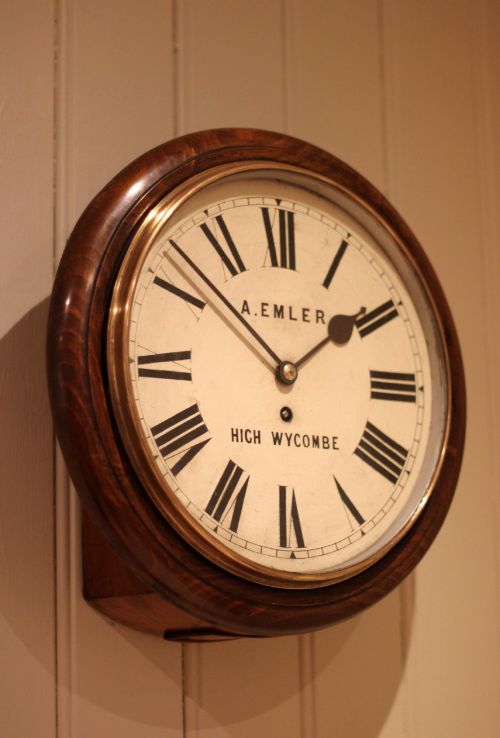
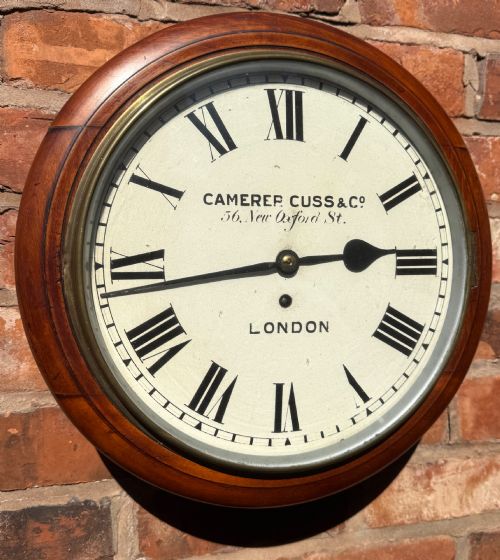
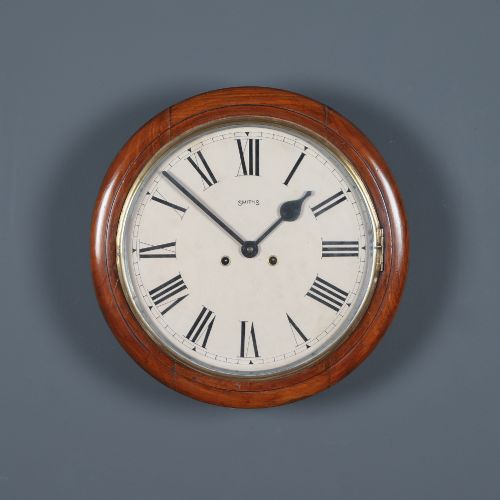
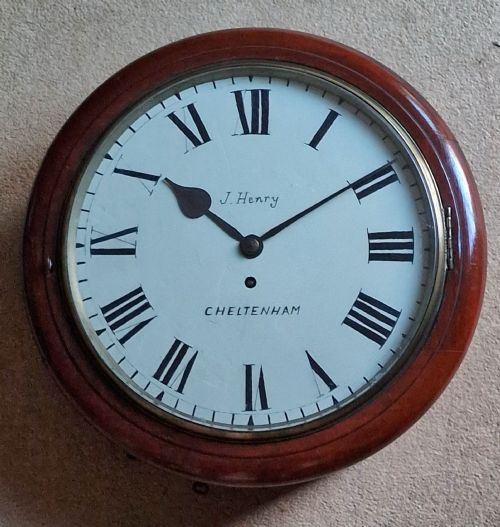
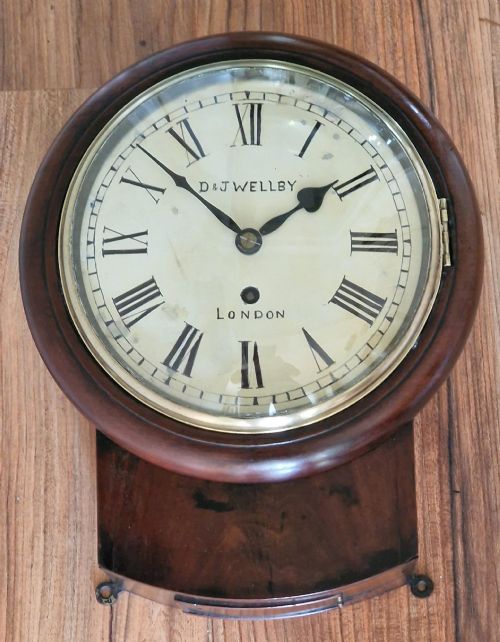
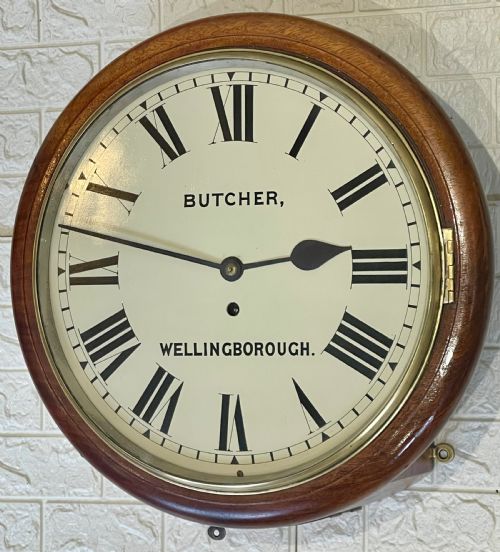
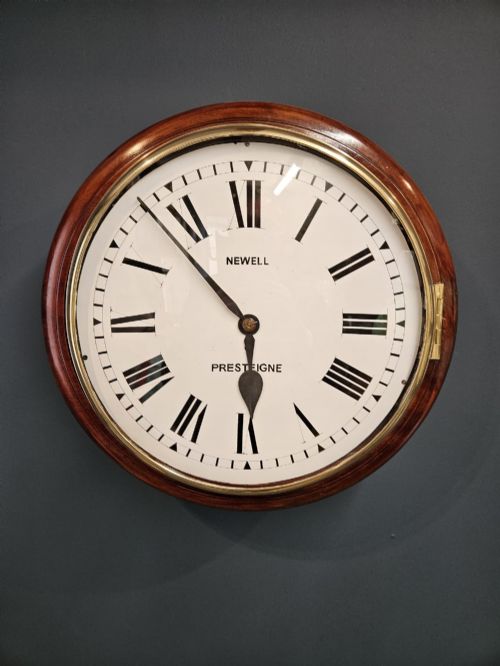
The version most frequently encountered on this page is the fusee dial wall clock housed in mahogany, oak, or walnut. These round-faced instruments rely on a chain or cord connected to a conical pulley to maintain even tension as the mainspring unwinds.
Materials and movement
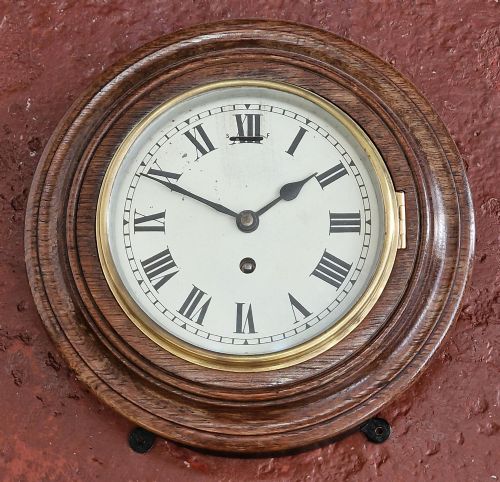
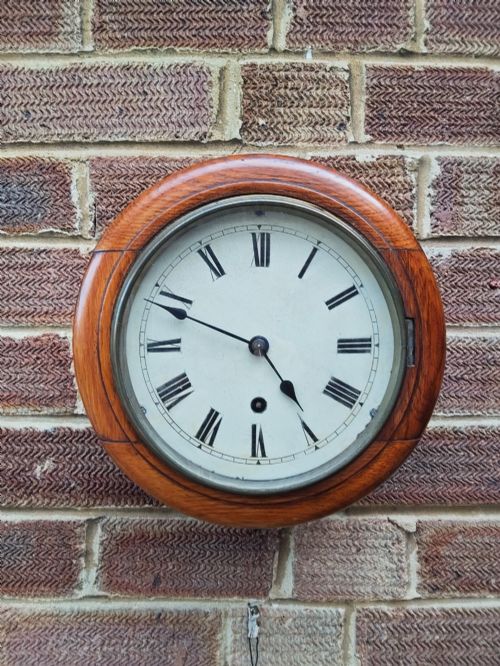
Cases combine dense hardwoods such as mahogany, walnut, rosewood, and oak with brass bezels, iron components, and glazed glass doors. Dials typically feature white painted enamel or metal faces marked with bold Roman or Arabic numerals.
Internal mechanisms depend on mechanical gear trains driven by hanging weights, tensioned springs, or fusee cones. Carved variants from the Black Forest integrate intricate wooden plates and bellows to produce animated cuckoo calls.
Station clocks often spent decades watching weary travellers miss their morning trains before finding a quiet retirement on a domestic wall.
Craftsmanship and execution
Distinctions in quality arise from the crispness of cabinet joinery, the depth of wood carving, and the precision of the brass gear cutting. Finer examples retain original signed dials, matching hands, and robust movements bearing the stamp of recognised makers or railway companies.
Simpler utility clocks display plain timber surrounds and standard mass-produced movements designed for strict punctuality rather than ornamental display. Superior pieces demonstrate careful timber selection, such as figured walnut veneers or matched mahogany segments.
Camerer Cuss And Co·D And J Wellby·John Walker·Dent Of London·Butt Co Ltd
The Victorian Mechanical Wall Clock Glossary
- Fusee
- A conical pulley used in mechanical clocks to equalize the diminishing power of the mainspring as it runs down. This ensures consistent force is delivered to the gear train.
- Drop dial
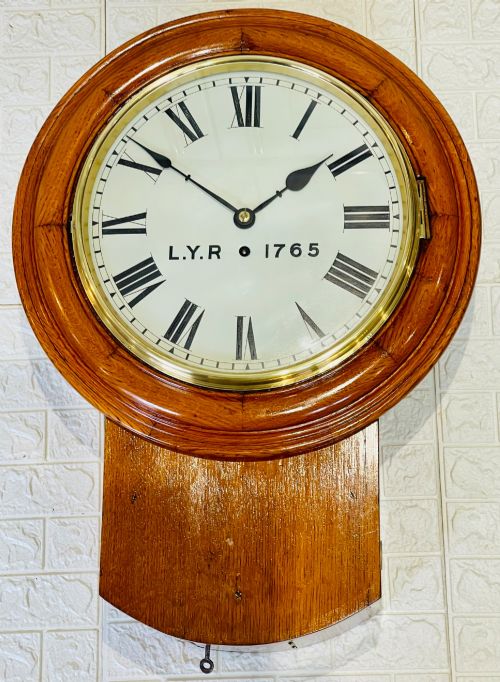
- A wall clock featuring an extended lower wooden case that houses the pendulum. This format became common in British offices and railway stations during the nineteenth century.
- Regulator
- A high-precision mechanical clock designed for extreme accuracy. These instruments typically feature long pendulums and separate dials for hours, minutes, and seconds.
- Cuckoo clock
- A striking mechanical clock housed in carved wood that uses pipes and bellows to imitate the call of a bird. These originated in the Black Forest region of Germany.
- Bezel
- The metal or wooden ring that holds the glass protecting the clock face. It often opens on a hinge to allow hand-setting.
Victorian Mechanical Wall Clock: Frequently Asked Questions
How do fusee wall clocks work?
A fusee clock uses a spring barrel connected by a fine chain to a conical pulley. As the spring unwinds, the chain moves to a wider part of the cone, maintaining steady power.
This clever geometric design compensates for the loss of spring tension over time. It keeps the movement running at a uniform speed between winds.
Where were railway station clocks used?
Railway clocks hung in ticket offices, platform shelters, and administrative boardrooms to keep staff and passengers coordinated. Railway companies demanded robust movements that withstood vibrations from passing trains.
Many of these pieces bear company initials on their dials or backplates. They represent a distinct era of industrial punctuality and transport history.
How do I wind a mechanical wall clock?
Most mechanical wall clocks require a specialised winding key inserted into a small hole on the dial face. Turning the key counteracts the descent of the weights or winds the mainspring barrel.
Care must be taken not to overwind the mechanism, which can strain the spring or chain. Regular winding maintains proper tension and keeps the pendulum swinging accurately.
Are Black Forest clocks made of wood?
Black Forest clocks utilise carved linden, pine, or walnut for their rustic cases and internal gear plates. Artisans in the German highlands carved foliage, animals, and hunting motifs by hand.
Even the gears and arbors were frequently fashioned from boxwood or pearwood in older examples. This tradition combined forestry skills with precise horological mechanics.