





Victorian Mechanical Clockwork Clock
A victorian mechanical clockwork clock brings moving mechanical life and precise timekeeping into a room through brass, glass and ticking spring-driven gears.

Victorian Mechanical Clockwork Clock
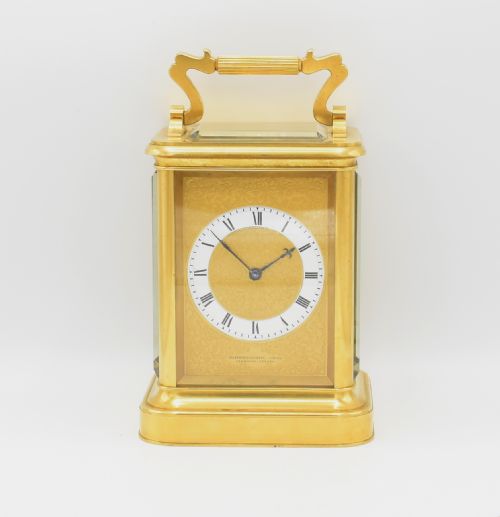
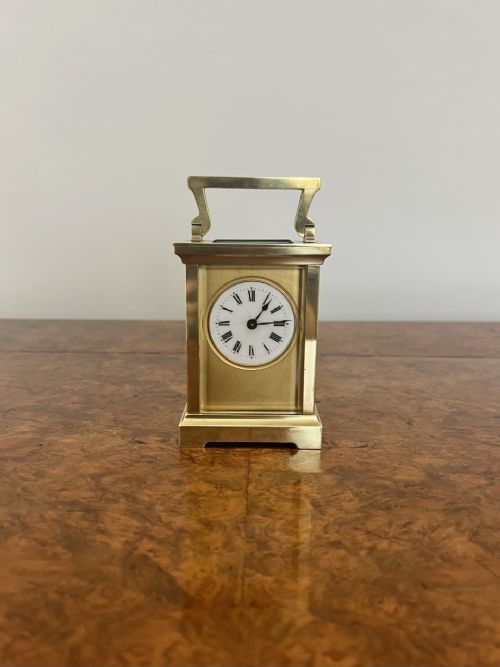
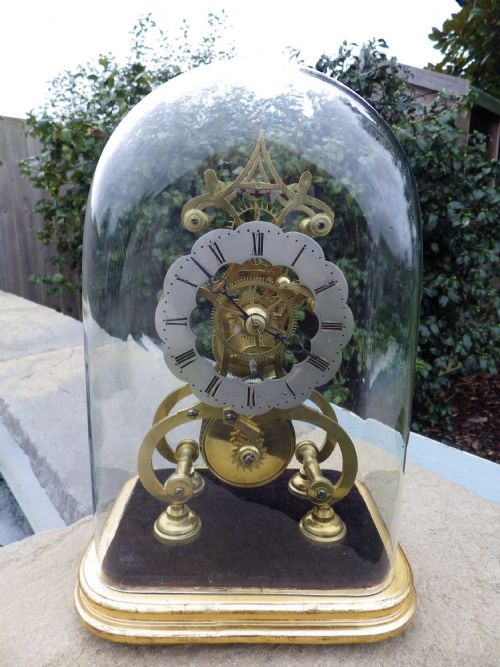
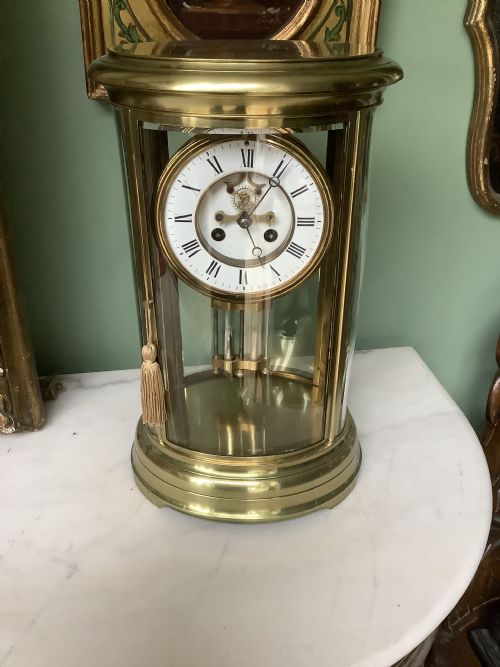
A victorian mechanical clockwork clock encompasses several distinct forms designed for desks, walls and mantelpieces during the nineteenth century. The selection ranges from portable carriage clocks housed in brass and glass cases to wall-mounted fusee dial clocks and elaborate skeleton clocks under glass domes.
Mantel clocks and bracket clocks in mahogany, walnut and gilt brass dominate the domestic styles of the period. More unusual domestic pieces such as automaton and picture clock examples also appear, reflecting the mechanical experimentation of the era.
How they were made
Makers constructed these clocks using durable brass movements fitted within cases of mahogany, walnut, gilt brass and iron. Glass domes frequently protected delicate skeleton movements, while enamelled dials provided clear visual contrast for the time markers.
Workshops employed fusee movements and striking mechanisms to regulate the gear trains, driven by coiled springs or weights. Engraving upon brass cases and skeleton wheel work added ornamental detail to the functional mechanical architecture.
Listings feature movements housed in glass, brass, mahogany, walnut and iron across nineteenth-century domestic forms.
What varies in quality
Quality rests upon the complexity of the movement and the finish of the internal gear work, such as six-spoke wheel designs or quarter-striking capabilities. Giant or miniature proportions and heavy engraved brass cases distinguish superior workshop output from standard production.
The choice of case material and housing also defines the tier of the piece, moving from standard wood dials to polished mahogany bracket cases and heavy four-glass enclosures. Signed movements by known makers elevate the standing of an individual clock.
German H.A.C.·Goldsmiths Alliance Ltd·Delépine-Barrois·Rudge Swindon·Piggin Norwich·Baveux Jacot·James Grohé
The Victorian Mechanical Clockwork Clock Glossary
- Fusee
- A conical pulley used on the mainspring of a clock to ensure even tension as the spring unwinds. This mechanism maintains consistent force on the gear train for accurate timekeeping.
- Skeleton clock
- A clock with an exposed gear train stripped of unnecessary dial plates and case sides. It allows a clear view of the mechanical movement from all angles, frequently displayed beneath a glass dome.
- Carriage clock
- A small, portable spring-driven clock developed for travelling during the nineteenth century. These pieces typically feature a brass and glass case with a folding handle on top.
- Bracket clock
- A portable domestic clock traditionally designed to sit on a bracket or shelf. Victorian examples often utilise rich woods like mahogany and walnut for their architectural cases.
- Automaton
- A mechanical device that imitates human or animal actions. In clockwork pieces, these mechanical figures move in time with the striking of the hours.
Victorian Mechanical Clockwork Clock: Frequently Asked Questions
How do I wind a mechanical clock?
Winding requires inserting a dedicated key into the winding squares on the dial or movement backplate and turning gently until resistance is felt. Care must be taken not to overwind the mainspring.
Most nineteenth-century movements require winding at regular intervals, typically daily, weekly or across a fourteen-day cycle depending on the specific gear train configuration.
What is a fusee movement?
A fusee is a conical pulley connected to the mainspring by a fine chain or cord. As the spring loses tension, the chain moves to a wider part of the cone to maintain steady power.
This clever mechanical device compensates for the dropping torque of the unwinding spring, ensuring the clock maintains consistent timekeeping right up until the next wind.
How do I identify the period of a clock?
Dating relies on stylistic clues within the case design, such as Victorian Gothic architectural motifs, mahogany bracket forms or heavy brass four-glass enclosures. Signatures on the dial or movement provide direct evidence of the maker and active working dates.
Material choices, including walnut veneers and enamelled chapter rings, further anchor these mechanical objects within the nineteenth-century timeline.