



Carved Wood Mantle Clock
These carved wood mantle clock pieces bring together nineteenth-century craftsmanship and practical timekeeping, offering both decorative presence and mechanical interest.

Carved Wood Mantle Clock
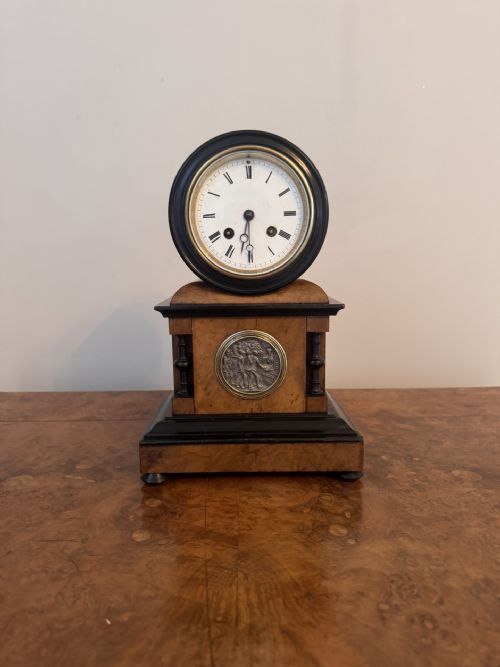
A carved wood mantle clock sits upon a shelf or table, serving both a domestic purpose and acting as a sculptural object within a room. When you search for a carved wood mantle clock, you encounter items predominantly from the Victorian and Regency periods, spanning the nineteenth century.
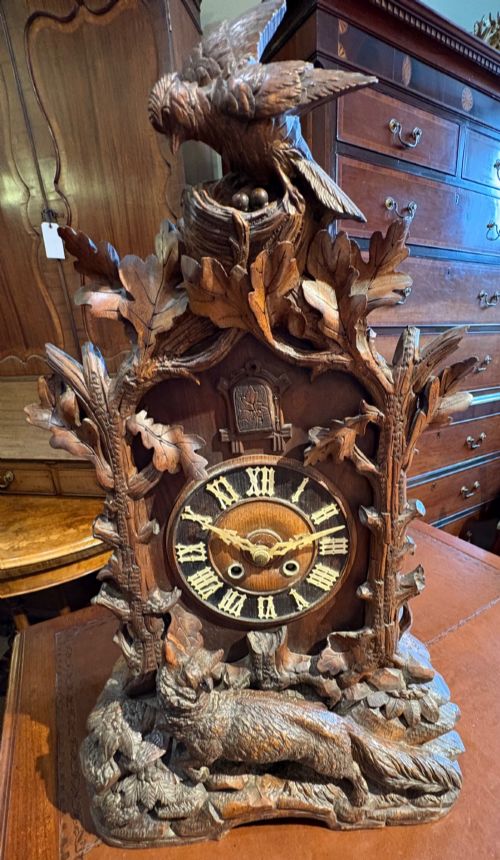
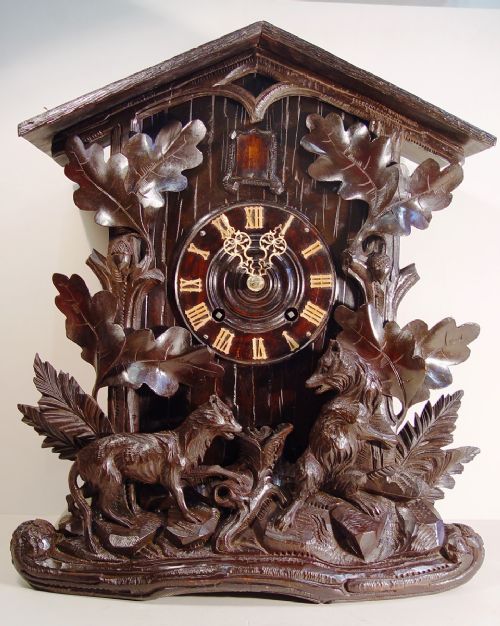
The selection ranges from robust Black Forest designs featuring naturalistic carvings to formal mahogany and walnut bracket clocks. These timepieces originate from English workshops as well as continental makers.
Mahogany, burr walnut, and ebonised wood form the primary housings for these clocks, often complemented by brass details and white enamel dials. Many examples incorporate intricate hand-carved motifs that define their distinct regional styles.
How they were made
Cabinetmakers constructed the wooden cases using solid timbers like mahogany and walnut, frequently selecting burr veneers to create striking surface patterns. Carvers shaped the intricate foliage, animals, and architectural details entirely by hand.
Makers housed mechanical movements within these wooden enclosures, utilising brass gears and fusee or spring-driven mechanisms to regulate time accurately. Enamel dials were painted and fired, then fitted behind glass doors or bezels.
Several examples incorporate Black Forest cuckoo clock movements housed within intricately carved wooden cases.
What varies in quality
The distinction between ordinary and exceptional pieces lies in the crispness of the wood carving and the quality of the timber selection. Finer examples display deeply undercut foliage and balanced proportions rather than flat or hasty chisel work.
Movement complexity also separates standard items from superior ones, with twin fusee systems and signed movements by known makers representing higher standards of horological engineering.
Piggin Norwich·Edwards Of London·Beha
The Carved Wood Mantle Clock Glossary
- Bracket clock
- A portable table clock originally designed to sit on a wall bracket. They often feature arched wooden cases and intricate brass carrying handles.
- Fusee
- A conical pulley used in mechanical clocks to maintain even power as the mainspring unwinds. This mechanism improves timekeeping accuracy across the power reserve.
- Double fusee
- A movement possessing two separate fusee chains or cords, typically dividing the timekeeping train from the striking train. This setup allows for a more reliable and consistent chime.
- Ebonised wood
- Timber treated with a dark finish to imitate expensive ebony. Victorian cabinetmakers utilised this technique to create sharp contrast against brass dials.
Carved Wood Mantle Clock: Frequently Asked Questions
How do I wind a mechanical mantle clock?
Most nineteenth-century clocks require a key to tension the springs via winding arbors on the dial face. Care must be taken not to overwind the mechanism.
Consulting the specific movement type ensures you do not damage the fusee chain or mainspring during routine maintenance.
Where should I place a wooden mantle clock?
These clocks belong on stable, level surfaces such as mantelpieces, side tables, or bookshelves away from direct sunlight and drafts. A stable foundation helps keep the pendulum swinging evenly.
Placing them securely prevents accidental knocks that could disturb the delicate internal gear train.
How do I identify the period of a clock?
Cabinet styles, wood choices, and dial construction offer the clearest indicators of age. Regency pieces often feature clean architectural lines, while Victorian examples tend toward heavier carving and gothic influences.
Signatures on the dial or movement backplate also help date the piece accurately.
What maintenance do these clocks need?
Periodic professional cleaning and oiling keep the brass gears and pivots functioning smoothly over decades. Dust accumulation inside the wooden case should be minimised carefully.
Keeping the clock running regularly prevents the lubricants from gumming up within the movement.