

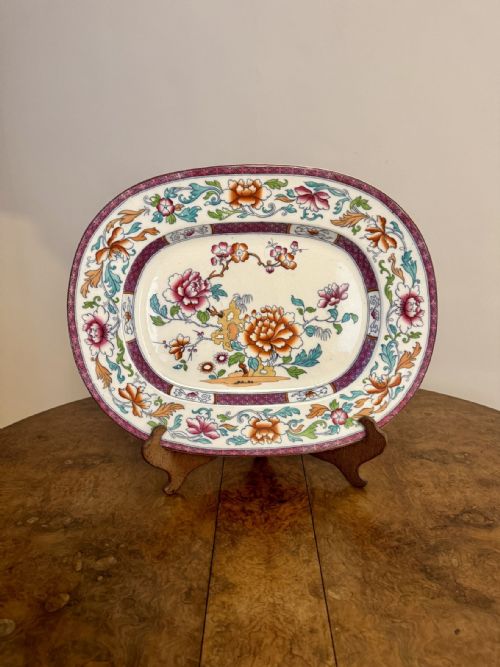

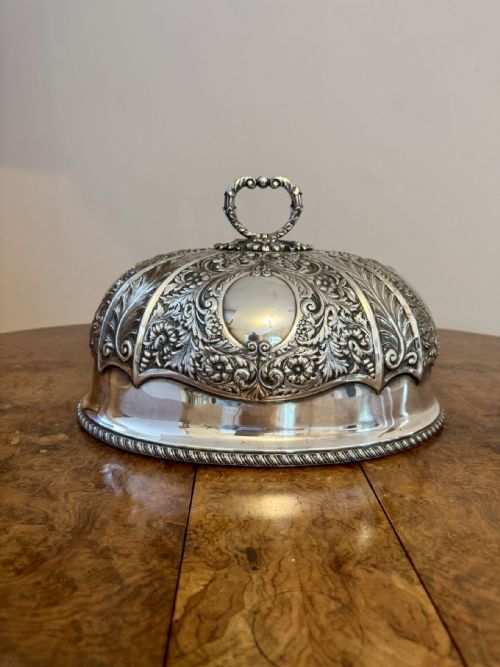


Victorian Meat Platter Dish
A victorian meat platter dish brings scale and heritage to the table, handling everything from a family roast to a grand display.
Victorian Meat Platter Dish
When you search for a victorian meat platter dish, you encounter large serving vessels designed to present joints of meat at the dining table. These pieces emerge in substantial proportions, often featuring wells and trees or draining trays to capture juices.
The most common examples on this page are earthenware, ironstone, and ceramic platters decorated in blue and white transfer print. Alongside pottery, you find silver plated meat covers, domes, and warming trays designed to keep food hot.
The assortment spans the nineteenth century, taking in Regency, early Victorian, and Edwardian periods. Alongside standard platters, the selection includes specialist forms like mazarines, strainers, and game plates.
Materials and production
Potters shaped earthenware, ironstone, and pearlware, applying glaze and transfer print patterns such as Chinoiserie, Imari, and scenic views. Copeland and Garrett, Minton, and Mason's utilised these ceramic techniques to produce durable servingware.
Metalworkers employed silver plate, EPNS, and Old Sheffield Plate over base metals to create heavy meat covers, domes, and warming dishes. These metal pieces often incorporated gold leaf details or detailed engraving.
Victorian Meat Platter Dish Retail Price Guide 2026
Typical asking prices for victorian meat platter dish among the pieces listed under this phrase on Sellingantiques today, from the lower quarter to the upper quarter. They describe what is for sale here now, not the wider market.
Listings feature ceramics and silver plate spanning the nineteenth century, including blue and white transferware, ironstone, and pearlware.
Judging quality in meat platters
Quality rests on the crispness of the transfer print and the weight of the ceramic body or metal plate. Substantial ironstone and thick silver plating indicate higher manufacture standards.
The presence of specialised components like strainers, mazarines, and wells distinguishes utilitarian vessels from superior display pieces. Maker marks from established potteries add distinction to the ceramic examples.
Copeland and Garrett·Minton·Elkington·Staffordshire·Elkin Knight and Bridgwood·Mason
The Victorian Meat Platter Dish Glossary
- Transferware
- Earthenware or ironstone decorated by pressing a design from an engraved copper plate onto tissue paper, which was then transferred onto the ceramic body before glazing. This technique allowed intricate blue and white patterns to be produced in large quantities.
- Ironstone
- A heavy, durable type of ceramic patented in the nineteenth century to imitate Chinese porcelain. It resists chipping and staining much better than standard earthenware.
- Mazarine
- A pierced ceramic or metal insert placed inside a platter to drain juices away from the meat. It lifts the joint above the pooling liquid.
- Well and tree
- A platter featuring a recessed channel system around a sloped centre that drains meat juices into a small well. This design keeps the meat resting dry.
- Old Sheffield Plate
- An early form of silver plating created by fusing a sheet of silver to a copper ingot. This method produced durable wares with a rich lustre.
Victorian Meat Platter Dish: Frequently Asked Questions
What is a well and tree platter?
A well and tree platter is a large serving dish featuring carved channels and a central well designed to catch meat juices.
This system kept the carved meat elevated and dry during grand Victorian dinners.
How do I care for antique ceramic platters?
Antique ceramic platters require careful hand washing in warm water using mild soap. Avoid dishwashers and harsh scrubbers to protect the historic glaze and transfer print.
Store them securely on their edges using proper plate stands or flat with protective padding between stacked pieces.
What is the difference between ironstone and earthenware?
Ironstone is a denser, heavier, and more durable ceramic body developed to withstand heavy daily use. Earthenware is softer and more porous by comparison.
Both materials carried the popular blue and white transfer prints seen throughout the nineteenth century.
How were silver plated meat covers used?
Silver plated meat covers were placed directly over the large roast sitting on the platter. They trapped the heat and kept the food warm between the kitchen and the dining table.
Servants lifted the heavy domes at the table just before carving.