
Victorian Marquetry Side Cabinet
When you search for a Victorian marquetry side cabinet, you enter a world of figured timber and precise floral inlay designed to anchor a formal interior.

Victorian Marquetry Side Cabinet
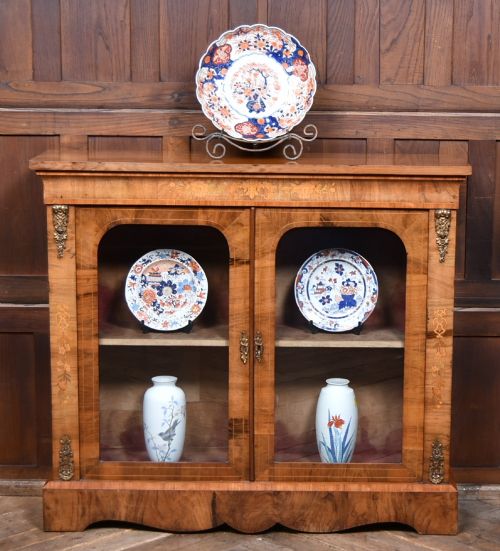
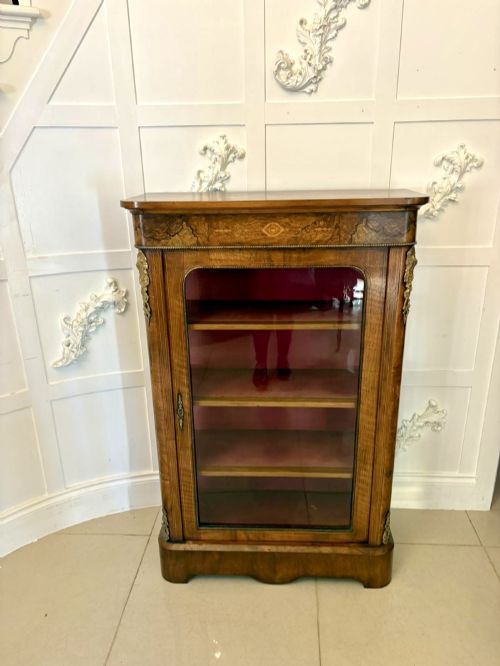
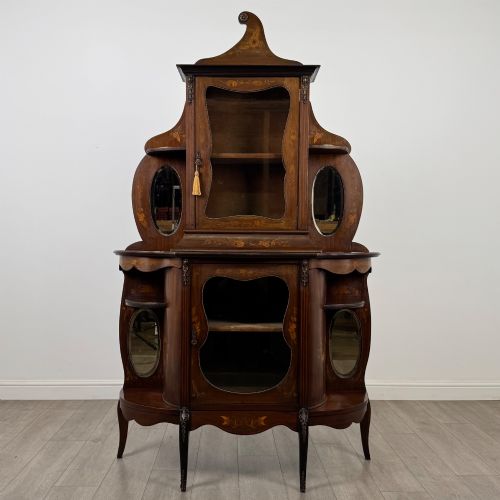
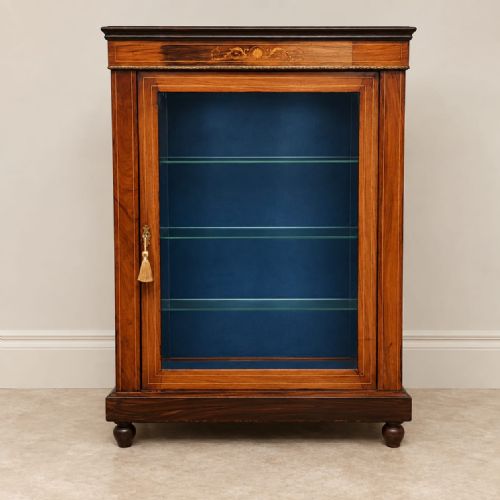
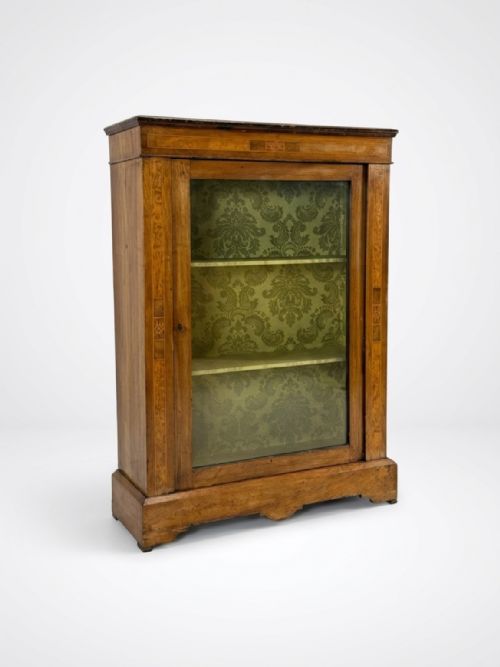
A victorian marquetry side cabinet encompasses a variety of timber furniture built to display and store possessions in nineteenth-century drawing rooms and parlours. The most common form met on this page is the pier cabinet, designed to sit against the wall between windows, alongside broader credenzas and glazed display cabinets.
These pieces emerge from nineteenth-century workshops utilising revivalist idioms such as French Louis styles, the Aesthetic Movement, and Sheraton Revival. Makers combined glass panels, brass or ormolu mounts, and tiered shelving with enclosed cupboards to create functional centrepieces for Victorian homes.
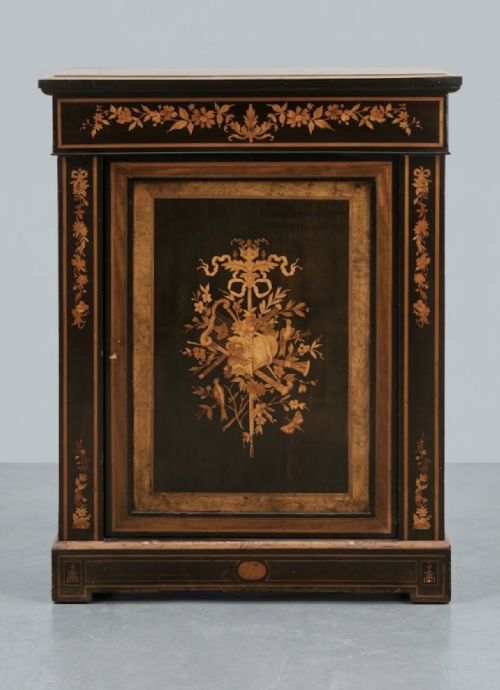
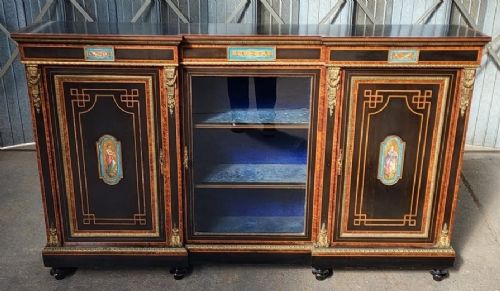
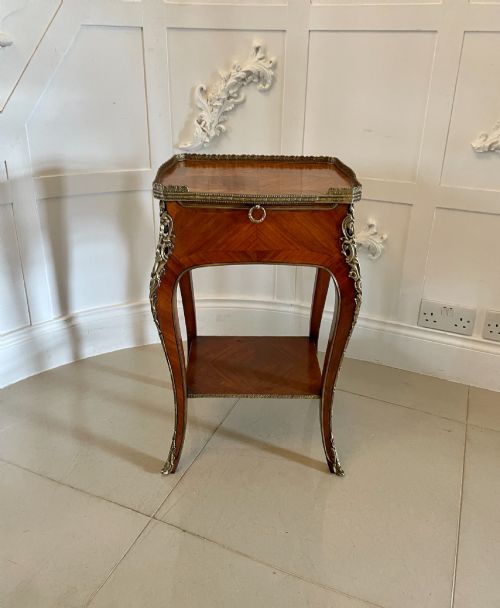
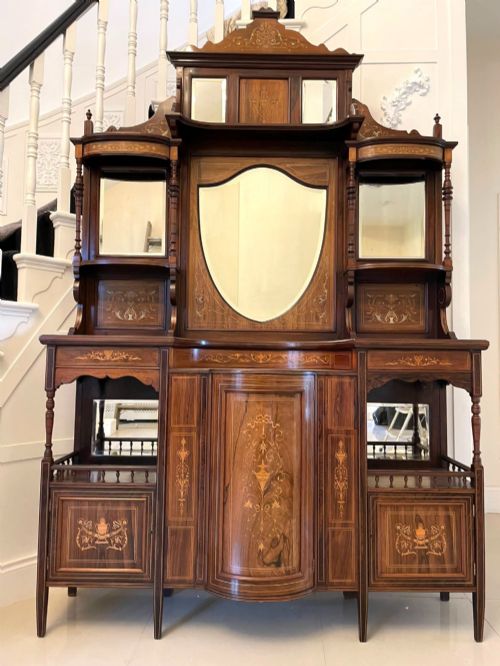
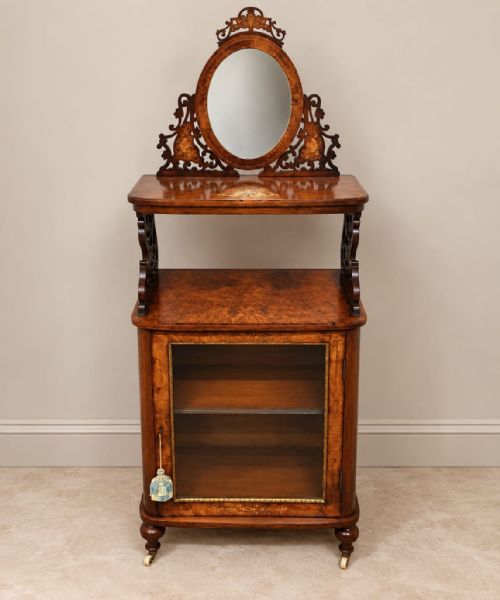
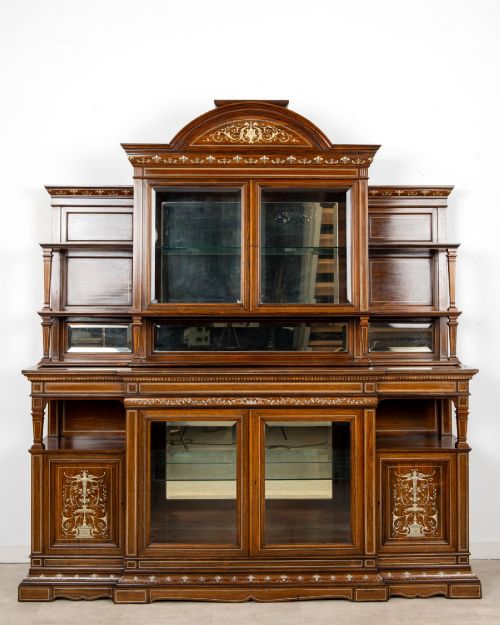
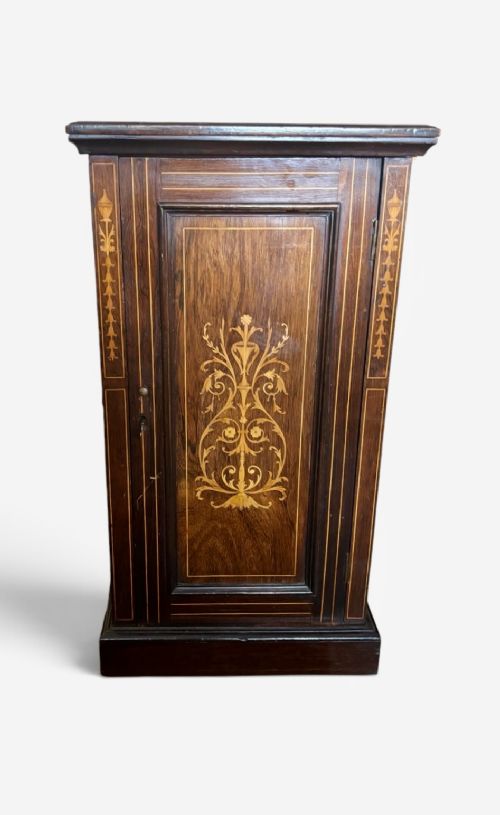
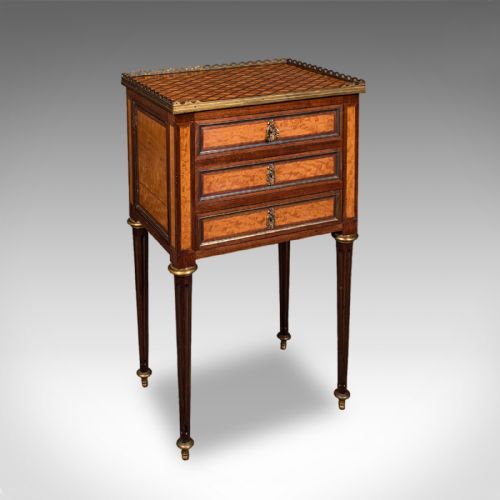
The selection ranges from compact bedside cabinets to large three-door credenzas fitted with porcelain plaques and mirrored backs. Walnut, burr walnut, rosewood, and mahogany provide the primary carcases, finished with intricate marquetry panels depicting flowers, urns, and scrolling foliage.
Materials and Technique
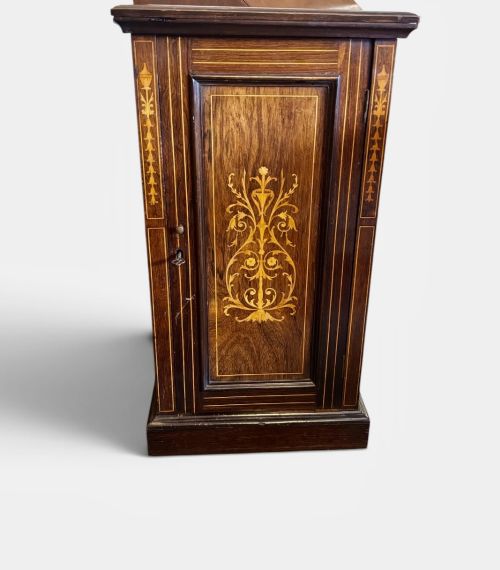
Cabinet makers constructed the carcases from dense hardwoods like mahogany and walnut, frequently applying highly figured burr walnut or rosewood veneers to the exterior surfaces. Boxwood, satinwood, and various tinted veneers were then hand-cut to form intricate marquetry scrolls and floral motifs set flush into the timber ground.
Gilt bronze, brass, and ormolu mounts were cast and chased to edge doors, frame porcelain plaques, and cap the corners and feet of grander examples. Glass panes were fitted into framed doors to create vitrines for the display of ceramics and curiosities.
Listings feature walnut, rosewood, and mahogany cabinets decorated with boxwood inlay, ormolu mounts, and porcelain plaques across the Victorian era.
Judging Quality
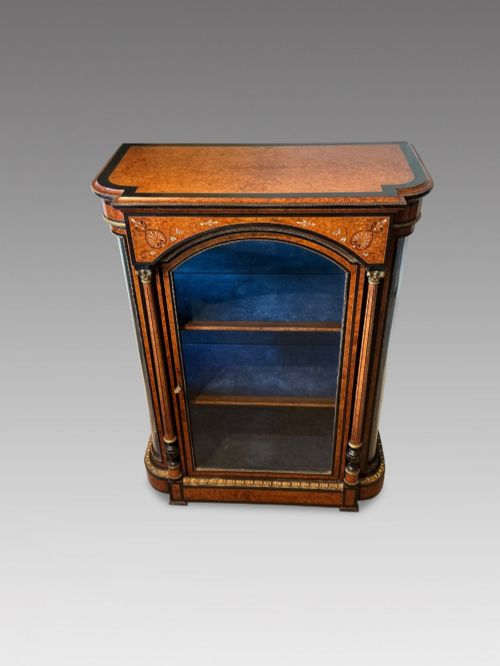
The distinction between ordinary production and superior work rests on the depth of figure in the timber veneers and the precision of the marquetry cutter's hand. Finer pieces demonstrate tight, symmetrical burr walnut figuring across wide expanses and seamless joins in multi-toned floral inlays without visible filler.
Hardware and secondary mounts also separate tiers of production, where heavy, finely chased ormolu and substantial cast brass handles indicate workshop ambition. The integration of painted porcelain plaques, glazed side returns, and secondary timbers like oak for drawer linings further signal a higher grade of manufacture.
Collinson and Lock·Gillows·Lamb of Manchester·Edward Holmes Baldock·Maple and Co
The Victorian Marquetry Side Cabinet Glossary
- Marquetry
- Decorative patterns formed by fitting contrasting veneers into a prepared wood ground. This technique creates detailed pictorial scenes or floral motifs across cabinet doors and friezes.
- Credenza
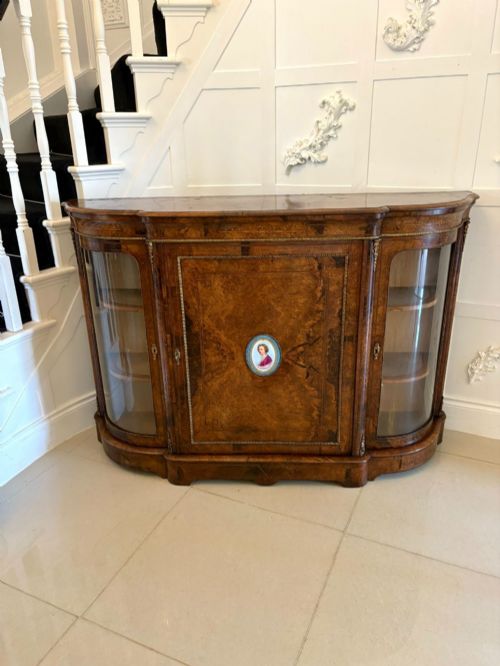
- A grand freestanding cabinet featuring central cupboards flanked by curved glass display doors. These pieces often incorporate gilt bronze mounts and porcelain plaques.
- Ormolu
- Gilt bronze mounts applied to the corners, feet, and friezes of furniture. The finish adds architectural definition and metallic contrast to dark wood carcases.
- Burr Walnut
- Timber taken from the gnarled growths of walnut trees, yielding highly swirled and mottled grain patterns. It was sliced into thin veneers for high-status cabinet fronts.
- Pier Cabinet
- A narrow, flat-backed cabinet built to stand against the wall space between windows. These are typically glazed to display porcelain and small collections.
Victorian Marquetry Side Cabinet: Frequently Asked Questions
What is a credenza?
A credenza is a low, wide cabinet featuring a central cupboard enclosed by doors, frequently flanked by curved glass display sections on either side. These large pieces were designed for formal entertaining and display in Victorian dining rooms.
Cabinet makers often decorated them with elaborate floral marquetry, gilt metal mounts, and hand-painted porcelain plaques set into the burr walnut or rosewood framework.
How do I style a side cabinet?
A side cabinet works well against an empty wall in a living room, hallway, or dining space where its figured timber and inlaid panels can be appreciated. The top surface provides an ideal stage for a pair of candlesticks, a small clock, or a collection of glassware.
Inside the glazed or open shelving, you can exhibit ceramics, books, or curiosities, echoing the original domestic function of nineteenth-century display furniture.
What is burr walnut?
Burr walnut is a decorative wood veneer sourced from the irregular excrescences found on walnut trees. The grain forms swirling, eye-like patterns that catch the light and offer immense visual texture to cabinet doors.
Victorian makers prized this timber for high-end credenzas and pier cabinets, pairing the wild figuring with restrained boxwood and satinwood marquetry borders.