




Victorian Marine Landscape
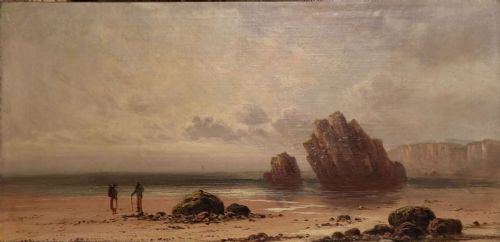
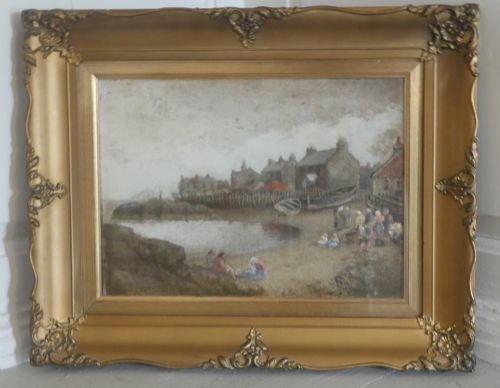
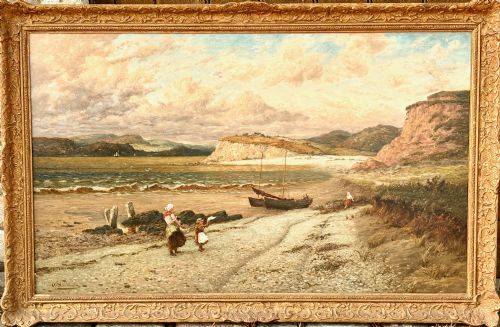
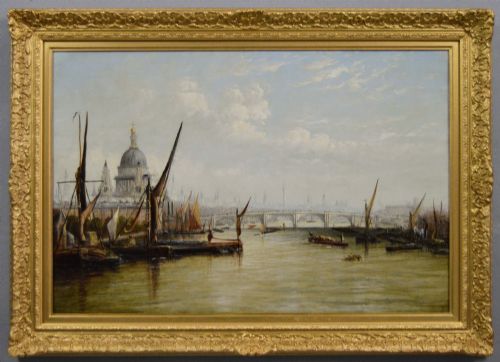
A victorian marine landscape captures the drama of nineteenth-century coastal life, combining rolling seas, bustling harbours and skies rendered in oil or watercolour.
Victorian Marine Landscape
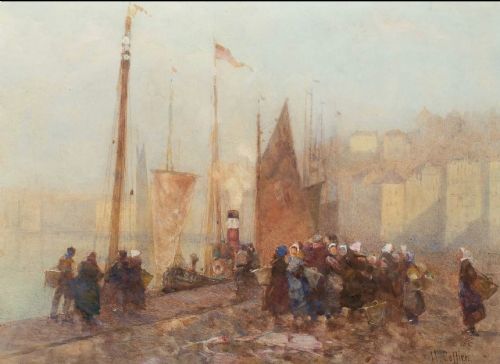
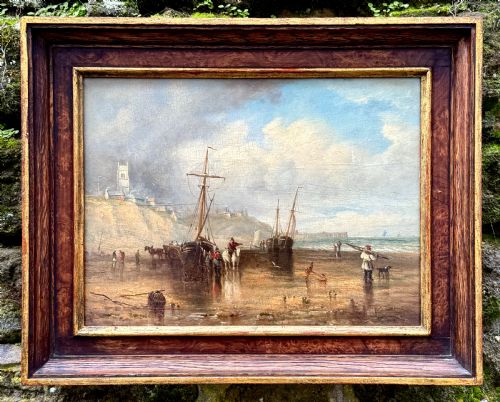
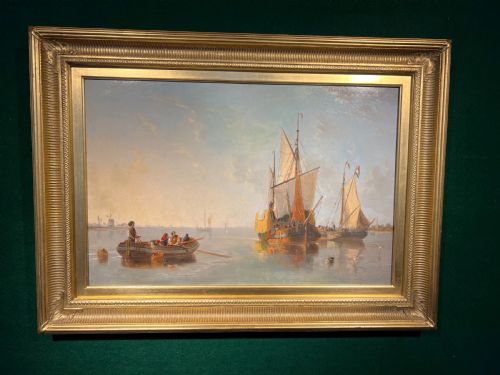
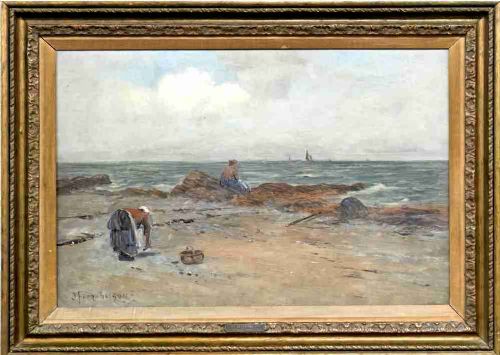
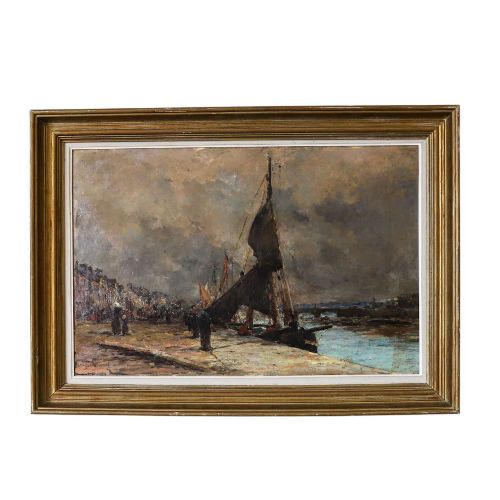
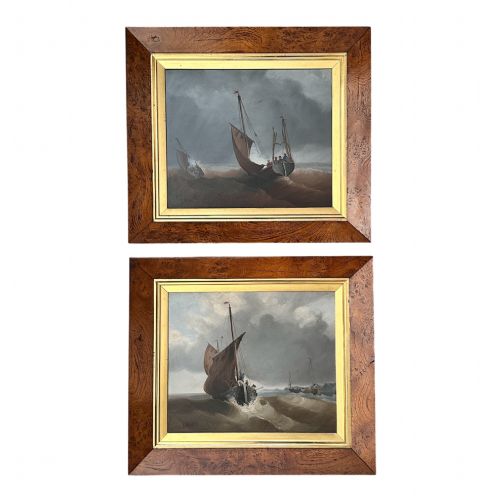
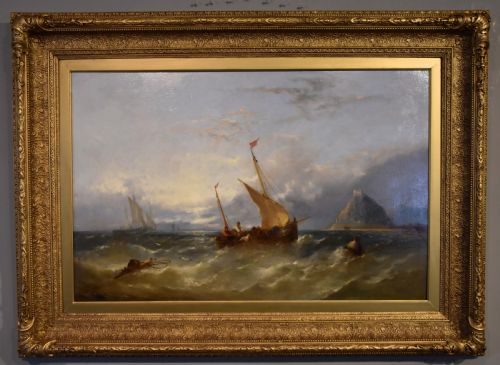
A victorian marine landscape brings nineteenth-century coastal and maritime scenes into the room, ranging from quiet shorelines to stormy seas. These works focus heavily on fishing boats, harbours, and tidal rivers captured during the height of the Victorian era.
Buyers will most frequently encounter framed watercolours and oil paintings on canvas or board dating from the mid-nineteenth century to around nineteen hundred. Common subjects include specific British coastal towns, estuaries, and shipping vessels recorded with careful topographical detail.
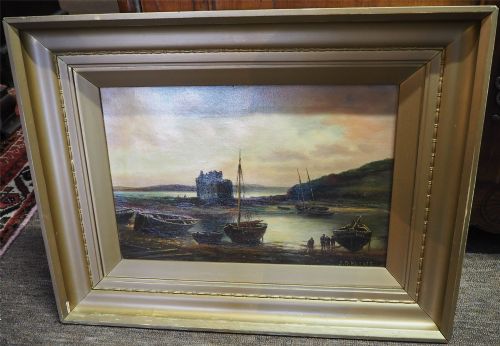
The regional variety is wide, spanning English fishing ports, Scottish castles, and Welsh cliffs, alongside occasional continental harbour views. These paintings record both the working life of the coast and the growing nineteenth-century fascination with seaside leisure.
Materials and technique
Artists relied primarily on oil paint applied to canvas or wood board, or watercolour pigments worked onto heavy paper. Oil paintings often utilised thick brushwork to suggest crashing waves and stormy skies, while watercolours favoured transparent washes to capture coastal light and atmospheric haze.
Frames played an essential role, with many surviving works housed in period gilt wood frames that complement the depth of the painting. The combination of durable canvas supports and protective glass for works on paper ensured these coastal scenes survived well over a century.
Several artists captured the exact moment a fishing boat hauled its catch ashore beneath crumbling castle ruins.
Evaluating quality
Quality in a victorian marine landscape rests upon the artist's command of light, atmosphere, and maritime architecture. Superior works demonstrate precise rigging on vessels and convincing movement in water, whereas weaker examples can feel stiff or formulaic in their composition.
The handling of the atmosphere distinguishes fine works from ordinary decorative pieces, particularly how the artist manages coastal mist, cloud formations, and the reflection of light on the sea. Original matching gilt frames and clear signatures or historical provenance also elevate the standing of a painting.
Edward Mills·Francis Moltino·Hector Caffier·Thomas Creswick·John Wilson Carmichael·Joseph Farquharson·John Moore of Ipswich·William Henry Williamson·John Holland·George Stanfield Walters·Henry Barlow Carter·John Moxon·William Frederick Settle·Alfred George Morgan·Charles William Wyllie·John Bedloe Goddard·Charles William Adderton·William Edward Webb·Gustave De Bréanski·Thomas Bush Hardy·Stanley Leader·F J Aldridge·William Greaves·John McDougal·Charles Sim Mottram
The Victorian Marine Landscape Glossary
- Seascape
- A work of art depicting the sea, coastal views, or maritime activity. These differ from inland landscapes by placing the water and weather conditions as the central focus.
- Impressionism
- A style of painting focused on capturing the visual impression of the moment, particularly shifting light and colour. In nineteenth-century British art, this approach influenced how water and sky were rendered.
- Gilt Wood
- Wood carved and covered with a thin layer of gold leaf or gilt paint. Period frames utilise this finish to enhance the visual weight of oil paintings.
- Provenance
- The documented history of ownership of an artwork. Clear provenance helps verify the attribution and age of nineteenth-century paintings.
- Topography
- The detailed mapping or description of specific real-world locations. Many Victorian marine works accurately record the layout of identifiable harbours and cliffs.
Victorian Marine Landscape: Frequently Asked Questions
What subjects appear in these paintings?
These works typically show fishing boats, bustling harbours, merchant shipping, and rugged coastal cliffs. Artists often recorded specific British ports, river estuaries, and tidal scenes.
Some compositions focus on the drama of shipwrecks or rescue boats at high tide, while others present calm coastal waters with leisure craft and distant towns.
How do I know if a painting is Victorian?
Clues lie in the clothing of figures on the shore, the type of sailing vessels depicted, and the framing style. Nineteenth-century riggings and steam-sail hybrids offer strong chronological markers.
Signatures, exhibition labels on the reverse, and period gilt wood frames also help confirm the era in which the artwork was produced.
Are watercolours as durable as oils?
Watercolours require protection behind glass to prevent moisture damage and fading from direct sunlight. When kept away from damp conditions, paper supports remain remarkably stable over generations.
Oil paintings on canvas or board are generally more robust against environmental changes but still benefit from stable indoor humidity and gentle cleaning.
Where should I hang a marine painting?
Display these works away from direct sunlight, open fires, and damp exterior walls to protect the canvas, paper, and gilt frame. Adequate wall space allows the often substantial period frames to sit comfortably.
Rooms with good natural light work well, provided the placement avoids harsh ultraviolet rays that can degrade watercolour pigments and varnishes over time.