




Victorian Mahogany Whatnot
When you search for a victorian mahogany whatnot, you are looking at tiered display furniture designed to hold books, ceramics and decorative objects.
Victorian Mahogany Whatnot
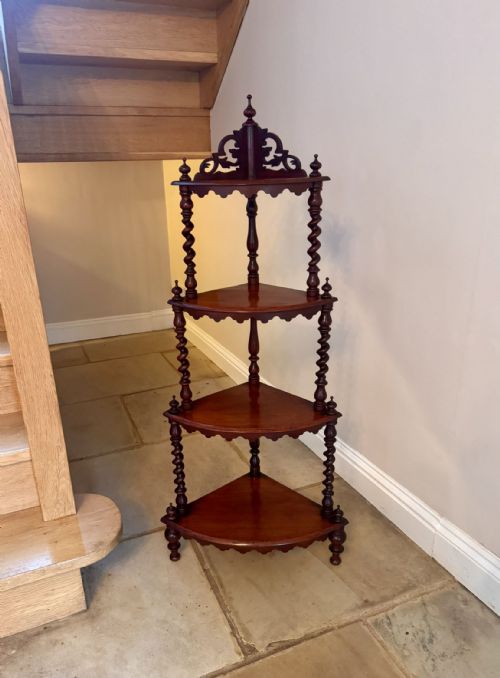
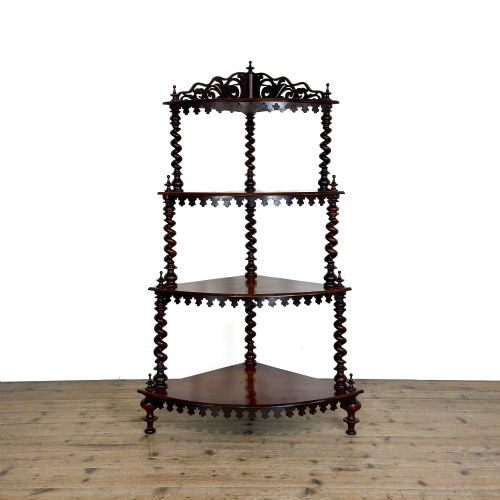
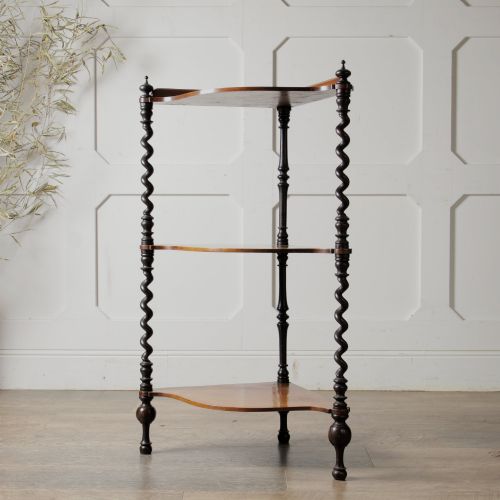
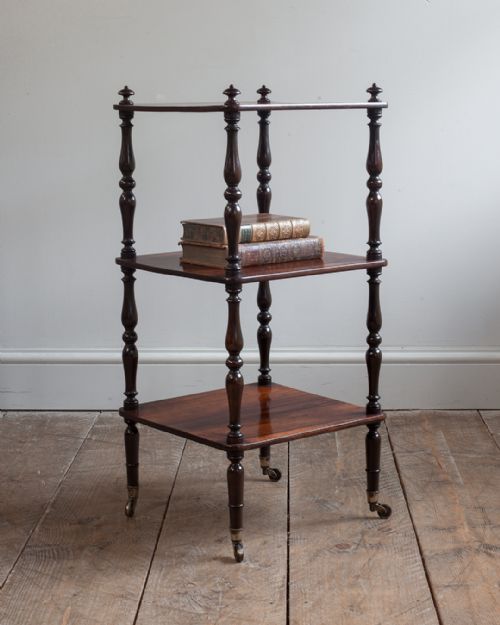
A victorian mahogany whatnot is an open-shelved tiered stand designed for displaying ornamental objects, books and small domestic items in nineteenth-century drawing rooms. These pieces appear most frequently as freestanding structures with three to five graduated shelves supported by turned columns, corner posts or barley twist uprights.
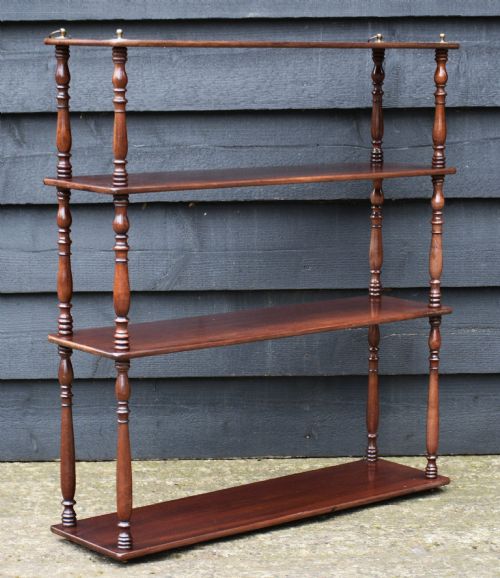
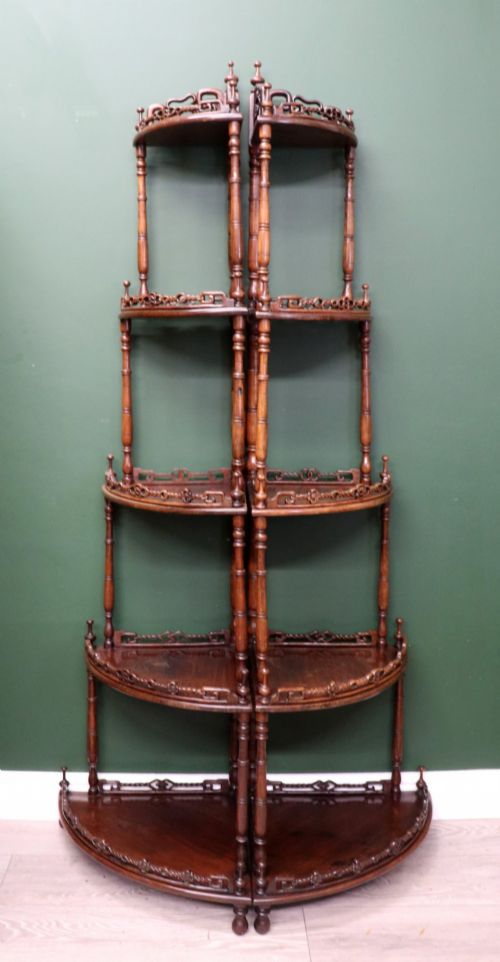
The form evolved during the nineteenth century to include variants such as corner units, wall-mounted shelves, and pieces combined with cupboards, drawers, mirrors or lower cellarettes. While many examples originate from the Victorian period, the records also capture earlier William IV and Regency influences alongside related terms like etageres and display stands.
Materials and construction
Cabinetmakers utilised solid and veneered mahogany for the structural framing and shelves, frequently selecting timber with deep grain patterns or golden tones. Supporting elements often featured turned woodwork, including elaborate barley twist uprights and delicate spindle galleries.
Secondary materials integrated into the construction include brass for castors and mounts, glass for enclosed doors, velvet linings, and occasional boxwood or marquetry inlay. Some advanced forms incorporated carved mirror backs and lower cabinet bases fitted with doors or drawers.
Victorian Mahogany Whatnot Retail Price Guide 2026
Typical asking prices for victorian mahogany whatnot among the pieces listed under this phrase on Sellingantiques today, from the lower quarter to the upper quarter. They describe what is for sale here now, not the wider market.
Listings demonstrate that mahogany remains the dominant wood, accompanied by rosewood, walnut, and ebonised finishes across nineteenth-century periods.
Factors of quality
Quality in a victorian mahogany whatnot is determined by the selection of the timber, the crispness of the turning on the upright columns, and the structural integrity of the tiered platforms. Superior examples display dense, well-figured mahogany grain, balanced proportions across multiple tiers, and robust joinery that supports weight without deflection.
The presence of secondary functional elements, such as fitted drawers, integrated mirrors, or lower cupboards with panelled doors, elevates the execution. Simpler two-tier or three-tier open shelves rely entirely on clean lines, precise woodwork, and original brass fittings to distinguish themselves from basic utility items.

The Victorian Mahogany Whatnot Glossary
- Whatnot
- A piece of furniture consisting of a set of open shelves for displaying small objects. This form became popular in British homes during the nineteenth century.
- Etagere
- A piece of furniture with a set of open shelves for displaying ornaments. The term is often used interchangeably with whatnot in the trade.
- Barley twist
- A type of decorative turning resembling a twisted rope. This technique frequently appears on the vertical supports of nineteenth-century stands.
- Cellarette
- A cabinet or container used for holding bottles. Some larger tiered units incorporate this compartment in the base.
Victorian Mahogany Whatnot: Frequently Asked Questions
What was a whatnot used for originally?
A whatnot served as an open display piece in Victorian sitting rooms and parlours for holding decorative ceramics, books, and small ornamental items. The multiple tiers allowed homeowners to exhibit various decorative objects within a compact footprint.
Over time, specialised versions evolved to include compartments for sheet music, lower cupboards for storage, or mirrored backs to reflect light and enhance the displayed items.
How many tiers do these stands usually have?
Most examples feature between three and five shelves, with four-tier configurations appearing most frequently across the record. The shelves typically graduate in size, with the deepest platform at the bottom and narrower surfaces towards the top.
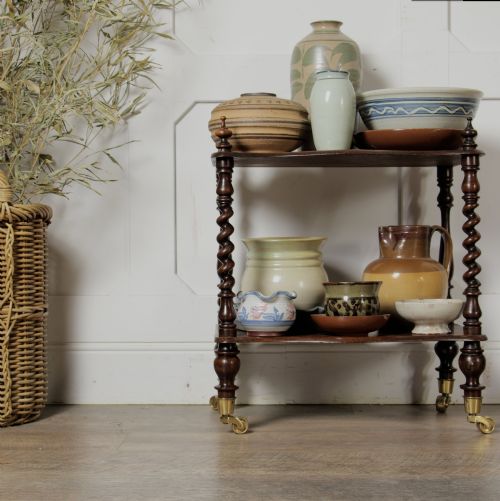
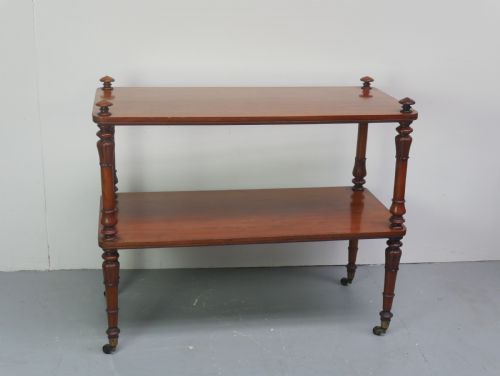
Heights vary accordingly, ranging from low corner units and two-tier bedside tables to tall five-tier freestanding towers supported by turned columns or barley twist posts.
How do I style a whatnot in a modern room?
Place a freestanding or corner unit against a sturdy wall in a living room, hallway, or study where the open shelves can hold books, framed photographs, or ceramics. The open structure keeps the floor plan feeling light while providing vertical display space.
Ensure heavier items rest on the lowest shelf to maintain physical stability, reserving the upper tiers for lighter decorative objects and trailing plants.
What is the difference between a whatnot and an etagere?
In British antique terminology, both words describe tiered shelving units designed for display, though etagere often leans towards lighter, French-influenced decorative stands. A whatnot frequently serves as the broader local descriptor for nineteenth-century open shelving.
Both forms utilise multiple stacked platforms held together by vertical supports, varying mainly in regional naming conventions and decorative detailing rather than core function.