



Victorian Mahogany Serving Tray
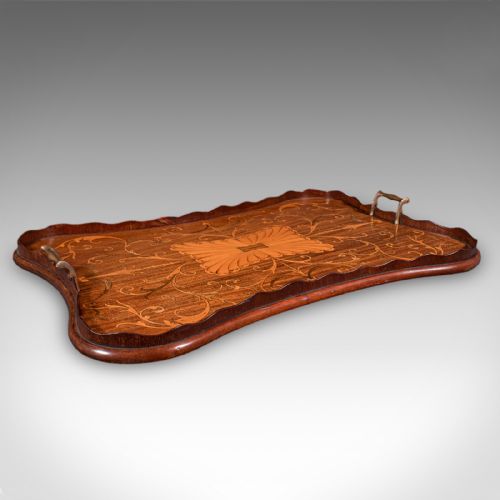
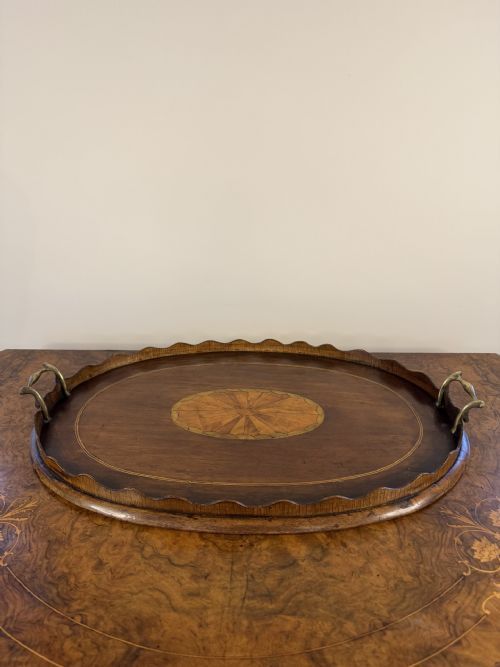
A victorian mahogany serving tray is a practical piece for afternoon tea or drinks, combining sturdy timber with refined oval or galleried forms.
Victorian Mahogany Serving Tray
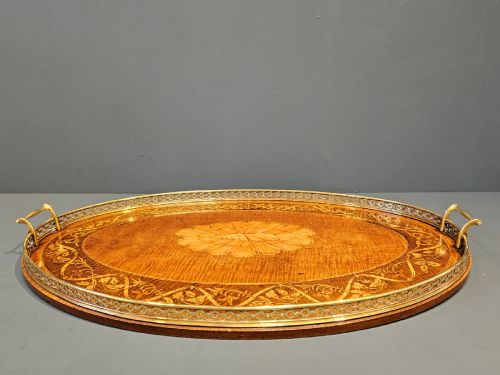
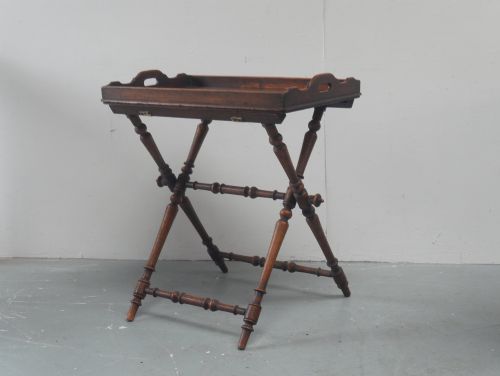
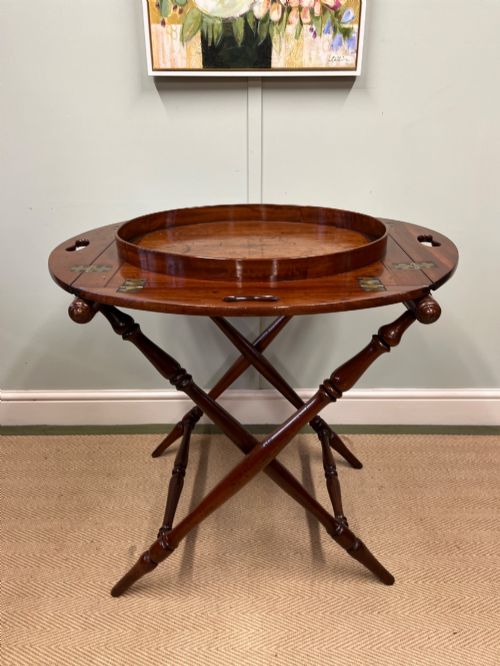
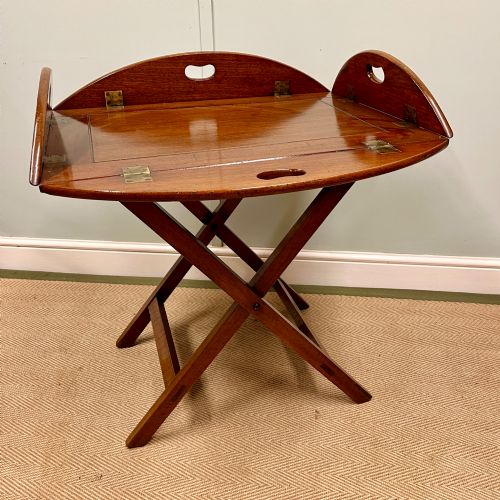
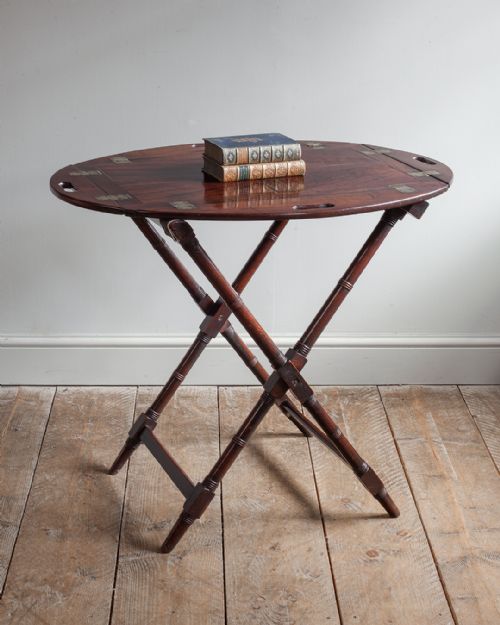
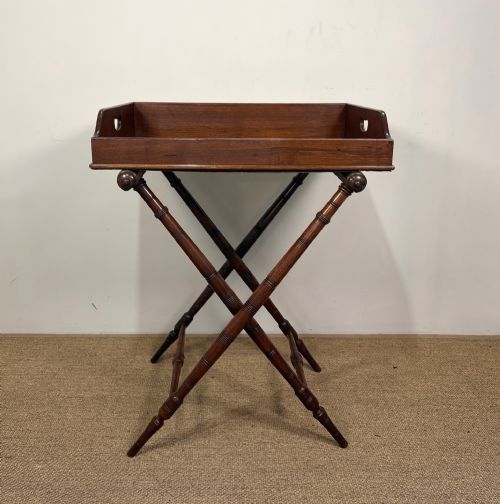
A victorian mahogany serving tray brings traditional English hospitality directly into a modern room, often appearing as an oval tea tray or a folding butler tray on a stand. These pieces date principally from the nineteenth century, reflecting an era when household entertaining required dedicated portable serving surfaces.
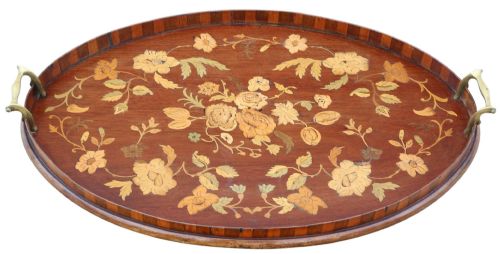
Buyers meet various configurations on this page, ranging from kidney-shaped inlaid platters to large trays paired with collapsible stands. The inventory spans straightforward domestic timber items alongside more decorative examples featuring satinwood inlay and scalloped edging.
How They Were Made
Craftsmen built these items primarily using solid mahogany, frequently pairing the rich dark timber with contrasting satinwood inlay or marquetry details. Brass handles and silver plate additions also appear to provide structural reinforcement and grip.
Associated stands utilise oak and webbing to support the folding frames, ensuring the furniture remained portable for garden parties and afternoon teas.
Listings feature items spanning the nineteenth century, including pieces dated specifically to 1850, 1860, 1870, 1880, 1900, and 1920 alongside general Victorian and Edwardian examples.
What Varies in Quality
Quality rests upon the precision of the cabinetwork, particularly where satinwood inlay meets the primary mahogany ground. Sharper execution in scalloped edges and galleried borders distinguishes finer workshops from standard utility items.
The sophistication of decorative details also dictates distinction, as seen in kidney-shaped profiles and the integration of substantial brass or silver mounts.
Maple & Co
The Victorian Mahogany Serving Tray Glossary
- Butler tray
- A portable wooden serving surface designed to lift off a folding X-frame stand. These pieces were historically carried by domestic staff to serve drinks or tea.
- Galleried tray
- A serving platter featuring a raised decorative rim or border around the perimeter. This edge prevents items from sliding off during transport.
- Inlay
- A decorative technique where contrasting woods such as satinwood are fitted flush into the mahogany surface. This creates intricate geometric or floral patterns.
- Kidney-shaped tray
- A serving tray curved inward on one side to sit comfortably against the body. This specific form typically incorporates fine inlay work.
- Dumb waiter
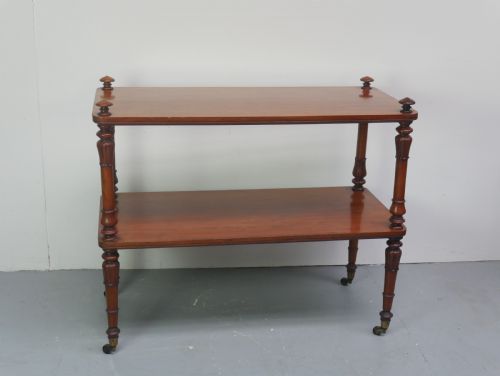
- A tiered freestanding stand or revolving server used to hold dishes during meals. These items share materials and periods with traditional serving trays.
Victorian Mahogany Serving Tray: Frequently Asked Questions
How do I use a folding butler tray?
Place the X-frame stand securely on the floor and rest the removable wooden tray directly on top. They function well as temporary side tables for drinks or afternoon tea.
Fold the stand flat and lift off the tray when you need to clear floor space or store the furniture away.
What is the difference between a tea tray and a butler tray?
Tea trays are generally designed for carrying handheld items and often feature inlaid decoration or galleried edges. Butler trays are typically heavier and intended to sit upon dedicated folding stands.
Both items utilise mahogany construction but serve slightly different roles in nineteenth-century entertaining.
Can these trays hold heavy items?
Solid mahogany construction provides natural strength and durability for carrying glassware, teapots, and silver platters. Trays supported by wooden stands offer extra stability for heavier loads.
Inspect the joints and handles to ensure the timber remains secure before placing substantial weight on the surface.
How do I clean and care for mahogany?
Dust the timber regularly with a dry soft cloth to protect the polished surface from grit and marks. Avoid placing wet cups directly onto the wood to prevent water rings.
Apply a traditional beeswax polish occasionally to nourish the mahogany grain and maintain the natural lustre.