



Galleried Wooden Tray
A galleried wooden tray is a practical serving piece bordered by a low raised rim, designed to carry items safely while displaying fine cabinetmaking.
Galleried Wooden Tray
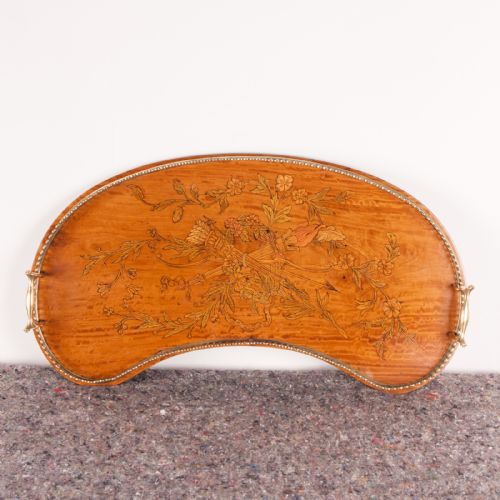
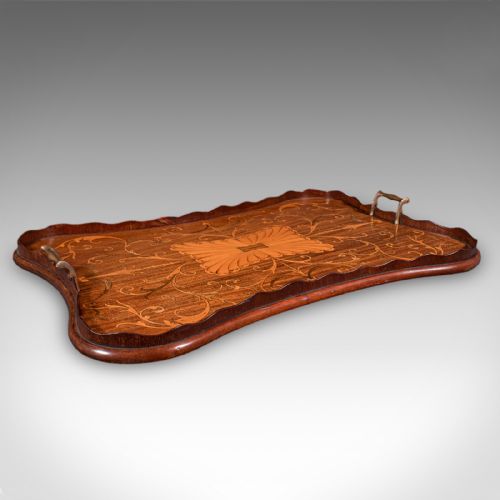
A galleried wooden tray offers a raised rim, or gallery, designed to keep glassware and decanters secure during service. The pieces found on this page span the Georgian, Victorian, and Edwardian periods, demonstrating how styles evolved over centuries of domestic use.
The materials recorded in these listings rely heavily on mahogany, satinwood, and various wood veneers, often accented by brass or silver-plated handles. Makers frequently shaped these trays into oval, kidney, or rectangular forms to suit tea service or general entertaining.
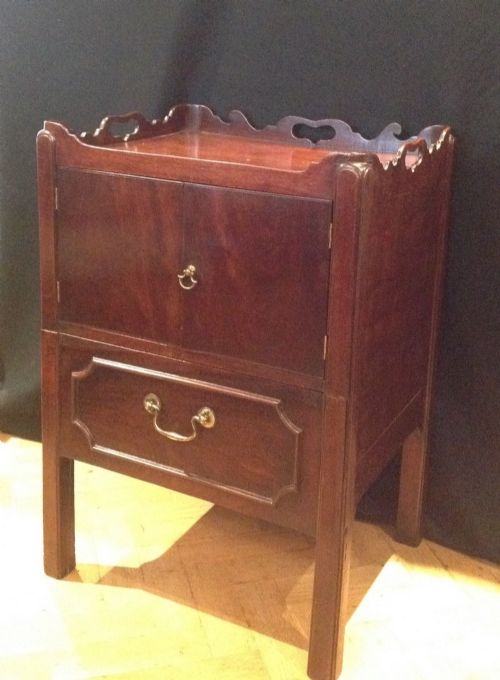
Beyond standard serving platters, the selection includes pieces adapted as side tables or occasional tables when mounted on stands. These functional variations highlight the versatility of cabinet work from the eighteenth and nineteenth centuries.
How they were made
Cabinetmakers constructed these pieces using solid timbers like mahogany alongside delicate wood veneers to create stable yet decorative surfaces. Marquetry and inlay work using satinwood brought contrasting tones into the design, particularly on Edwardian and Georgian examples.
The raised galleries were meticulously joined to the base boards, sometimes incorporating pierced handgrips or applied brass mouldings. Metal elements such as silver plating added a layer of refinement for formal afternoon tea service.
The listings on this site span the eighteenth, nineteenth, and early twentieth centuries, featuring mahogany, satinwood, and brass.
What varies in quality
The distinction between standard domestic items and superior examples rests in the precision of the inlay and the crispness of the gallery fretwork. Pieces that combine satinwood marquetry with well-figured mahogany demonstrate a higher level of workshop skill.
Proportion and structural integrity define the better specimens, where the timber grain flows naturally across the surface without clumsy repairs. The integration of mounts, whether brass handles or silver-plated details, marks the boundary between utilitarian objects and formal entertaining pieces.
The Galleried Wooden Tray Glossary
- Gallery
- A raised wooden or metal rim around the edge of a tray designed to prevent items from sliding off. This feature defines the primary form of the object.
- Marquetry
- The art of applying decorative pieces of veneer to a structure to form intricate designs. This technique frequently appears in satinwood on Edwardian examples.
- Satinwood
- A hard, durable timber with a golden sheen used extensively for fine inlay work. It provides a bright contrast against darker woods like mahogany.
- Veneer
- A thin slice of superior wood applied to a secondary timber base for decorative effect. This method allowed cabinetmakers to display striking grain patterns affordably.
Galleried Wooden Tray: Frequently Asked Questions
What is a galleried wooden tray used for?
These pieces served primarily for carrying tea ware, decanters, and glassware around the home during formal afternoon service. The raised border ensured that cups and bottles remained secure in transit.
Over time, many of these trays found new life placed upon dedicated stands to function as occasional side tables or bedside furniture. Their decorative surfaces made them suitable for display even when not in active service.
How do I date a wooden tray?
Dating relies heavily on the timber selection, decorative techniques, and overall form recorded in the piece. Georgian and George III examples often showcase solid mahogany and restrained lines, whereas Edwardian pieces frequently feature elaborate satinwood inlay and silver plating.
Construction methods also provide clues, as earlier makers employed different joinery and timber preparation techniques compared to late nineteenth-century workshops. Comparing the style of handles and gallery piercing to known period furniture helps narrow the timeline.
Are all these trays meant for serving?
While the primary design purpose was carrying food and drink, many listings include pieces mounted on stands or adapted as small tables. The crossover between serving platters and occasional furniture has a long history in British domestic interiors.
Some examples were built specifically as fixed tabletops from the outset, while others were portable trays retrofitted with folding or permanent stands. Both forms share the characteristic raised wooden gallery.
What woods were used for these trays?
Mahogany forms the structural core of the vast majority of these listings, valued for its stability and rich dark tone. Cabinetmakers paired it with lighter timbers like satinwood for decorative inlay and contrast.
Additional materials include brass and silver-plated metal for handles, galleries, and mounts. Veneers were also deployed across the base boards to create geometric or floral patterns.