
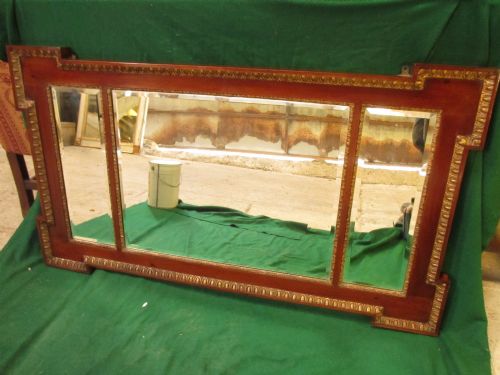
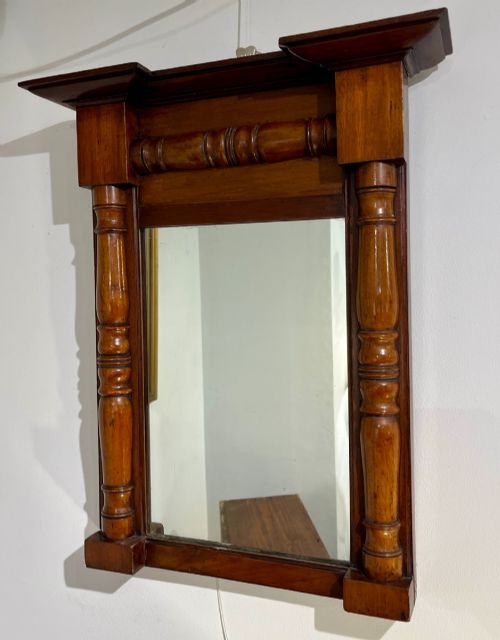
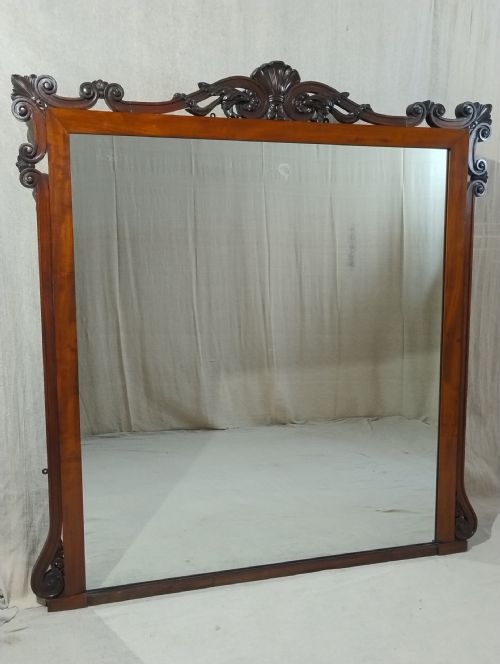

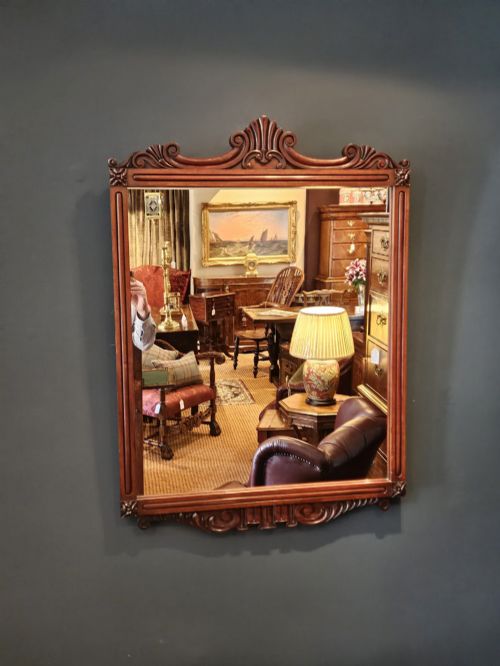
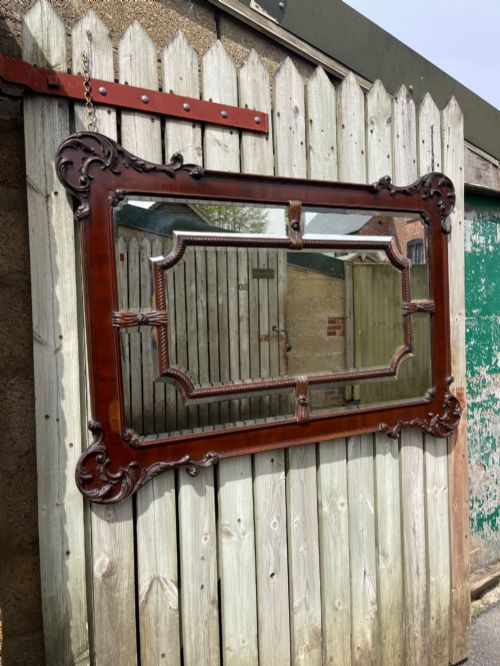


Victorian Mahogany Overmantel Mirror
A victorian mahogany overmantel mirror anchors a chimney breast with timber warmth and reflected light, offering the classic nineteenth-century hearth centrepiece.
Victorian Mahogany Overmantel Mirror
When you search for a victorian mahogany overmantel mirror, you encounter wide timber frames designed to sit directly above a fireplace mantelpiece. The pieces span periods from early nineteenth-century examples to later 1900 interpretations, taking forms from simple rectangular plates to elaborate triptychs.
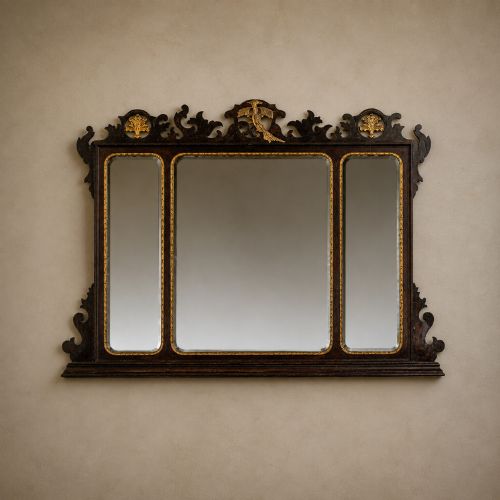
You meet versions styled in the Chippendale Revival manner alongside French Empire and Aesthetic Movement variants. The proportion is typically horizontal, built to span the width of a domestic hearth.
Most items on this page combine mahogany timber with mirror glass, occasionally incorporating gilt highlights or fretwork cresting such as the Ho-Ho bird motif. The construction ranges from single heavy plates to sectional and triple plate configurations.
Materials and Construction
Makers utilised solid mahogany and mahogany veneers over secondary timbers, shaping the frames through carving, fretwork piercing, and ebonising. Timber selection provided a dense, dark ground that accepted polish and carving with crisp definition.
Reflecting surfaces rely on silvered mirror glass and original bevelled plates, sometimes partitioned into multiple sections to catch light across a room. Giltwood accents, gold leaf, and parcel gilding highlight carved details, cartouches, and crestings against the dark mahogany grain.
Keep an eye out for carved wooden birds peering down from the crestings.
Assessing Quality
The distinction between ordinary and superior examples lies in the crispness of the carved ornament and the depth of the mahogany timber. Fretwork cut with sharp, clean piercing and deep mouldings commands attention above shallow, mechanical stamped decoration.
Originality of the glass plate and silvering elevates a piece, as does the integrity of the frame joints and backboards. Finer mirrors display harmonious proportions where the frame weight balances the expanse of the glass.
The Victorian Mahogany Overmantel Mirror Glossary
- Overmantel
- A large mirror designed to hang or stand specifically upon a fireplace mantelpiece. These pieces visually expand hearth spaces and reflect interior light.
- Triptych
- A mirror plate divided into three distinct vertical sections within a single frame. This layout frequently appears in larger revival and overmantel designs.
- Parcel Gilt
- Partial gilding applied to specific carved details or highlights on a wooden frame. It creates contrast against the polished dark mahogany surface.
- Pier Mirror
- A tall mirror constructed to fit the narrow wall space between windows. Such items share period characteristics with overmantels but serve different architectural positions.
- Fretwork
- Thin wood pierced with intricate patterns using a fretsaw. Victorian makers used this technique extensively for decorative crests and borders.
Victorian Mahogany Overmantel Mirror: Frequently Asked Questions
How do I hang a heavy overmantel mirror?
These large timber frames require secure fixing directly into masonry or wall studs using heavy-duty brackets suited to the weight. The substantial mass of nineteenth-century wood and glass demands professional installation.
Ensure the hanging wire or integrated mirror plates engage firmly with wall anchors to prevent any forward tilt off the chimney breast.
Were these mirrors meant to stand or hang?
Many overmantels were designed to rest directly on the mantel shelf while secured to the wall with anchor brackets at the top. Others were built primarily for wall hanging using heavy rear battens.
Examination of the base and rear frame typically reveals whether a piece sat upon timber feet or relied entirely on wall fixings.
How do I clean antique mirror glass?
Use a soft microfibre cloth and a mild, ammonia-free cleaning solution sprayed onto the cloth rather than directly onto the glass. This prevents moisture from seeping behind the silvered backing.
Take care around the edges of the plate where original silvering may be fragile or vulnerable to flaking.
What is a Chippendale Revival overmantel?
A Chippendale Revival piece imitates eighteenth-century rococo and Chinese-influenced designs popularised during the later Victorian era. These frames feature elaborate fretwork, asymmetric scrolls, and carved crests such as birds.
They combine earlier stylistic vocabulary with nineteenth-century manufacturing methods and denser mahogany stocks.