
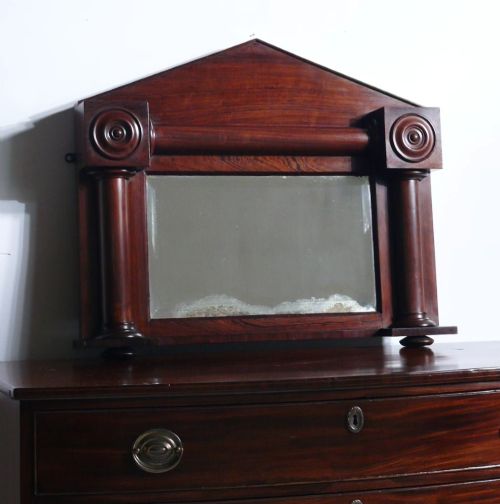
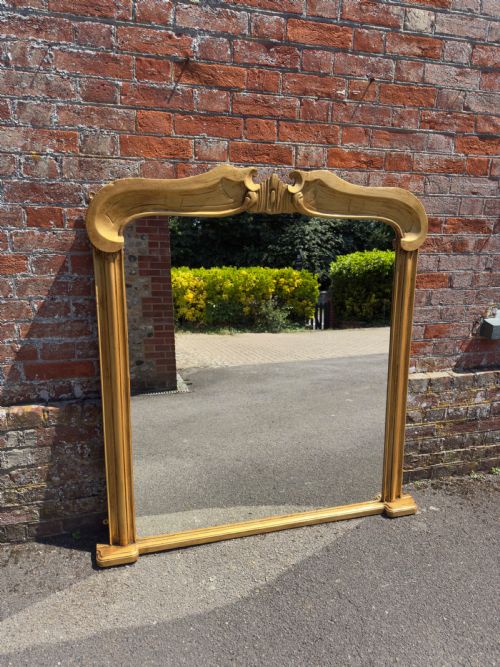
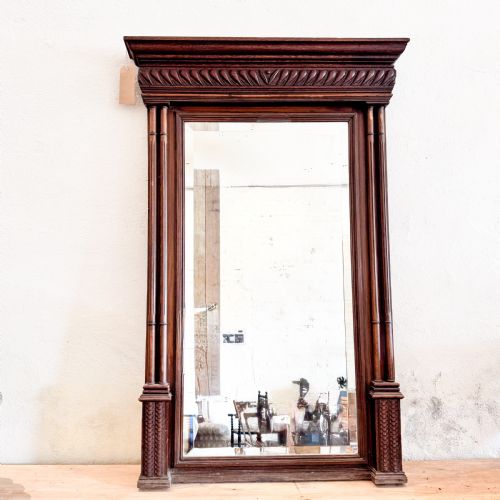
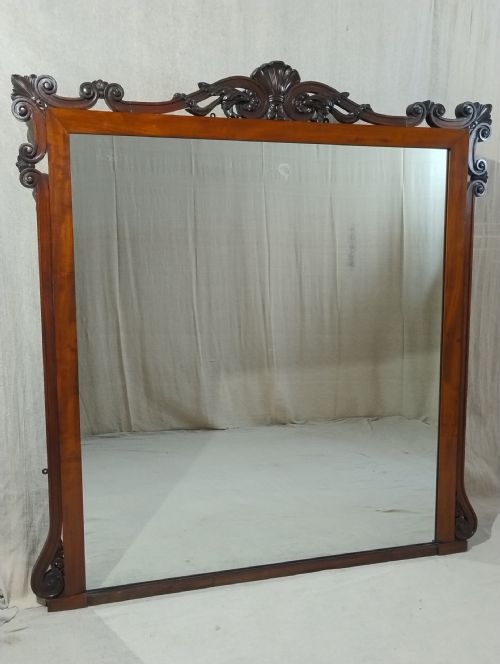


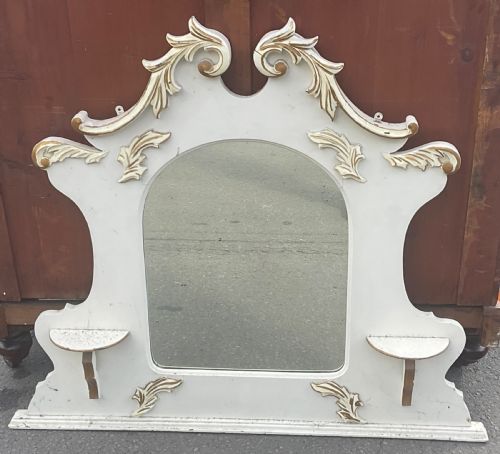


Carved Wooden Chimney Glass
These carved wooden chimney glass pieces are grand overmantel mirrors designed to sit above a fireplace, bringing depth and light to a room.
Carved Wooden Chimney Glass
A carved wooden chimney glass is primarily an overmantel mirror designed to hang or rest on the mantelpiece above a fireplace. These large glass plates sit within substantial wooden frames shaped by Victorian, Edwardian, and Regency hands.
The versions you meet most frequently on this page span the nineteenth century and the early twentieth century. They arrive in timbers like rosewood, walnut, and mahogany, alongside painted or gilded gesso surfaces.
Forms range from simple architectural rectangles and arched tops to triptych mirrors and pieces bearing marquetry or intricate carvings. Each one reflects the domestic interior tastes of its period, from austere Victorian mahogany to decorative Edwardian rosewood.
How they were made
Frames rely on dense timbers such as mahogany, walnut, and rosewood, carved directly or built up with gesso to accept intricate ornamentation. Cabinet makers shaped these woods to form arches, fretted scrolls, and architectural mouldings.
Surfaces were finished with paint, gilding, or polished veneers, sometimes enhanced with marquetry or inlay work. The glass plates themselves were fitted securely into the wooden rabbets behind protective backing boards.
Listings feature timbers like rosewood, walnut, and mahogany, alongside painted or gilt gesso surfaces spanning the nineteenth and early twentieth centuries.
What varies in quality
Quality rests in the depth of the carving and the selection of the timber grain. Finer examples show crisp hand-carved details in solid walnut or mahogany rather than heavy, uniform composition ornament.
The integrity of the mirror glass and the construction of the wooden frame dictate the durability of the piece. Superior construction ensures the heavy glass remains stable within its rebated frame without twisting the timber.
The Carved Wooden Chimney Glass Glossary
- Overmantel mirror
- A large wall mirror specifically proportioned to hang on the wall directly above a fireplace mantel. They often incorporate architectural frames designed to anchor the visual weight of a chimney breast.
- Gesso
- A plaster-like mixture applied to wood frames to provide a smooth surface for gilding or painting. It allows craftsmen to model intricate low-relief ornamentation before applying gold leaf or colour.
- Marquetry
- The art of applying decorative pieces of veneer to a structure to form ornamental designs. This technique appears on several Edwardian and nineteenth-century rosewood frames.
- Triptych mirror
- A three-part mirror where a central glass plate is flanked by two smaller hinged or fixed side panels. This configuration was favoured by Victorian makers to multiply reflections across a room.
Carved Wooden Chimney Glass: Frequently Asked Questions
Where should I hang a chimney glass?
These mirrors traditionally anchor the wall directly above a fireplace mantel where they reflect light from the opposite windows.
They also function well on plain expanses of wall in reception rooms where a large reflective surface is needed.
How do I date a wooden mirror?
Dating relies on combining the timber choice with the decorative style and edge bevelling of the glass plate.
Victorian pieces often lean towards heavy mahogany or walnut, while Edwardian examples favour inlaid rosewood and lighter painted finishes.
Are these mirrors heavy to hang?
Most overmantel mirrors possess considerable weight due to the dense timber frames and thick glass plates.
Secure installation requires fixing directly into wall studs or using heavy-duty masonry anchors suited to the load.
What is an Aesthetic Movement mirror?
Aesthetic Movement pieces reflect late nineteenth-century design reforms that valued artistic composition over conventional Victorian ornamentation.
They often display simpler geometric lines and thoughtful wood selection that set them apart from heavily carved styles.