
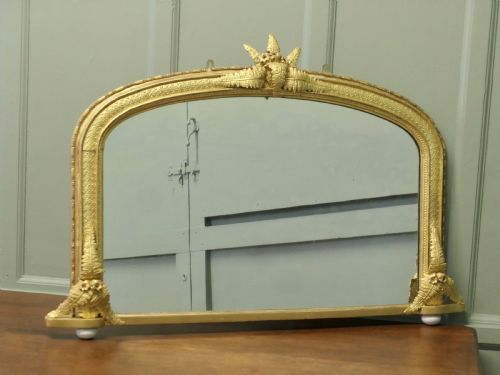
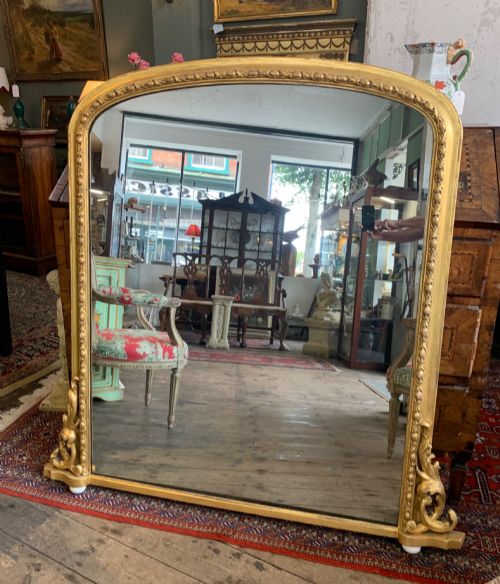
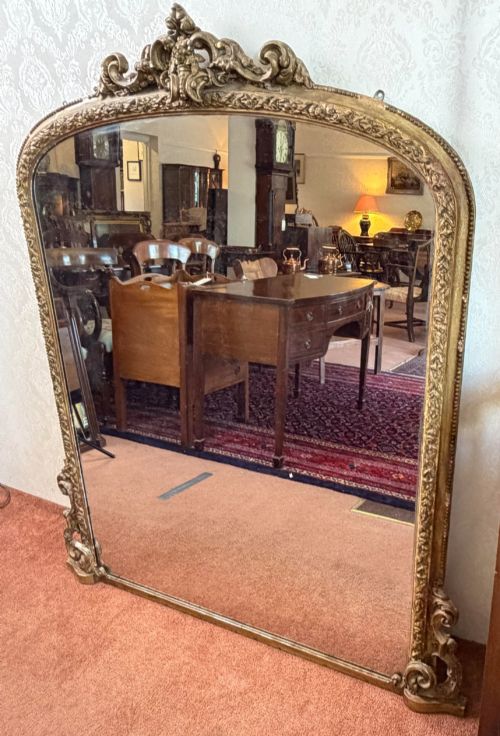
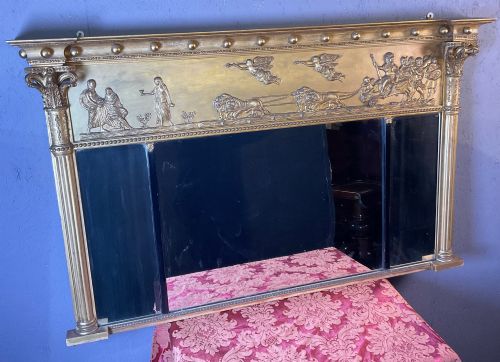


Victorian Over Mantel Mirror
A victorian over mantel mirror anchors a room above the hearth, bringing light and scale to a nineteenth century interior.
Victorian Over Mantel Mirror
A victorian over mantel mirror is designed specifically to sit above a fireplace, often featuring an arched top or rectangular frame suited to the proportions of a chimney breast. These architectural glasses range from small panels to very large wall hanging plates shaped to reflect the room and draw daylight deeper into the space.
The versions met most frequently on this page belong to the nineteenth century, spanning early, mid and late periods alongside related William IV examples. Makers utilised giltwood, gesso, mahogany, walnut, oak and ebonised timber, frequently finishing the frames with gold leaf or paint.
Stylistic variation runs from French Rococo Revival and Regency influence through to Arts and Crafts interpretations. Frames appear as simple mahogany or carved wood alongside ornate gilded compositions with brackets, cartouche shapes and triple plates.
Materials and Construction
Frames are constructed from solid timbers such as mahogany, oak, walnut and timber composites, joined to support the heavy weight of the glass plate. Many pieces employ gesso applied over wood as a base for intricate mouldings and subsequent gilding.
Giltwood and gold leaf finishes provide the characteristic bright metallic surface seen across the majority of examples, though painted, ebonised and black lacquer finishes also occur. Mirror glass plates are set within these heavy rebates, occasionally featuring arched or shaped perimeters.
Listings feature nineteenth century pieces incorporating materials such as giltwood, gesso, mahogany, walnut, oak and ebonised timber.
Assessing Quality and Execution
Quality shows in the depth and sharpness of the wood carving or gesso moulding, where crisp detail separates superior pieces from heavier, less refined production. The proportion of the frame to the mirror plate dictates the visual balance, with finer examples demonstrating careful harmony between architecture and decoration.
The condition and character of the original mirror plate contribute significantly to the standing of a piece, as does the integrity of the original gilding or timber finish. Stronger examples retain their original backingboards, brackets and integrated construction details without heavy structural compromise.
S T Townshend Norwich
The Victorian Over Mantel Mirror Glossary
- Gesso
- A plaster-like mixture applied to wood frames to create a smooth surface for gilding or intricate low-relief carving. It responds well to stamping and moulding before the application of gold leaf.
- Giltwood
- Timber that has been covered with thin sheets of gold leaf or metal leaf. This finish creates the bright reflective surface typical of nineteenth-century decorative frames.
- Overmantel
- A mirror or painting designed specifically to hang on the wall directly above a mantelpiece or fireplace. The proportions are typically wider or taller to match the scale of the hearth below.
- Cartouche
- An ornamental frame or tablet resembling a scroll or undressed shield, often featuring scrolled edges. In mirror frames, it describes a shaped, curved outline.
Victorian Over Mantel Mirror: Frequently Asked Questions
How do I hang a heavy overmantel mirror?
These large mirrors require secure fixing directly into masonry or substantial wall studs using appropriate heavy-duty brackets. The weight of the timber frame and glass demands professional installation to ensure stability above a fireplace.
Position the mirror at a height that reflects eye level and balances the proportions of the mantelpiece below. Ensure the integrated brackets or hanging points support the full vertical load.
Can these mirrors be placed on the mantelpiece?
Many examples are designed to rest directly on the slate or marble shelf of the fireplace while being secured to the wall for safety. This placement follows traditional nineteenth-century domestic arrangement.
Check the base of the frame and the depth of the mantel shelf to ensure secure contact. Wall anchoring remains essential even when the base carries part of the weight.
How do I clean antique mirror glass?
Clean mirror plates gently using a soft, dry microfibre cloth to remove dust without disturbing the edges of the glass. Avoid spraying liquid directly onto the plate to prevent moisture seeping behind the silvering.
Take care near the frame, particularly on giltwood or gesso surfaces where moisture can damage the historical finish. Use minimal cleaner applied to the cloth rather than the glass itself.
What is distressed mirror plate?
Distressed plate refers to the natural ageing of the silver backing behind the glass, which creates dark spots, foxing and cloudy patches over time. This patina develops through decades of exposure to ambient moisture and temperature changes.
Collectors often value this aged appearance because it confirms the genuine nineteenth-century origin of the glass. It softens the reflection and adds distinct historical character to the piece.