


Victorian Mahogany Library Table
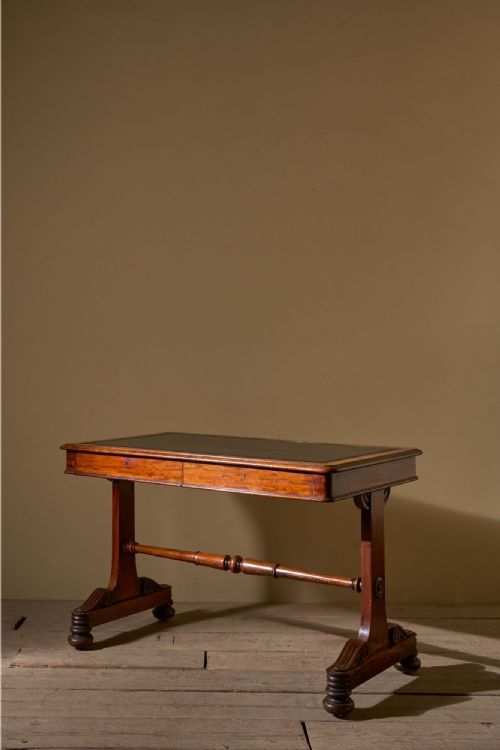
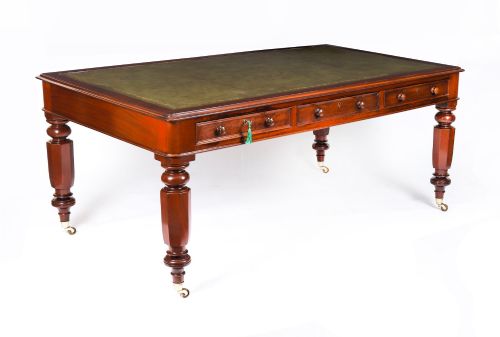
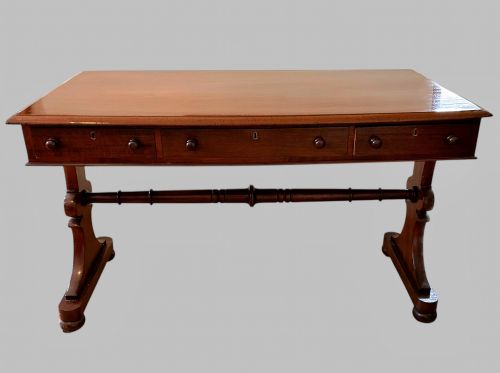
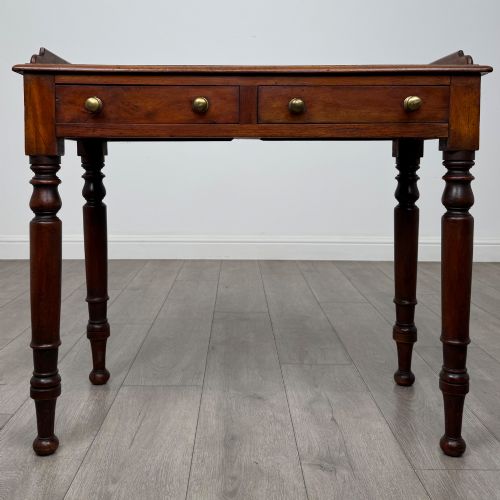
A victorian mahogany library table brings substantial nineteenth-century presence and a generous writing surface into a room.
Victorian Mahogany Library Table
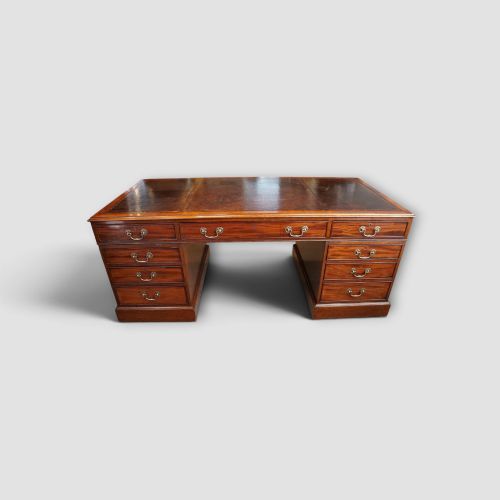
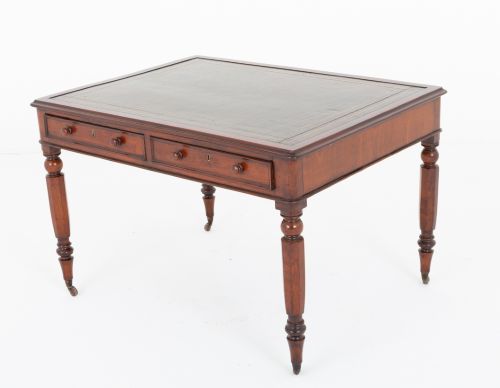
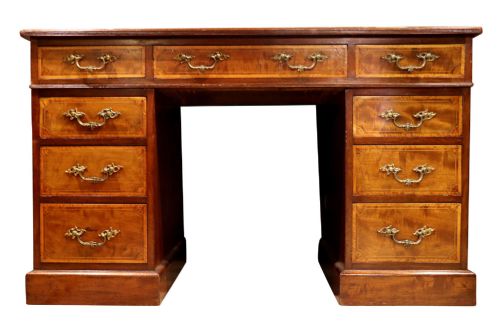
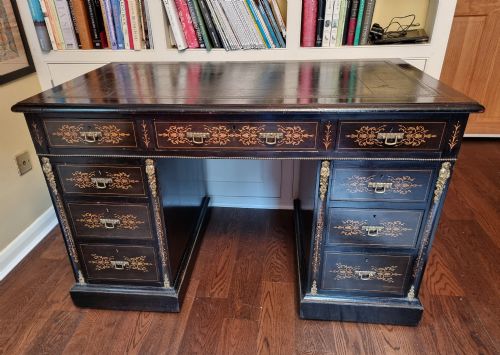
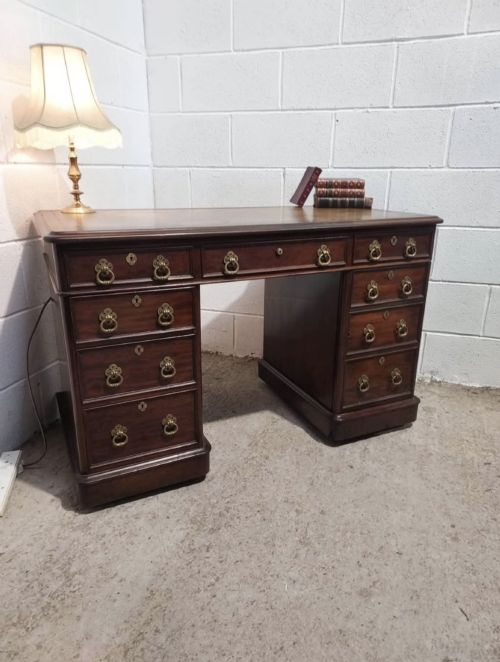
A victorian mahogany library table is a substantial freestanding desk or writing surface designed for nineteenth-century domestic and institutional studies. These pieces frequently appear with rectangular tops, inset leather writing surfaces, and banks of frieze drawers.
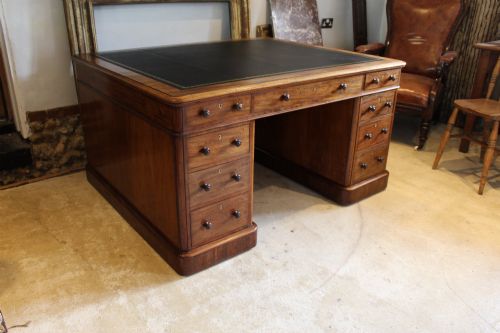
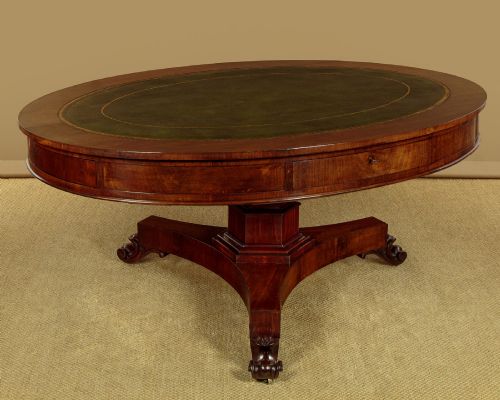
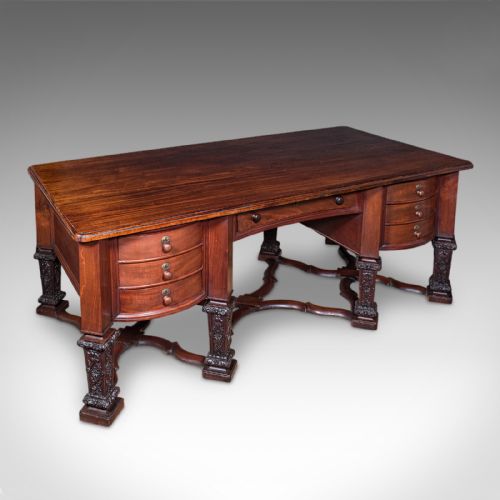
The most common formats on this page range from standard two-drawer library tables to large partners desks and circular drum tables. Makers utilised dense tropical timber alongside secondary woods like pine to construct these robust pieces for heavy daily use.
Many examples span the broader nineteenth-century timeline, with distinct sub-types emerging from early Victorian periods through late Victorian and Edwardian iterations. Pieces often incorporate stylistic influences from the Georgian era, Louis XIV revival, and Gothic revival.
Materials and construction
Cabinet makers relied heavily on solid and veneered mahogany, frequently selecting flame mahogany for dramatic grain patterns on drawer fronts and tabletops. Secondary timbers such as oak and pine provide internal structural framing for drawers and carcases.
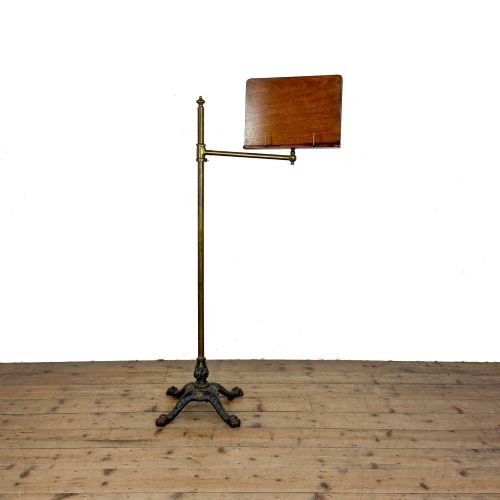
Writing surfaces were traditionally inset with contrasting panels of hand-tooled leather, often framed by decorative brass hardware or turned wooden mounts. Cast iron and brass components appear in mechanical elements, notably on adjustable reading stands and revolving bookcases.
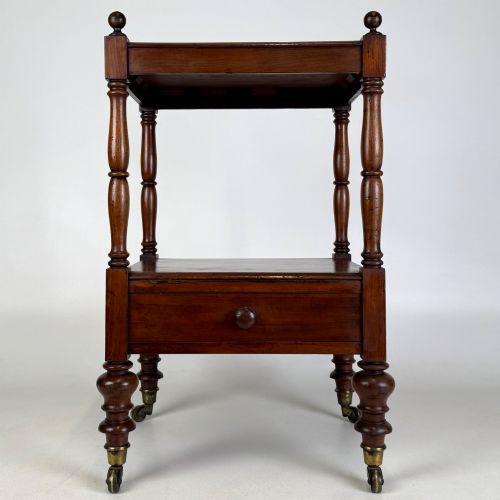
Nineteenth-century readers required specialised furniture, resulting in revolving bookcases and adjustable reading stands designed to hold heavy folios at straining angles.
Distinctions in craftsmanship
The architectural presence of a victorian mahogany library table depends on timber selection and the depth of the cabinet work. Superior pieces display carefully matched mahogany veneers across wide expanses and solid brass drawer furniture.
Proportion and structural integrity distinguish finer examples from standard workshop production. Tables bearing signatures or stamps from recognised nineteenth-century cabinet makers demonstrate superior joinery and refined secondary timber choices.
Trollope & sons·Edwards & Roberts·Johnstone & Jeanes·Charles Andrea Nosotti·Holland & Sons·J. Kerr & Co
The Victorian Mahogany Library Table Glossary
- Partners desk
- A large double-sided desk designed for two people to work opposite one another, featuring drawers on both longitudinal faces.
- Drum table
- A circular library table with a rotating or stationary top surrounded by a deep frieze containing alternating real and dummy drawers.
- Flame mahogany
- A decorative wood veneer cut from the fork of the mahogany tree, producing a distinctive fire-like ripple pattern.
- Frieze drawer
- A drawer integrated into the horizontal band immediately beneath the tabletop.
- Sofa table
- A rectangular occasional table featuring drop leaves at either end, traditionally placed before sofas in nineteenth-century drawing rooms.
Victorian Mahogany Library Table: Frequently Asked Questions
How can I tell an early Victorian table from a later one?
Early Victorian examples generally date from the 1840s and 1850s, displaying heavier proportions and rich, dark mahogany timber tones. These pieces frequently incorporate traditional hand-cut dovetailing in the drawer construction.
Later Victorian and Edwardian iterations from the 1880s onward often exhibit lighter timber treatments, machine-sawn elements, and occasional revivalist styling cues such as Louis XIV or Georgian revival motifs.
Were leather writing surfaces always green?
While green leather inset panels are widely seen across nineteenth-century writing tables and desks, other colours such as brown and black also appear. The leather was typically dyed, stretched across the wooden top, and finished with decorative gilt tooling along the perimeter.
Many surviving pieces retain their original hide surfaces, though replacements executed in traditional styles are common due to centuries of heavy use.
Can a library table be used as a modern dining table?
Most library tables are built with fixed frieze drawers underneath the top, which restricts knee clearance for seating diners comfortably. Their standard heights and structural framing are engineered for writing and reading rather than dining.
However, large partners desks or tables lacking deep frieze drawers can occasionally accommodate chairs alongside, provided the leg clearance meets ergonomic requirements.