

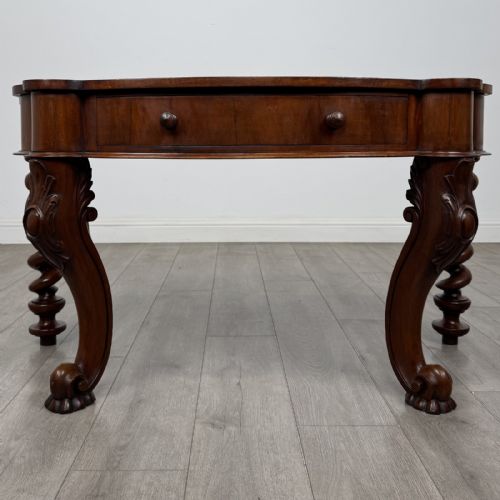
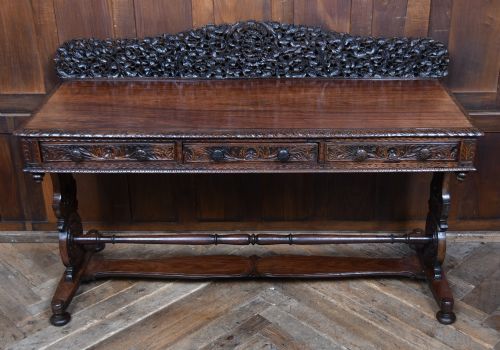
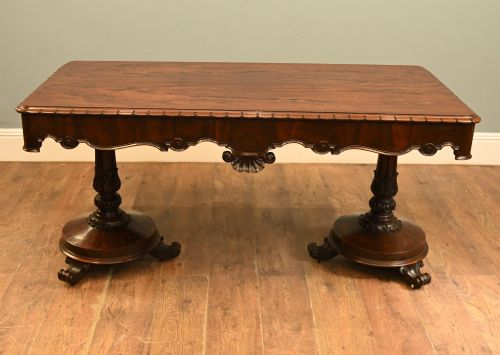
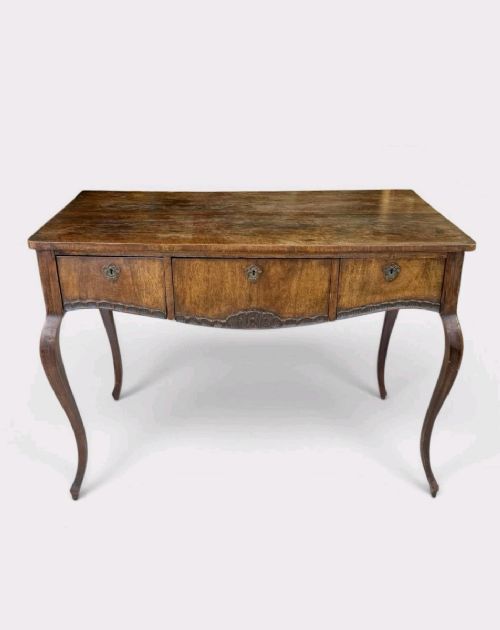
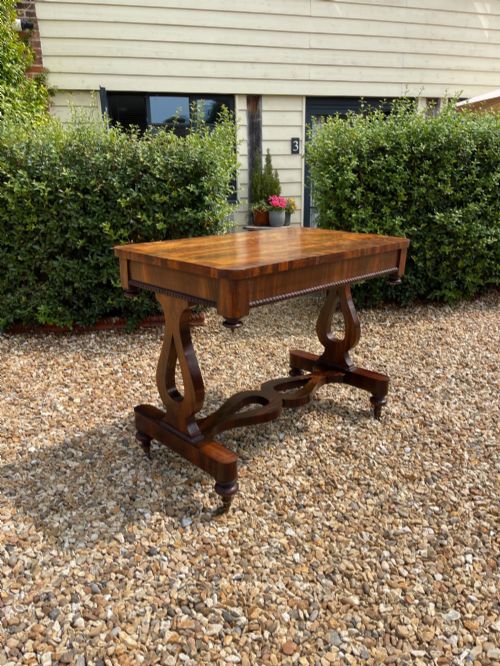
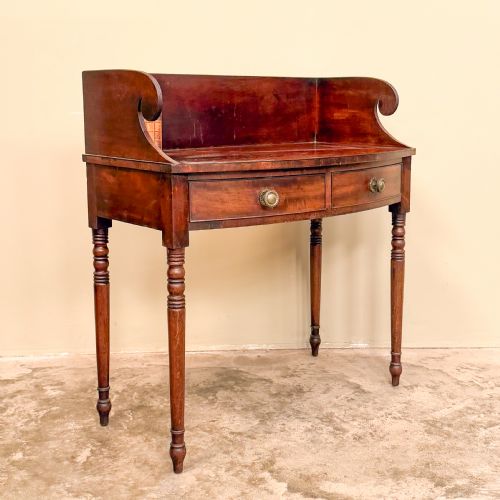
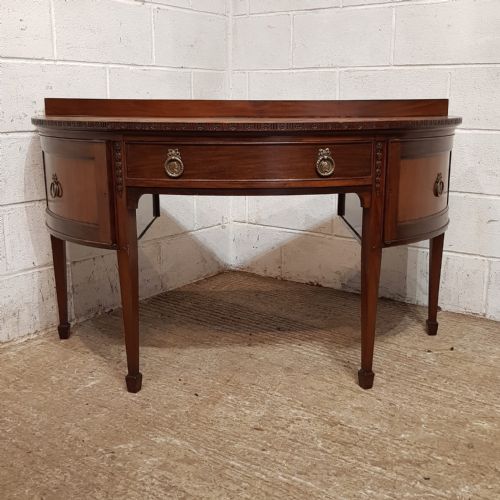
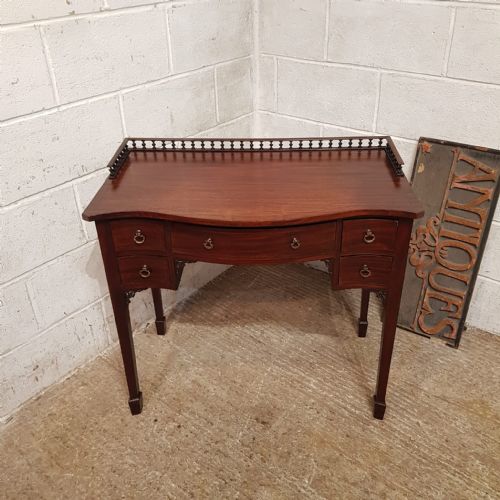
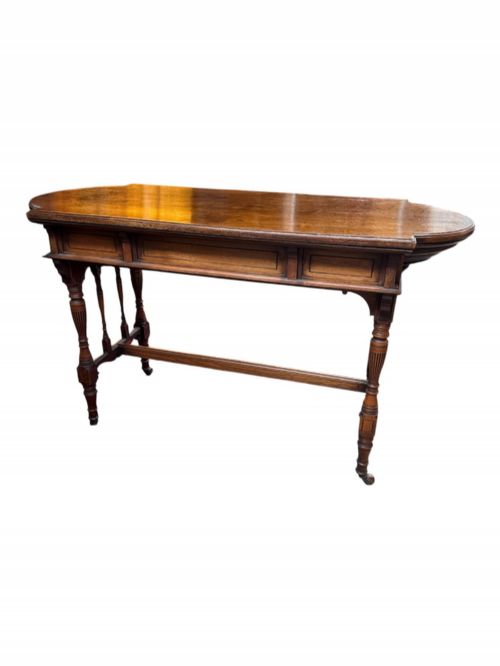


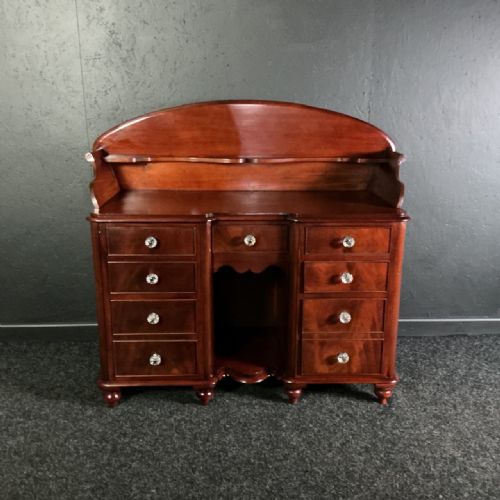
Carved Mahogany Console Desk
A carved mahogany console desk brings sturdy nineteenth-century timber and functional writing space into a modern room.
Carved Mahogany Console Desk
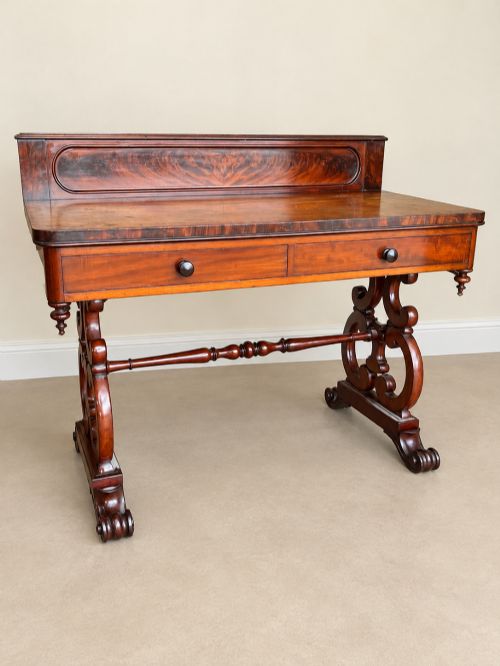
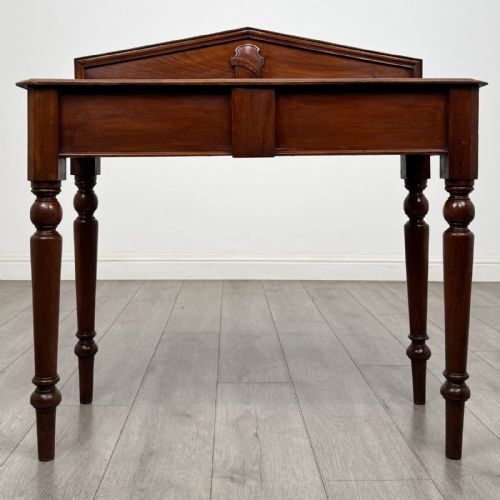
A carved mahogany console desk combines the linear form of a side table with the practical writing surface of a desk, drawing on eighteenth and nineteenth-century traditions. When you search for a carved mahogany console desk, you encounter pieces spanning the Regency, Victorian, and Edwardian eras, executed in rich timber.
The selection on this page ranges from compact writing tables and serpentine fronted desks to larger library and centre tables. Many examples incorporate drawers or fold-over surfaces, bridging the gap between decorative console display and everyday study use.
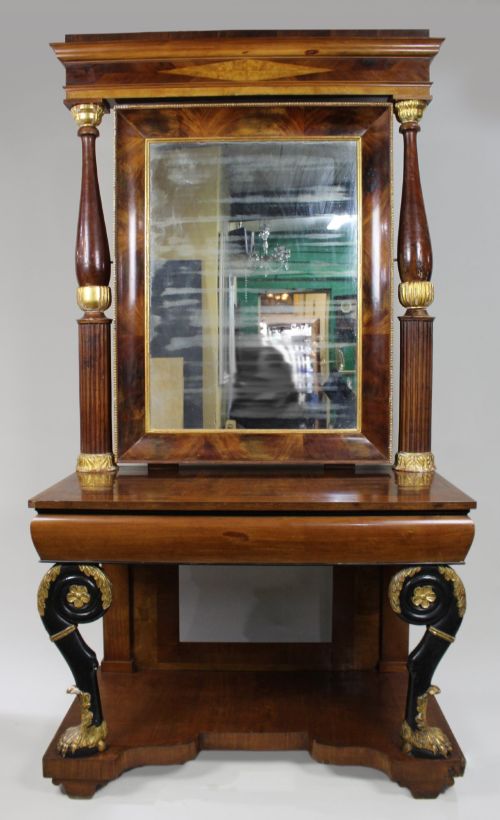
Origins stretch across English workshops as well as Irish and French makers, utilising styles from Chippendale Revival to French Empire. These tables function equally well against a hallway wall or freestanding in the middle of a study.
Materials and construction
Makers relied primarily on solid mahogany and mahogany veneers, often enhanced by secondary timbers such as oak and rosewood. Brass mounts, ormolu details, and leather inserts added functional contrast and refined texture to the writing surfaces.
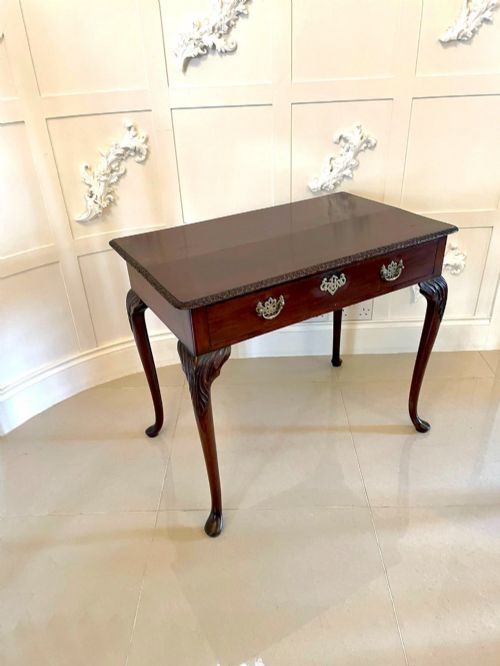
Hand carving defined the ornamentation, appearing on edges, legs, and friezes in manners reflecting Chippendale, Adams, or classical revival influences. Wood inlay and parcel gilt accents further articulated the structural lines of Regency and Edwardian pieces.
Carved Mahogany Console Desk Retail Price Guide 2026
Typical asking prices for carved mahogany console desk among the pieces listed under this phrase on Sellingantiques today, from the lower quarter to the upper quarter. They describe what is for sale here now, not the wider market.
Object types range widely from side tables and card tables to dedicated writing desks and large library tables.
Assessing craftsmanship and finish
Quality rests in the depth of the timber's natural patina and the crispness of the hand carving rather than surface embellishment alone. Superior examples display seamless joins, well-figured mahogany grain, and original brass hardware.
The structural integrity of the legs and the smooth action of drawers separate utilitarian items from exhibition pieces. Attributions to known workshops or surviving retail labels elevate the standing of a table within its period.
Jean-Joseph Chapuis·McKeon’s of Liverpool·Gillingtons of Dublin·Gillows
The Carved Mahogany Console Desk Glossary
- Console table
- A table designed to stand against a wall, frequently secured with brackets. These forms often double as slim desks in domestic settings.
- Library table
- A large freestanding table intended for books and papers, typically finished on all sides. They frequently feature multiple drawers along the frieze.
- Ormolu
- Gilded bronze or brass mounts applied to furniture for decoration. This technique was favoured in French Empire and Regency pieces.
- Serpentine front
- A furniture front curved with a convex centre flanked by concave sides. This shape requires advanced cabinet-making skill.
- Parcel gilt
- Part gilding applied to carved details or mouldings to highlight specific design elements against dark mahogany.
Carved Mahogany Console Desk: Frequently Asked Questions
How do I date a mahogany desk?
Examine the secondary woods, construction methods, and the style of the carving to determine the period. Regency and Victorian pieces exhibit distinct leg turnings and joinery techniques that separate them from later Edwardian revivals.
Looking for maker's marks, paper labels, or stamps inside drawer linings can also provide a reliable window into the decade of manufacture.
Were these desks meant for writing?
Many tables listed as console, library, or side desks were built with functional writing surfaces and integrated drawers. Some incorporate leather or cloth inserts specifically for correspondence.
While certain pieces served primarily for display in halls or drawing rooms, their proportions accommodated seated writing tasks.
What is Chippendale Revival style?
Chippendale revival furniture echoes the ornate mahogany designs of the eighteenth-century master craftsman. These later interpretations often feature elaborate carved cabriole legs and scrolled feet.
Victorian and Edwardian makers embraced this style to combine historical aesthetics with sturdy nineteenth-century timber construction.