
Victorian Mahogany Dressing Mirror
A victorian mahogany dressing mirror brings honest nineteenth-century craft to the bedroom, offering rich timber and adjustable reflection.
Victorian Mahogany Dressing Mirror
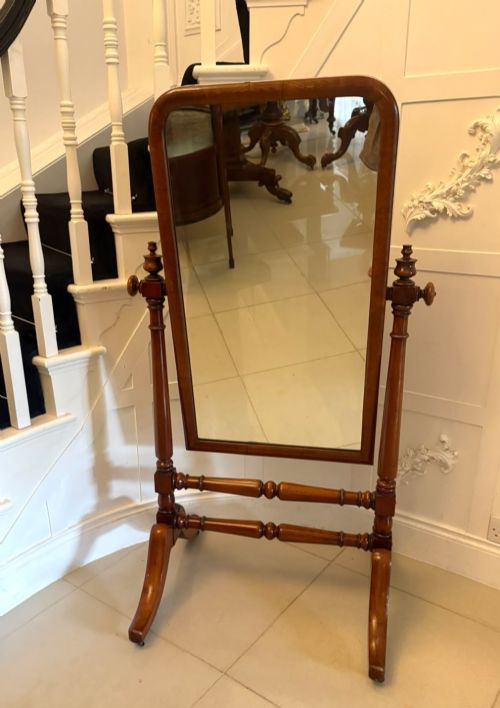
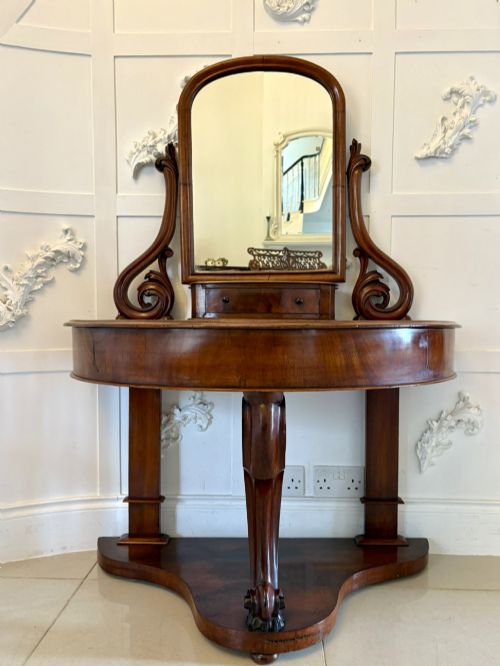
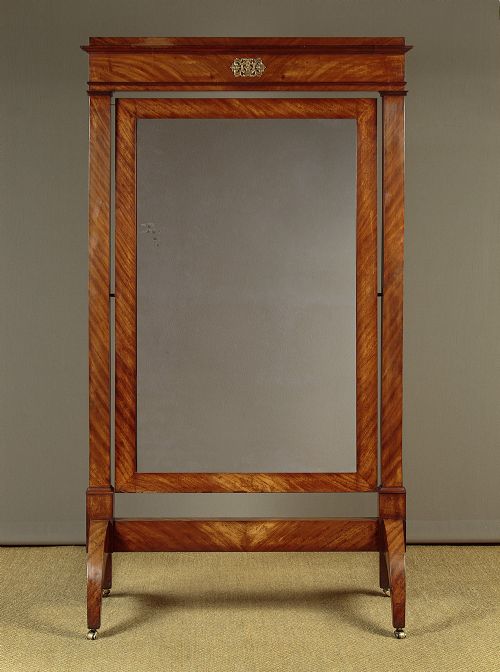
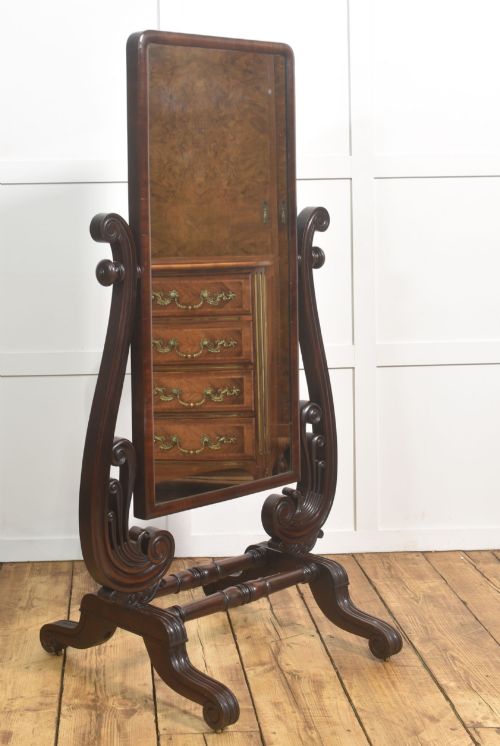
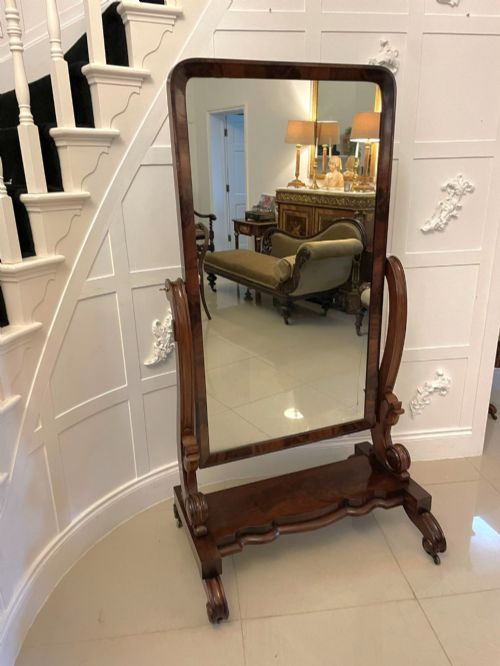
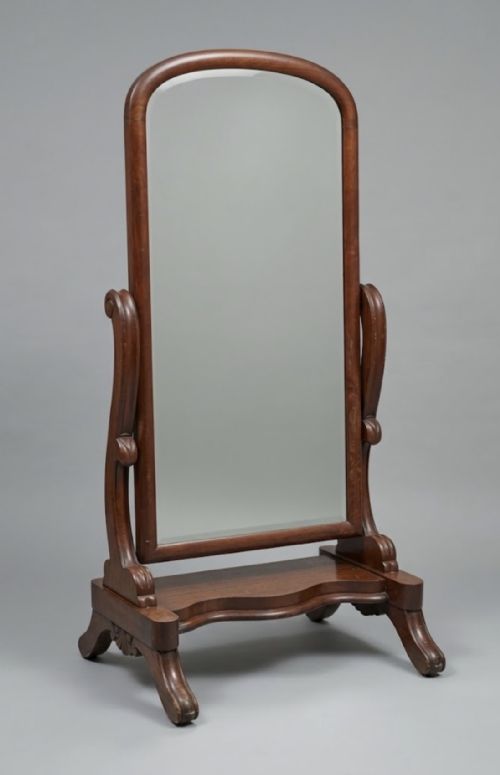
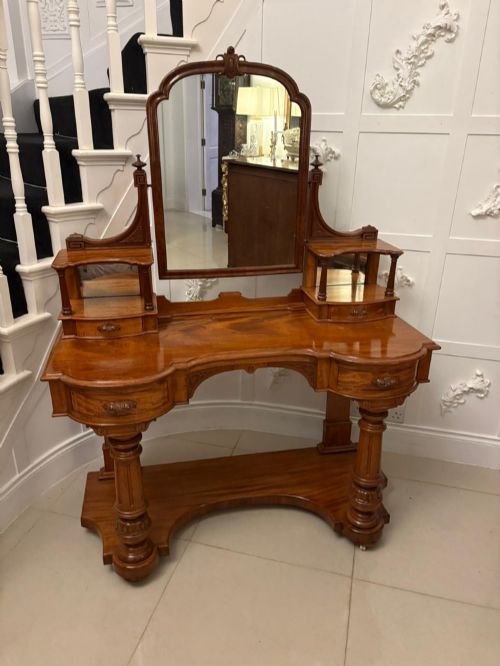
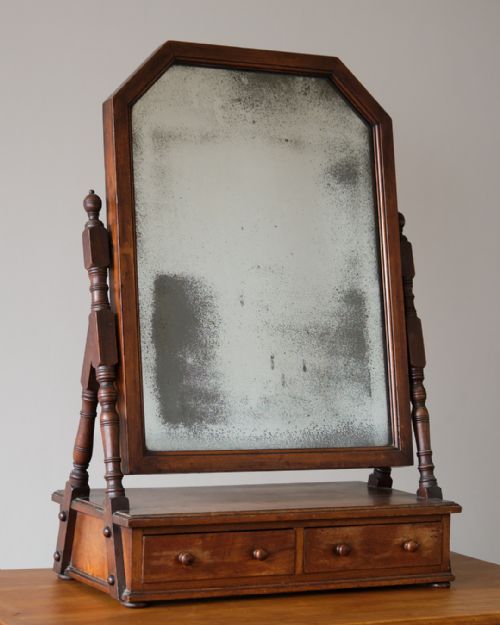
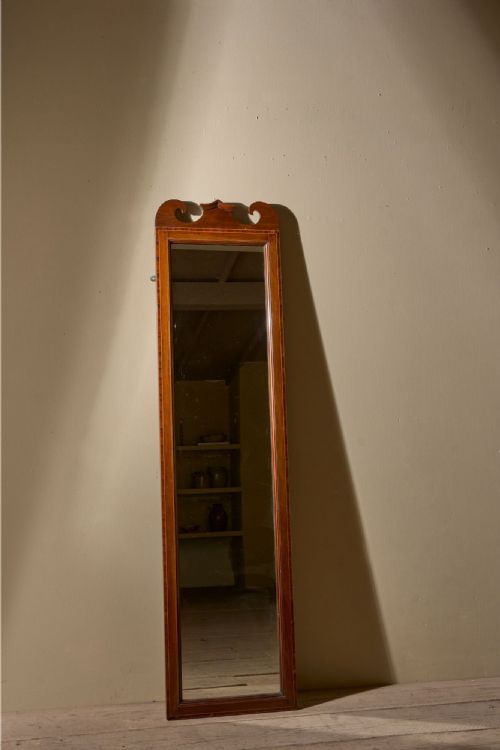
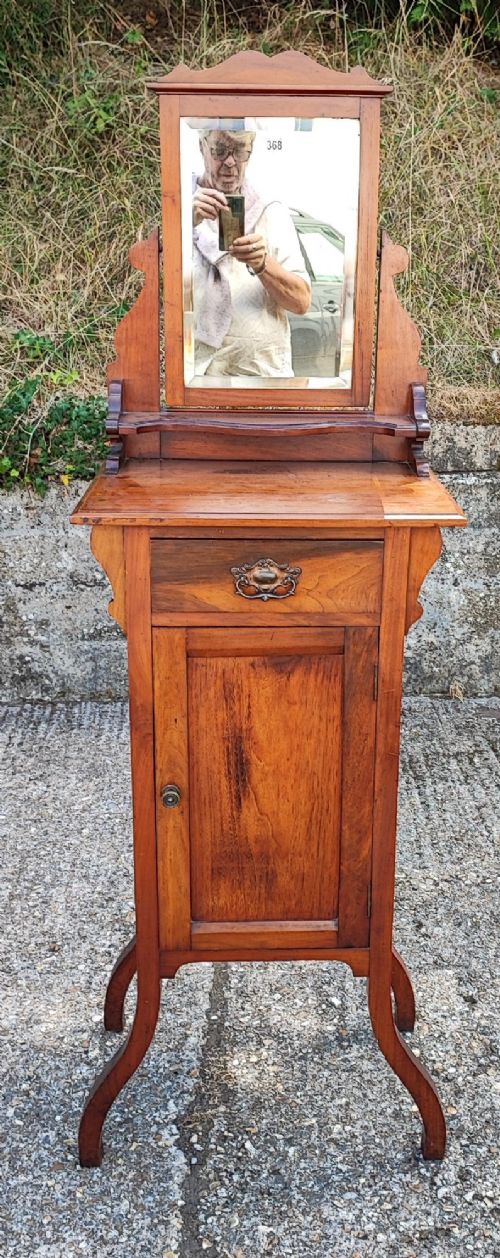
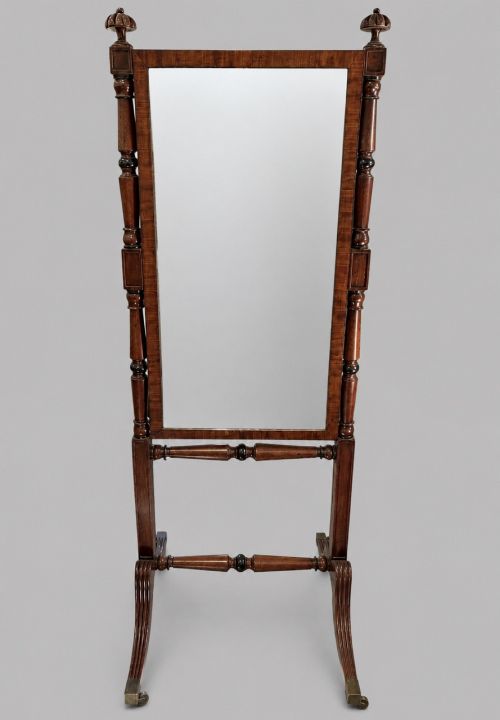
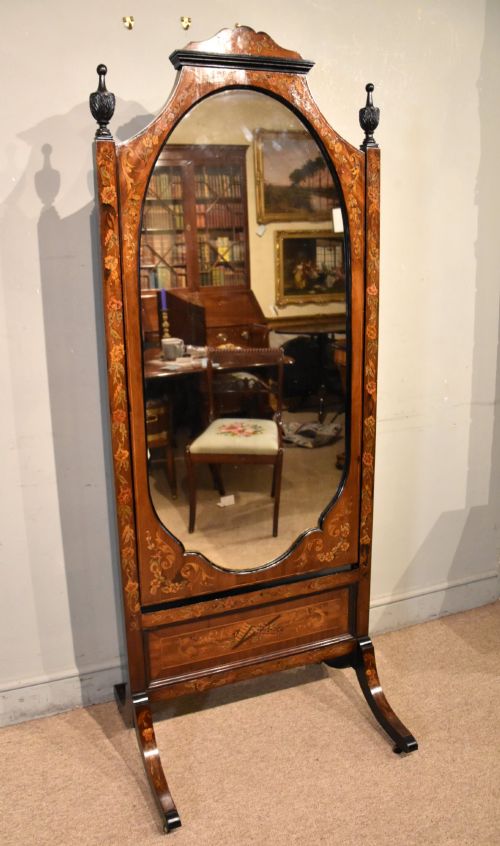
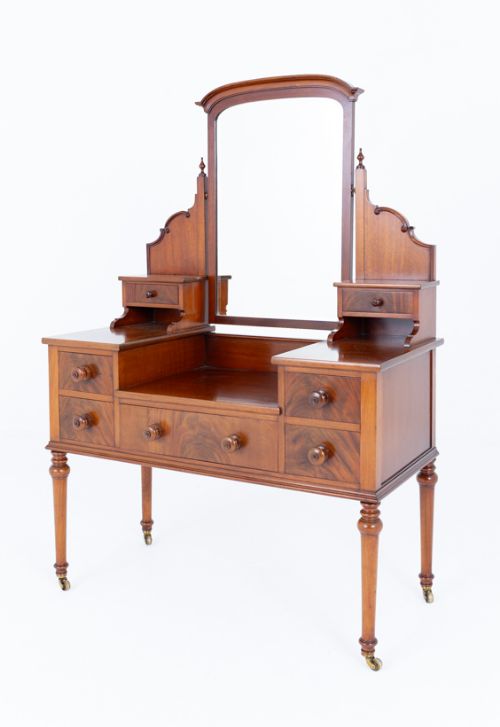
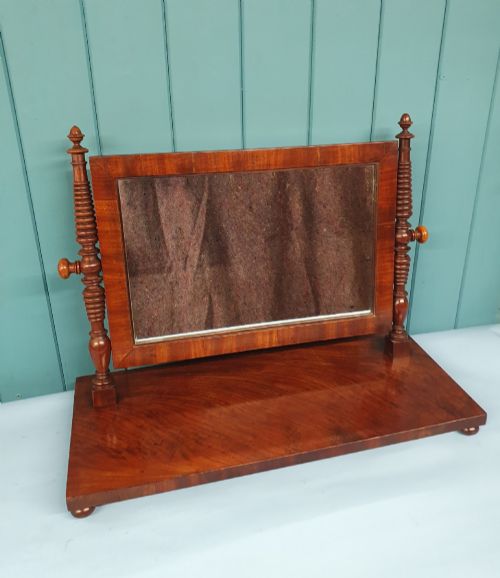
A victorian mahogany dressing mirror spans compact table-top swing glasses fitted with small drawers to grand floor-standing cheval frames designed for full-length reflection. The selection ranges widely through nineteenth-century iterations, including compact toilet mirrors and large pedestal companions made for bedrooms.
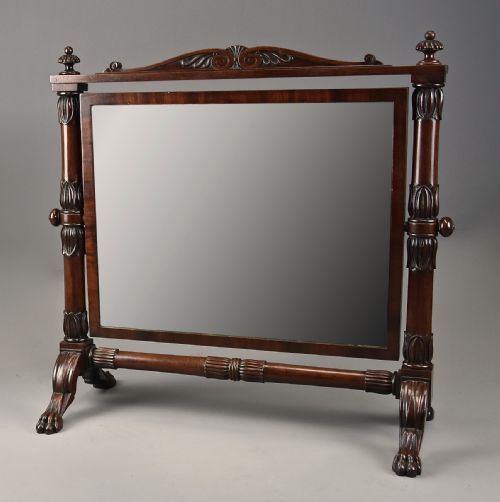
Most examples originate from the Victorian era alongside related Regency and Edwardian variants, capturing the evolution of domestic dressing furniture. Makers employed rich timber grains, incorporating swing mechanisms supported by turned pillars, upright columns, or barley twist supports.
Materials and Construction
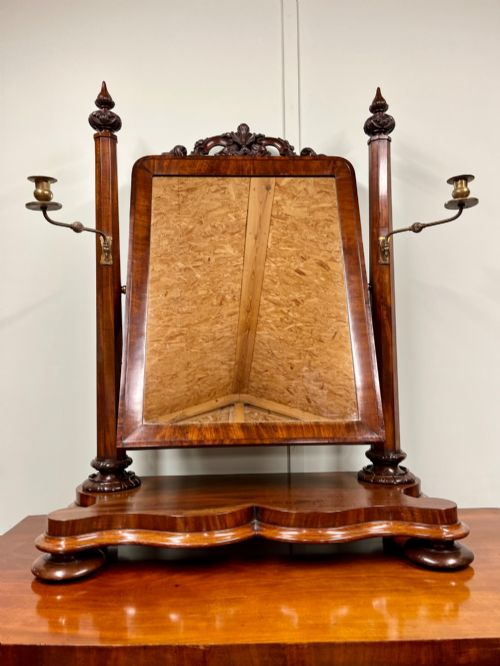
Cabinetmakers built these pieces using solid mahogany and dense Cuban mahogany, occasionally selecting flame grain veneers to create striking visual movement across the surfaces. Secondary timbers provided internal framing for drawers, while brass pivots, candle sconces, and lock escutcheons added functional metallic contrast.
Joinery relied on traditional dovetailed construction for drawer boxes and sturdy tenoned joints for upright mirror frames. Glass plates were silvered and held securely within rebated wooden frames, suspended between upright standards designed to tilt smoothly.
Victorian Mahogany Dressing Mirror Retail Price Guide 2026
Typical asking prices for victorian mahogany dressing mirror among the pieces listed under this phrase on Sellingantiques today, from the lower quarter to the upper quarter. They describe what is for sale here now, not the wider market.
Distinctions in Execution
The division between standard workshop output and exceptional craftsmanship rests in the selection of timber figures and the crispness of carved details. Superior pieces display heavily figured flame mahogany, balanced proportions, and robust structural framing that prevents swaying.
Hardware weight and refinement also signal grade, where heavy brass brackets, finely turned uprights, and meticulously dovetailed accessory drawers elevate the object. Lesser examples rely on plain timber stocks and simpler, unadorned framing without inlaid stringing or boxwood details.
P & MA Nicholson·Heal & Sons·Harrods
The Victorian Mahogany Dressing Mirror Glossary
- Cheval mirror
- A large, floor-standing dressing mirror mounted on a freestanding frame that permits the glass to tilt fully.
- Toilet mirror
- A smaller table-top dressing glass, often set upon a miniature box base containing small drawers for trinkets.
- Cuban mahogany
- A dense, dark timber harvested in the Caribbean, prized for its rich grain and heavy weight in high-end nineteenth-century furniture.
- Swing mirror
- A glass plate hung on central lateral pivots between two upright supports, allowing the user to adjust the viewing angle.
- Barley twist
- A decorative turning technique resembling a spiralling rope, frequently seen on the vertical supports of mid-nineteenth-century frames.
Victorian Mahogany Dressing Mirror: Frequently Asked Questions
What is a cheval mirror?
A cheval mirror is a tall, floor-standing dressing glass mounted within a heavy frame that allows the entire assembly to tilt on pivots.
These pieces were designed to provide a full-length reflection in nineteenth-century bedrooms and dressing rooms.
How do I date a dressing mirror?
Dating relies on observing structural characteristics, timber choices, and mounting hardware styles across different nineteenth-century decades.
Earlier Regency and William IV pieces often display heavier architectural mounts, while later Victorian and Edwardian examples incorporate turned supports and inlaid boxwood stringing.
Where were table mirrors placed?
Table mirrors sat atop dedicated dressing tables, chests of drawers, or washstands to assist with personal grooming.
Many incorporated small drawer bases designed to hold jewellery, cosmetics, and hair accessories close to hand.
Are the mirror plates original?
Many nineteenth-century frames retain their original mercury or silvered glass, which often exhibits gentle foxing and minor age spots.
Replacement glass plates appear in some pieces where the original silvering degraded significantly over decades of domestic use.