
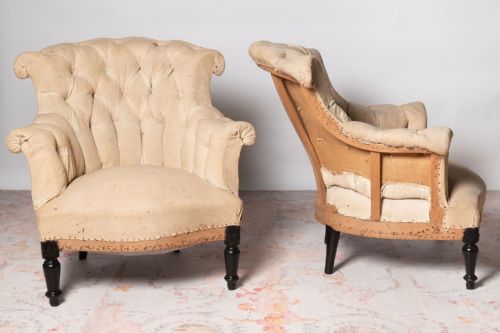


Victorian Low Armchair Pair
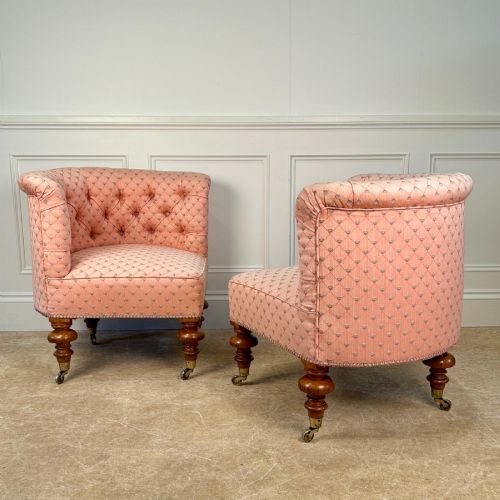
These Victorian low armchair pair options are upholstered seats built low to the ground for fireside comfort, offering matched pairs for drawing rooms and bedrooms.
Victorian Low Armchair Pair
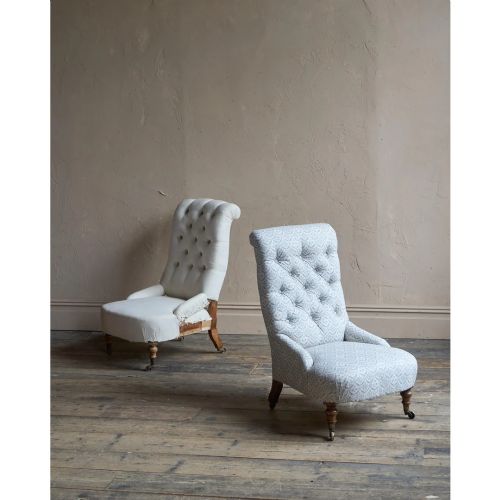
A Victorian low armchair pair brings matched seating into a room, taking the form of nursing chairs, bedroom chairs, slipper chairs, and easy chairs designed for fireside or low-level seating. The pieces appearing here span the nineteenth century, covering the Victorian and Edwardian eras alongside French Napoleon III and French Rococo Revival interpretations.
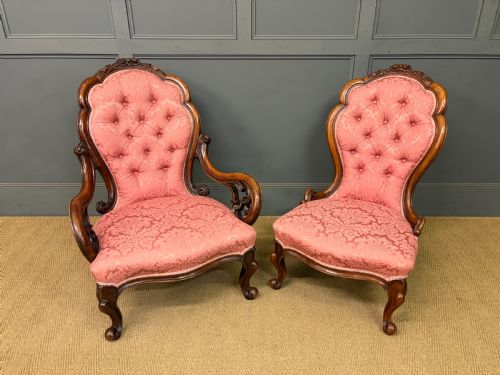
Buyers seeking this phrase encounter walnut, oak, and mahogany frames supporting fully upholstered bodies covered in velvet, ticking, calico, and fabric. Forms range from button-backed and hoop-backed armchairs to corner chairs and child chairs, reflecting the varied domestic uses of the period.
Materials and Construction
Frames rely upon timbers such as walnut, mahogany, oak, and ash, shaped into carved walnut structures, bobbin turnings, and sturdy wood supports. Brass details often appear on castors, providing mobility to heavy, deep-seated frames.
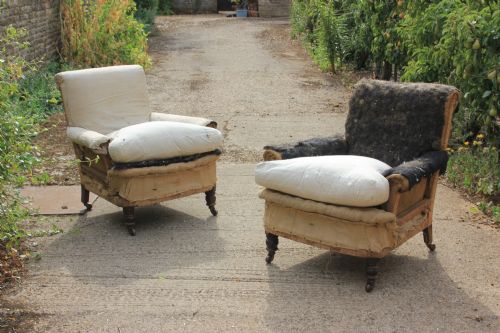
Upholstery techniques involve deep buttoning, fabric covers, calico foundations, and grey ticking, supported by sprung seats designed for comfort. Wood carving defines the show-wood elements on walnut and mahogany frames.
Some nineteenth-century nursing chairs were built intentionally low so Victorian ladies could tend fires without scorching their faces.
Judging Quality
The standard of a pair rests upon the integrity of the timber frame, the crispness of any wood carving, and the fidelity of the upholstery work. Matched pairs show consistent proportion, identical turning, and balanced wear across both chairs.
Maker attribution alters the standing of a piece, with workshops like Howard and Sons or Gillows commanding attention for their construction and design pedigree. The quality of the underlying springs and traditional stuffing dictates the comfort and longevity of the seating.
Howard and Sons·Gillows
The Victorian Low Armchair Pair Glossary
- Nursing chair
- A low-seated chair traditionally used in bedrooms or nurseries for feeding and sewing. These pieces feature short legs to keep the sitter near the floor.
- Slipper chair
- An upholstered chair with very short legs designed for dressing rooms and bedrooms. They allow sitters to put on shoes with ease.
- Ticking
- A heavy cotton or linen fabric woven in stripes, commonly used as a durable upholstery cover. It provides a relaxed, traditional appearance on nineteenth-century seating.
- Button back
- An upholstery style where depressions are formed in the padding by pulling buttons deep into the stuffing. This technique secures the filling and creates a patterned surface.
Victorian Low Armchair Pair: Frequently Asked Questions
What rooms suit a low armchair pair?
These matched chairs fit naturally in bedrooms, dressing rooms, and firesides where lower seating heights create an intimate seating arrangement.
Their compact proportions also allow them to sit comfortably in sitting rooms without dominating the floor space.
How do I identify a true pair?
Examine the timber grain, carving details, and frame dimensions to confirm that both chairs share identical construction origins.
Slight variations in hand-turned elements or wear patterns indicate genuine age and traditional craft methods rather than factory replication.
Are these chairs comfortable for daily use?
Many examples feature deep-seated sprung upholstery designed specifically for lounging and long periods of relaxation.
Their low stature provides a restful posture, though comfort ultimately depends on the condition of the internal padding.
What fabrics appear on these chairs?
Original and replacement coverings include cotton ticking, plush velvet, plain calico, and various traditional patterned textiles.
Ticking and calico offer a simpler aesthetic, while velvet provides a more formal nineteenth-century appearance.