


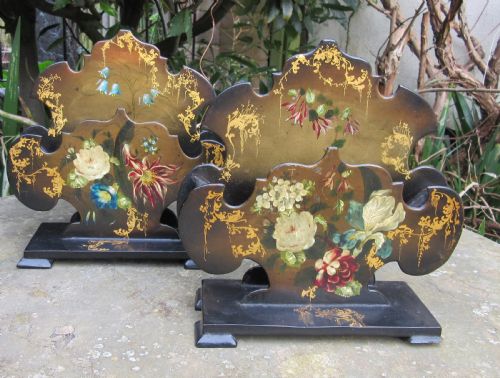

Victorian Letter Stand
A Victorian letter stand organises your desk with period craftsmanship, offering a practical stationery holder in brass, wood, or papier-mâché.
Victorian Letter Stand
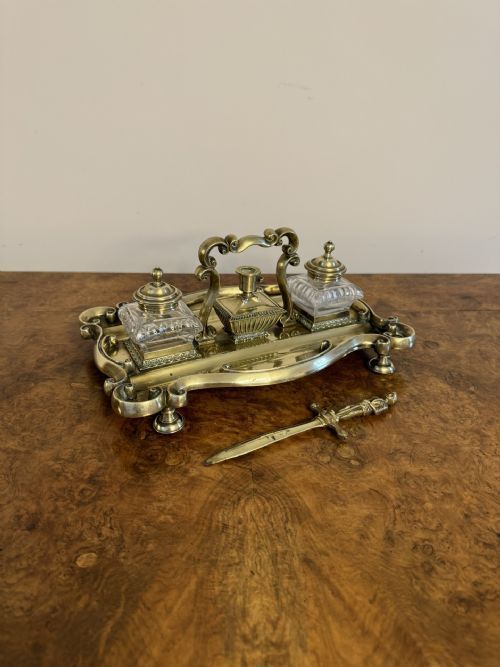
A Victorian letter stand is a desk accessory designed to hold correspondence, envelopes, and papers within a study or office space. You will frequently find these pieces rendered in brass, mahogany, oak, and papier-mâché, often combining inkwells or pen trays into the design.
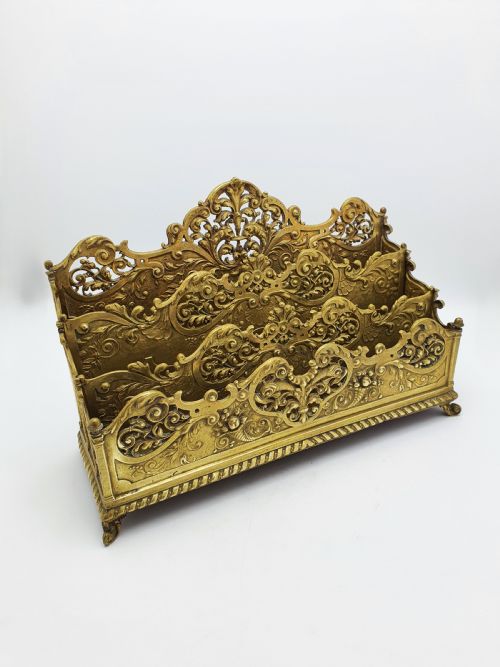
The selections span the nineteenth century and into the Edwardian period, appearing as dedicated letter racks, stationery boxes, and larger desk tidies. Formats range from simple wooden waterfalls to ornate Rococo Revival brass frameworks and novelty cricket motifs.
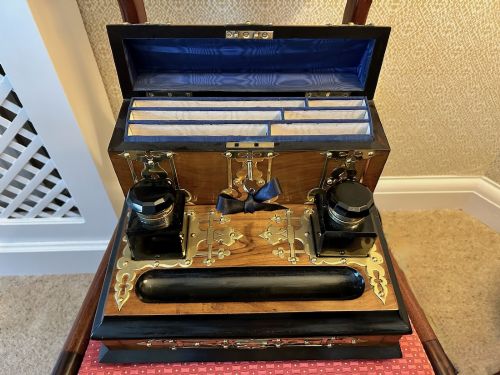
Many examples integrate compartments for ink and pens alongside the letter slots, reflecting the practical desk organisation needs of the period. These desk accessories serve both functional duties and decorative roles in modern interiors.
How they were made
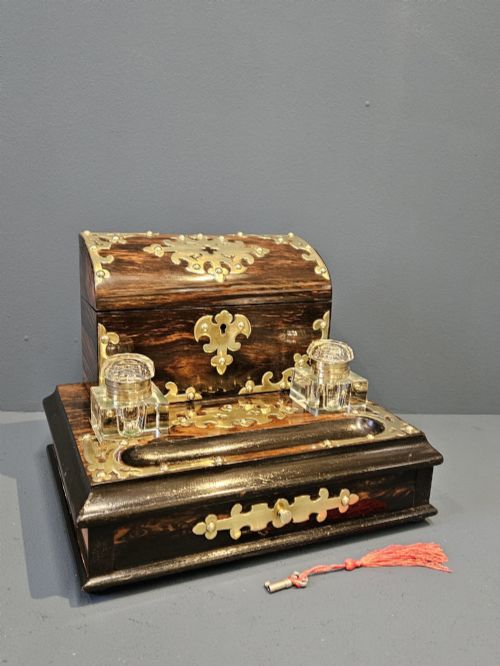
Cabinet makers utilised dense timbers such as mahogany, oak, walnut, and coromandel, frequently shaping them into tiered waterfall structures or fitted stationery boxes. Joinery methods of the period involved precise dovetailing and turned supports to create sturdy compartments for paper.
Metalworkers cast brass into intricate Rococo scrolls, architectural Gothic motifs, and novelty shapes, occasionally combining the metal with glass inkwells or silver plating. Papier-mâché and toleware pieces involved moulded bases finished with painted or lacquered decoration.
Fitted interiors often incorporated leather, velvet, or silk linings within compartments, while metal components relied on casting and chased surface detailing. The integration of different materials such as brass fittings on wooden bodies required precise mechanical fixing.
Forms range from simple waterfall letter racks to complex desk tidies incorporating inkstands, stamp boxes, and newspaper holders.
What varies in quality
The standard of a piece depends heavily on the crispness of the casting in brass examples and the selection of figured veneers in wooden desk accessories. Superior items display well-defined detail in decorative mounts, harmonious material pairings, and robust structural integrity.
Simpler office tidies focus on utility with plain oak or pine construction, whereas luxury examples utilise exotic coromandel, sterling silver, or hand-painted toleware finishes. The presence of integrated elements like original glass inkwells and complete locking mechanisms elevates the standing of an individual piece.
The Victorian Letter Stand Glossary
- Stationery box
- A desk accessory featuring a lidded compartment or tiered slots designed to hold writing paper and envelopes.
- Papier-mâché
- A composite material made from paper pulp or layers of paper bound with glue, moulded, and finished with lacquer or paint.
- Rococo Revival
- A nineteenth-century design style characterised by asymmetrical scrolls, flowing curves, and ornate natural motifs.
- Coromandel
- A dense, heavily figured tropical hardwood from Asia, prized for its dark grain and used in luxury Victorian deskware.
- Toleware
- Metalware, typically iron or steel, coated with tin and finished with opaque painted or lacquered decoration.
Victorian Letter Stand: Frequently Asked Questions
What is a Victorian letter stand?
A Victorian letter stand is a desktop organiser created during the nineteenth century to hold envelopes, correspondence, and writing materials.
These pieces range from simple wooden tiered racks to elaborate brass and papier-mâché desk sets that often incorporate inkwells.
How were letter stands used?
They sat upon library tables, hall desks, and office bureau surfaces to keep incoming and outgoing mail sorted and accessible.
Many designs combined letter slots with pen trays and ink containers to serve as complete writing stations.
Are these stands made of brass or wood?
Both materials appear frequently across the period, often combined in a single piece through brass frames mounted on mahogany or oak bases.
Other examples utilise alternative materials including papier-mâché, coromandel, and painted toleware.
How do I date a letter stand?
Dating relies on observing the stylistic indicators, such as Rococo Revival casting, Arts and Crafts simplicity, or Edwardian manufacturing traits.
Materials and construction techniques also provide clear markers of the period of origin.
Can I use an antique letter stand today?
These pieces accommodate modern mail, envelopes, and notepads just as they held nineteenth-century correspondence.
Their compact footprints make them practical accessories for contemporary desks and hallways.