



Antique Brass Organiser
These antique brass organiser pieces sort desk papers and hold letters with period charm, offering a practical solution for tidy writing surfaces.
Antique Brass Organiser
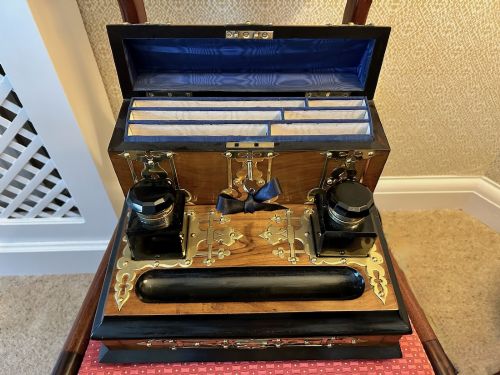
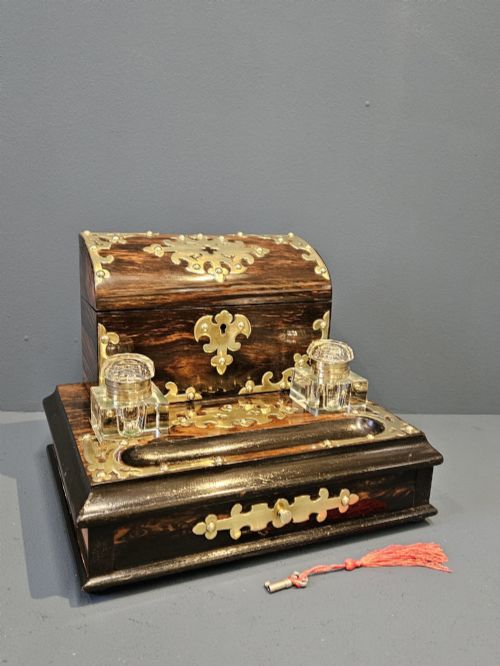
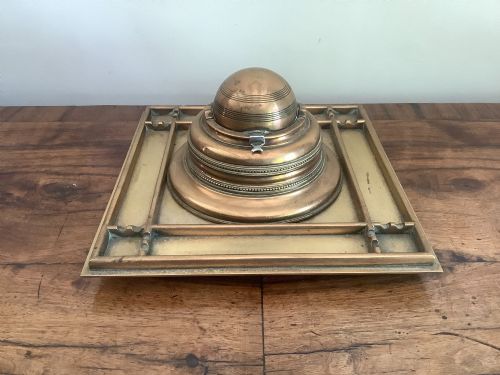
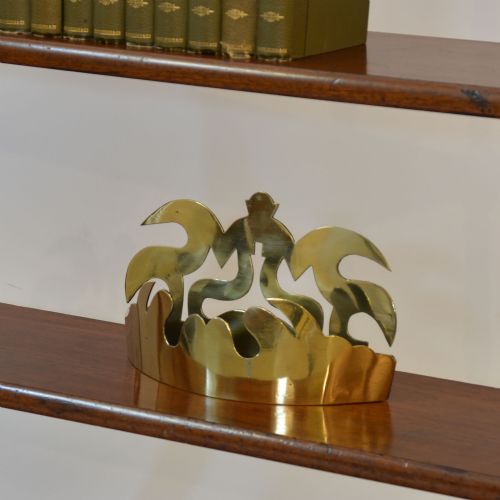
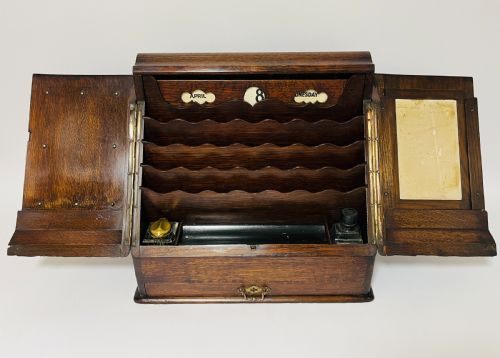
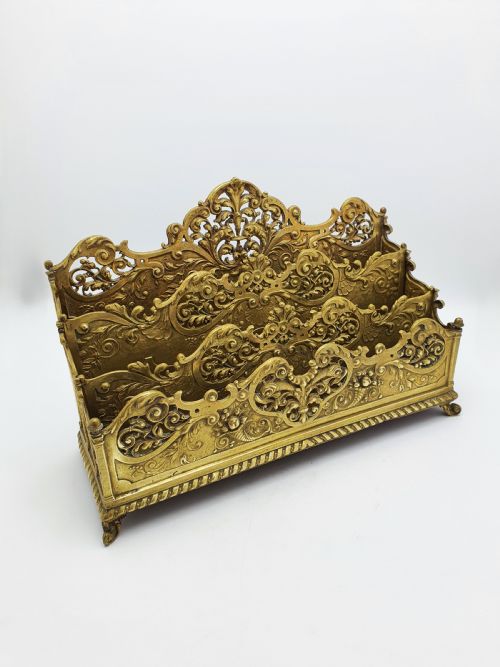
An antique brass organiser encompasses items designed to keep correspondence and desk paraphernalia in order, drawing from nineteenth and early twentieth century origins. Buyers searching for an antique brass organiser encounter stationery boxes, letter racks, inkstands, and desk tidies spanning the Victorian and Edwardian periods.
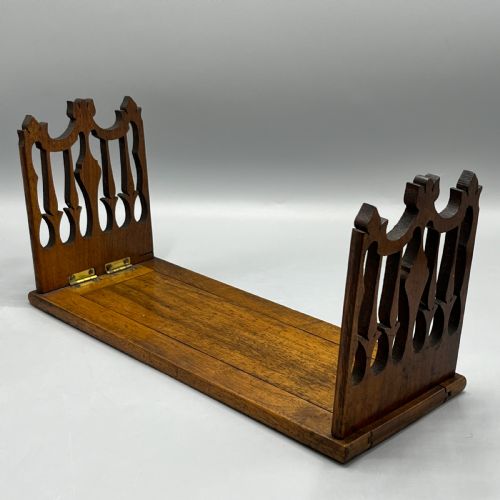
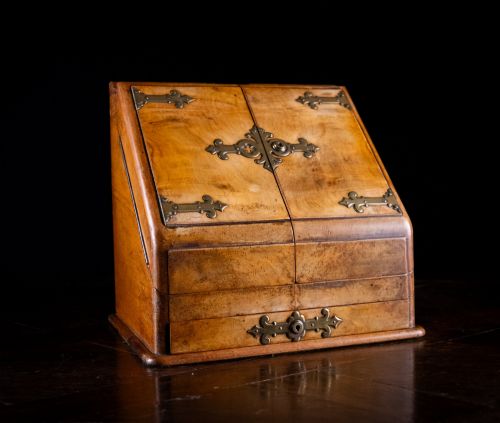
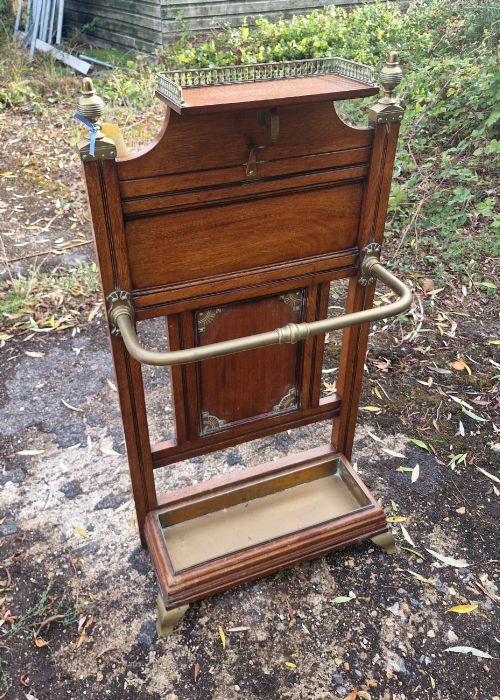
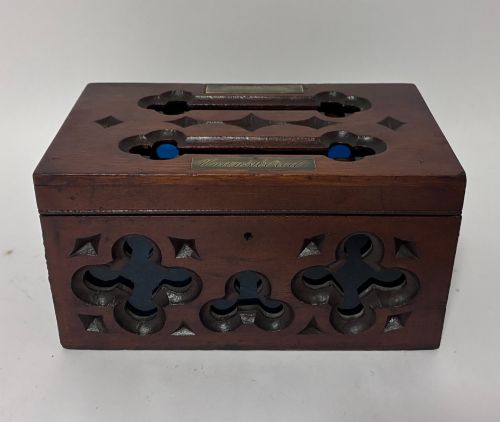
The selection ranges from oak and walnut correspondence boxes mounted in brass to French ormolu desk sets and wall pockets. Most pieces combine solid woods like mahogany or oak with brass mounts, hinges, and framework to create durable desktop storage.
Materials and Technique
Construction relies on combining metals with cabinet timbers such as walnut, oak, mahogany, and coromandel. Brass provides structural mounts, hinges, galleries, and decorative plaques, while glass inserts appear in inkwells.
Joinery methods reflect period cabinet-making standards, incorporating brass inlay, ormolu casting, and fitted wooden compartments. Patination develops naturally on the brass elements and timber surfaces through handling and age.
Listings feature items from the Victorian, Edwardian, and Georgian periods, utilising brass, oak, walnut, and mahogany.
Standard and Execution
Quality rests in the crispness of brass casting, the selection of figured wood veneers, and the presence of original internal fittings like glass inkwells or velvet-lined compartments. Superior examples display careful engraving, robust hinges, and patent mechanisms.
Lesser items show simpler construction with plain timber and stamped sheet brass rather than heavy cast mounts. The integrity of the combined materials and surviving original components dictate the standing of each piece.
Betjemanns
The Antique Brass Organiser Glossary
- Standish
- A structured tray or stand designed to hold inkwells, quill pens, and sanders for a desk. It serves as a central writing accessory.
- Ormolu
- Gilded bronze or brass applied to furniture and decorative objects for ornamentation. It provides a bright metallic finish.
- Correspondence Box
- A tabletop box constructed to hold writing paper, envelopes, and incoming letters. These boxes often feature fall fronts or sloping lids.
- Coromandel
- A dense, heavily figured timber imported from Asia, frequently used for luxury Victorian boxes and desk accessories. Its dark grain contrasts sharply with brass mounts.
Antique Brass Organiser: Frequently Asked Questions
What is an antique brass organiser?
An antique brass organiser refers to desk accessories and boxes incorporating brass work, designed to hold letters, pens, and stationery.
These pieces originate mainly from the Victorian and Edwardian eras, combining timber construction with brass hardware.
How were stationery boxes used?
Stationery boxes sat on writing desks to keep writing paper, envelopes, and correspondence neatly sorted and out of sight.
Fall fronts and hinged lids protected the paper from dust while providing quick access for daily correspondence.
How do I date an organiser?
Dating relies on stylistic clues, timber choices, and construction methods associated with periods like the Victorian or Edwardian eras.
Patination on the brass and the type of joinery help narrow down the decade of manufacture.
Are inkwells usually included?
Many desk stands and inkstands retain their original glass or ceramic inkwells, often fitted with brass collars or hinged lids.
Some pieces lose these small removable inserts over time, though replacements can be matched to the period.