




Pierced Brass Holder
These pierced brass holder examples span the Victorian and Edwardian eras, offering intricate fretwork and metalwork for domestic utility.
Pierced Brass Holder
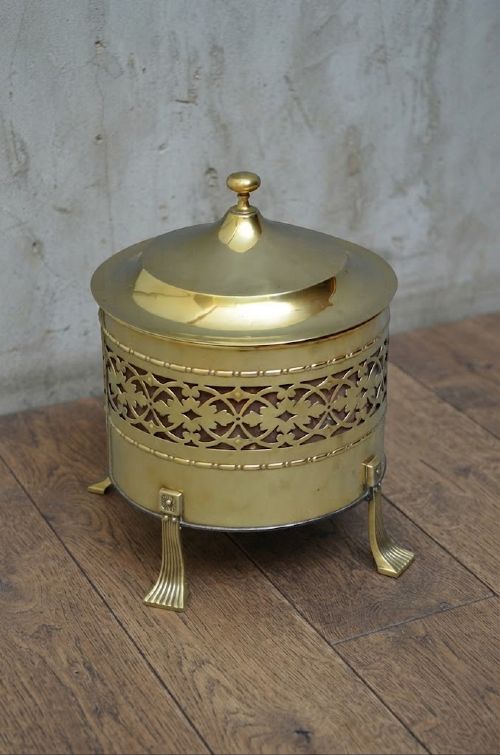
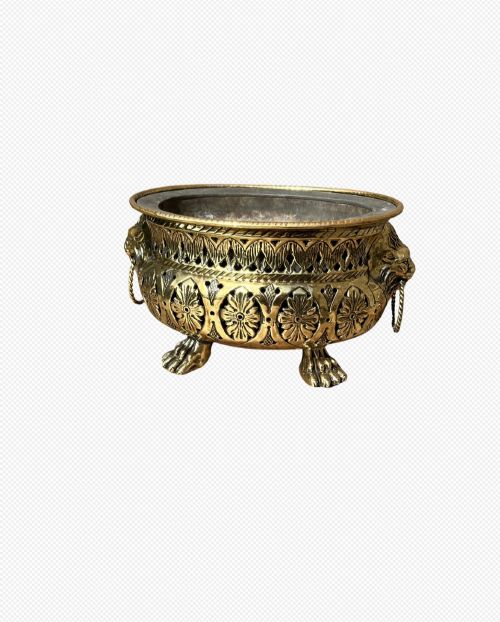
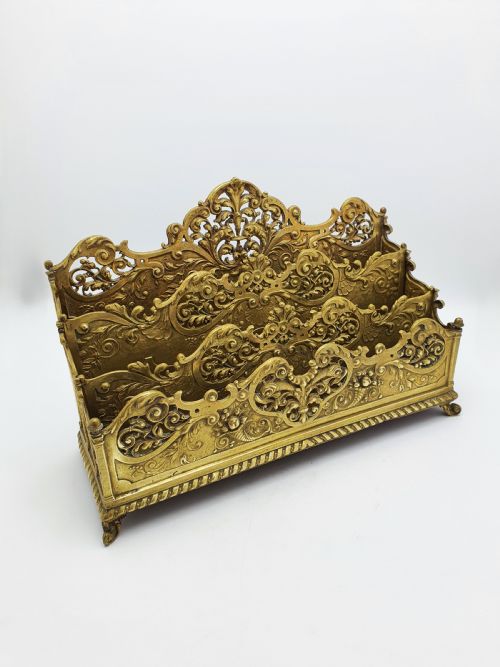
A pierced brass holder encompasses a variety of domestic and decorative objects produced primarily during the Victorian and Edwardian periods, stretching from the mid-nineteenth century into the early twentieth century. These items include jardiniere planters, coal buckets, chambersticks, desk sets, letter racks, and stick stands, each featuring perforated or fretwork metal designs.
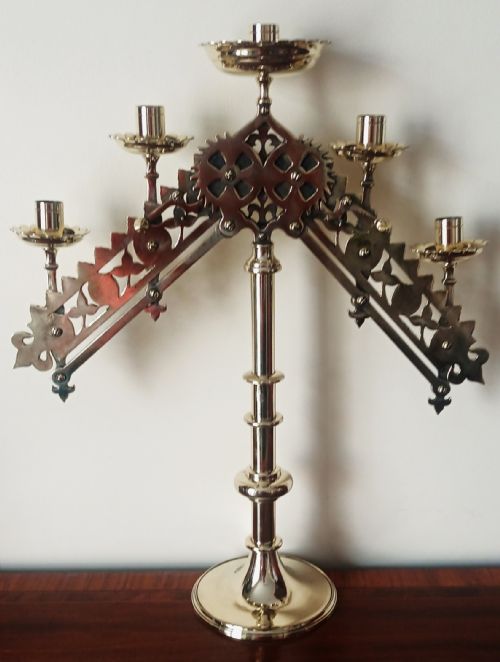
The evidence shows forms ranging from Grand Tour letter racks and church candlesticks to hearth accessories and plant holders with origins spanning English, French, and Anglo-Indian workshops. Buyers seeking a pierced brass holder will frequently encounter items utilising cast brass alongside mixed media such as porcelain and glass.
How they were made
The construction of these pieces relies heavily on brass and cast brass, occasionally complemented by copper or other metals to create structured forms like cylindrical planters and candelabras. Artisans achieved the signature pierced decoration through techniques of cutting, fretwork, and openwork casting.
Many items incorporate additional decorative elements, pairing the pierced metalwork with porcelain inserts or glass components as seen in nineteenth-century desk accessories and candlesticks.
Materials documented across the pieces include brass, cast brass, copper, porcelain, and glass.
What varies in quality
Quality in these items is determined by the crispness of the piercing and the weight of the cast brass used in the construction, distinguishing standard production from finer ornamental work. The complexity of the design, whether utilising restrained Gothic Revival motifs or elaborate Rococo Revival and Art Nouveau curves, dictates the refinement of the piece.
The inclusion of supplementary materials, such as porcelain sections or articulated components, introduces another tier of distinction among desk sets, jardiniere planters, and candelabras.
Wm. Tonks & Sons
The Pierced Brass Holder Glossary
- Pierced brass
- Metalwork featuring patterns cut completely through the sheet brass or cast brass to create openwork designs. This technique allows light and air to pass through the decorative body of the object.
- Fretwork
- An ornamental design created by cutting intricate patterns into metal or wood using a piercing method. It defines the decorative surface of many coal buckets and planters.
- Chamberstick
- A short candlestick fitted with a wide drip pan and a side handle for carrying around a house. These portable light holders often feature pierced or shaped brass work.
- Jardiniere
- An ornamental pot or stand designed to hold a plant or floral arrangement. Examples frequently employ pierced brass or copper bodies.
- Grand Tour
- A cultural journey undertaken by wealthy young Europeans in the eighteenth and nineteenth centuries to study art and antiquities. Souvenirs from these travels included decorative metal items such as letter racks.
Pierced Brass Holder: Frequently Asked Questions
What is a pierced brass holder used for?
These items serve various functional and decorative roles around the home, including holding candles, desk supplies, walking sticks, or potted plants.
Depending on the specific form, such as a chamberstick or jardiniere, they combine practical utility with ornamental metalwork.
How do I date a pierced brass item?
Dating relies on stylistic clues and period characteristics, as seen in the transition from mid-nineteenth-century Gothic and Rococo Revivals to later Art Nouveau designs.
Construction methods and accompanying materials like porcelain also help place pieces within the Victorian or Edwardian eras.
Are these items made of solid brass?
The pieces utilise brass, cast brass, and sometimes copper as their primary metallic components.
Some designs incorporate other materials such as glass or porcelain alongside the metal framework.
How do I care for antique brass?
Maintenance involves gentle cleaning to preserve the patination that develops on nineteenth-century and early twentieth-century metal surfaces.
Harsh abrasives should be avoided to protect the intricate pierced and fretwork details.