



Ornate Brass Accessories
Ornate brass accessories bring heavy decorative metalwork to hearths and writing desks through nineteenth-century and Edwardian forms.
Ornate Brass Accessories
These ornate brass accessories encompass heavy hearth furniture and refined desktop items found across the nineteenth century and the Edwardian period. Buyers examining this selection encounter items designed for practical daily use that simultaneously served as decorative interior statements.
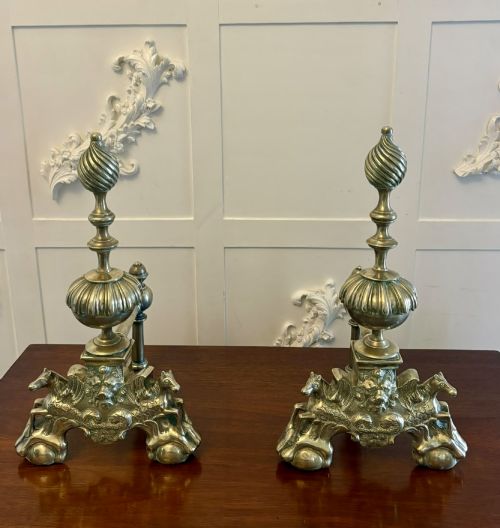
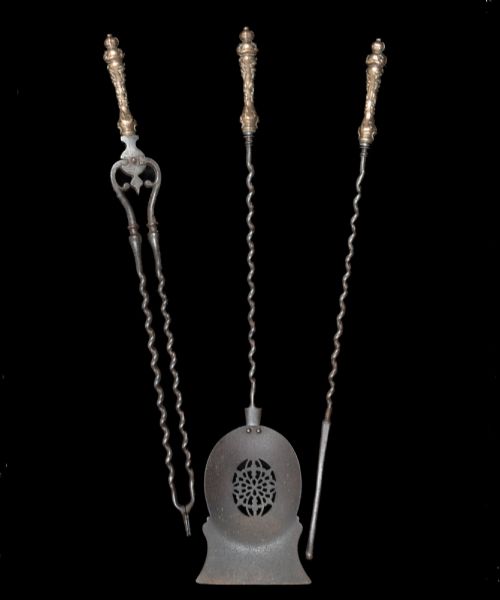
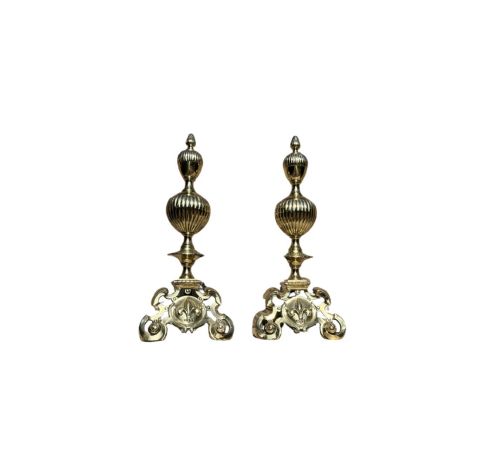
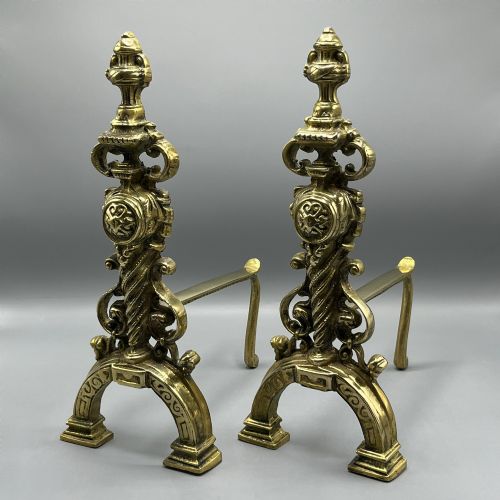
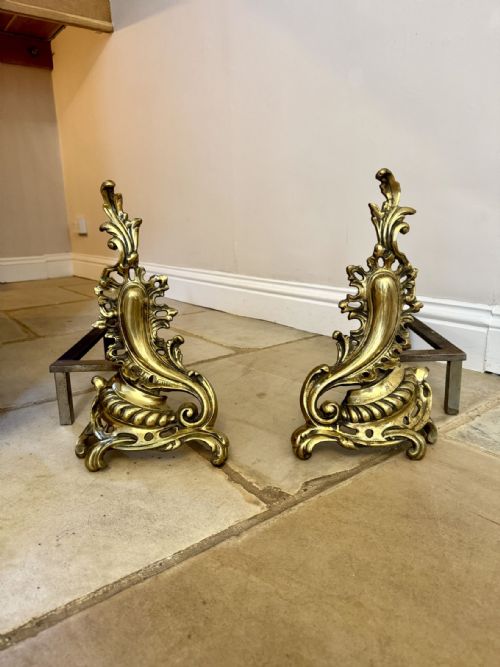
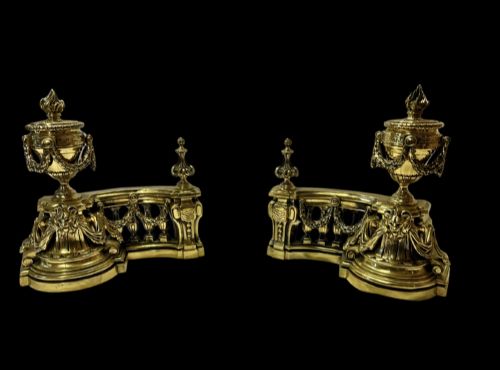
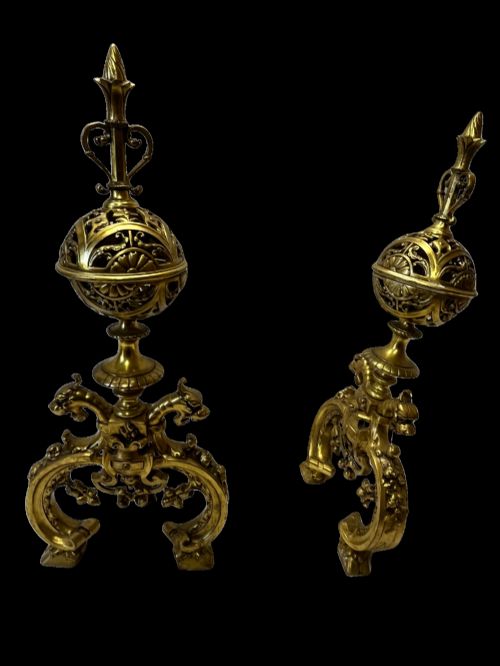
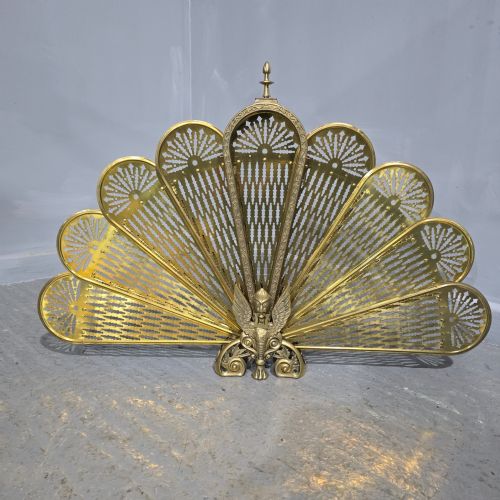
Hearth equipment forms a prominent category, featuring substantial pairs of fire dogs, andirons, companion fire tool sets, coal scuttles, and protective fire screens. These pieces frequently draw upon French Rococo, Baroque, and Gothic Revival styles to create dramatic focal points in period reception rooms.
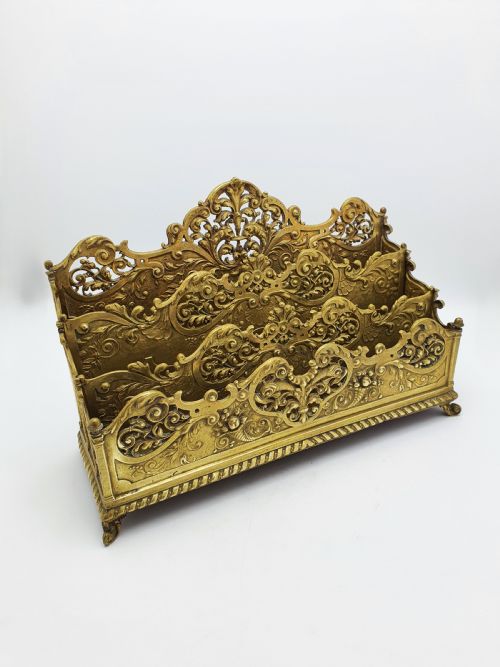
Desktop accessories represent the smaller scale of this metalwork, including detailed inkwells, inkstands, letter racks, desk sets, rocker ink blotters, and desk bells. Such items often incorporate materials like cut-glass, marble, wood, and steel alongside the primary brass foundation.
How they were made
Makers utilised brass casting and wrought iron techniques to produce durable hearth furniture capable of withstanding intense fireplace heat. Cast brass elements provided deep sculptural relief for decorative motifs, while steel and wrought iron components added structural strength to fire irons and fenders.
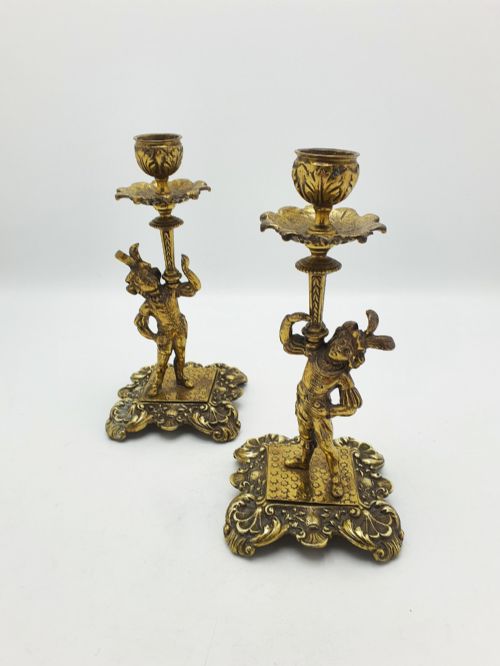
Gilt brass and ormolu finishes offered a bright, reflective surface layer on French-inspired decorative items and display caskets. Many items combined cast brass with contrasting materials such as marble bases, cut-glass inkwells, and polished wooden components.
Listings demonstrate a strong presence of nineteenth-century French Rococo fire dogs alongside Edwardian desk sets and cast brass inkwells.
What varies in quality
The degree of crispness in the cast detailing separates standard production from exceptional studio work. Superior items display sharp, deeply chased foliage, scrolls, and figural elements without the softening often seen in secondary castings.
Substantial metal weight and solid construction differentiate high-grade domestic hardware from lighter utilitarian pieces. Quality also shows in the successful integration of secondary materials, such as heavy cut-glass reservoirs fitted securely into cast mounts.
Benham & Froud·James Cartland & Sons
The Ornate Brass Accessories Glossary
- Andirons
- Supports for logs in an open fireplace, frequently featuring decorative upright fronts. They are also known as fire dogs.
- Ormolu
- Finely ground high-zinc brass applied as a gold-coloured surface finish to decorative metalwork. This technique was widely utilised by nineteenth-century French makers.
- Chenet
- The French term for a fire dog or andiron, usually associated with elaborate Rococo Revival hearth arrangements. These objects ornamented the front of the hearth.
- Inkstand
- A desk accessory comprising a tray fitted with one or more inkwells, sanders, and penholders. They formed the centrepiece of Victorian and Edwardian writing desks.
- Fireguard
- A protective metal screen placed in front of an open hearth to catch stray sparks. Many examples employed folding brass mesh or decorative peacock fan designs.
Ornate Brass Accessories: Frequently Asked Questions
How do I clean antique brass?
Antique brass generally requires minimal intervention to preserve the mellow surface tones accumulated over decades of age. Dusting with a soft cloth and occasional gentle cleaning keeps the metal stable.
Avoid harsh modern metal polishes that strip away historical patination and remove the subtle details carved into the casting.
What is an inkstand?
An inkstand is a portable tray holding inkwells, pen rests, and sometimes sanders or stamp boxes. They were essential desk accessories for correspondence before the advent of fountain pens.
Finer examples combined cast brass frames with cut-glass inserts and marble bases to match the furnishings of a gentleman's study.
How do I date Victorian brasswork?
Dating relies on stylistic shifts, manufacturing marks, and the combination of materials used in the construction. Pieces influenced by the Gothic Revival or heavy Rococo taste typically point toward the middle decades of the nineteenth century.
Later Edwardian items often display lighter proportions while retaining ornate surface decoration inspired by earlier French periods.