


Brass Night Light
These brass night light pieces offer practical illumination and period charm, ranging from Georgian chambersticks to Art Deco figural lamps.
Brass Night Light
A brass night light encompasses a range of domestic lighting from simple chambersticks to decorative figural lamps. Buyers exploring brass night light options frequently encounter Victorian and twentieth-century examples designed for low-level illumination.
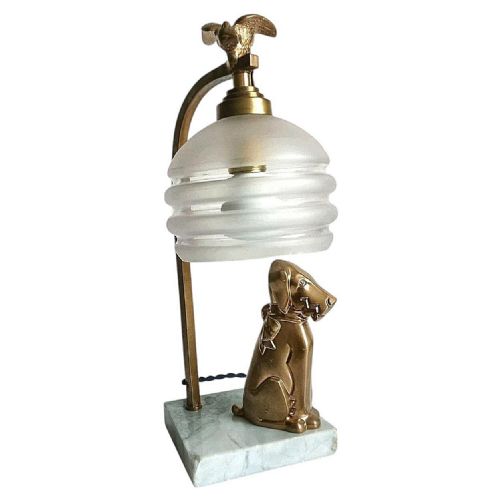
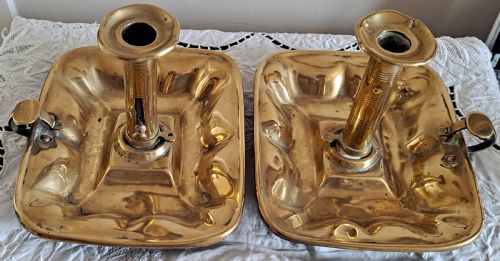
The selection includes eighteenth-century cast brass chambersticks alongside Arts and Crafts pairs and Art Deco pieces incorporating marble or frosted glass. Forms vary from traditional candle holders to oil lamps and fitted night lights featuring birds and novelties.
Origins span English, French and continental workshops across the Georgian, Victorian and Edwardian eras. The most common survivals on this page are nineteenth-century chambersticks and twentieth-century decorative lamps.
Materials and construction
Construction relies heavily on brass and cast brass, frequently paired with contrasting materials such as marble, porcelain and granite. Silver plate also appears on early nineteenth-century chamber candlesticks.
Glass elements include frosted glass and mottled opaline shades, which soften the light emitted from candles or early bulbs. Metalwork techniques combine cast components with detailed assembly typical of French and English workshops.
Assessing quality in lighting
Quality rests in the crispness of the cast brass detail and the integrity of paired materials like porcelain or marble bases. Superior examples maintain their original components without replacement parts or mismatched elements.
Design complexity distinguishes standard utilitarian items from artistic productions, particularly within Art Deco and Arts and Crafts pieces where figural elements or specialised glass shades elevate the work.
The Brass Night Light Glossary
- Chamberstick
- A short portable candlestick fitted with a pan to catch dripping wax and a handle for carrying from room to room. These form a large portion of early lighting options.
- Opaline glass
- A type of semi-translucent glass, often white or lightly tinted, used to diffuse light gently. It frequently appears in twentieth-century decorative shades.
- Sheffield plate
- A material made by fusing a thin layer of silver to a copper base, common in older candlestick production. It offers the appearance of solid silver through a distinct manufacturing method.
- Art Deco
- A design style from the early twentieth century characterised by sleek geometric forms, stylized motifs and modern materials. Pieces from this era often incorporate marble and novel figural designs.
Brass Night Light: Frequently Asked Questions
What is a brass night light?
A brass night light is a small lighting fixture or chamberstick designed to provide low-level illumination through the night.
These pieces range from simple eighteenth-century candle holders to decorative twentieth-century figural lamps made in France and England.
How were chambersticks used?
Chambersticks were carried by hand to light pathways through dark hallways and bedrooms before the widespread adoption of electricity.
The wide drip pan protected the holder's hand from hot wax while moving about the house.
How do I date a brass piece?
Dating relies on stylistic markers, manufacturing techniques and material combinations associated with specific periods like the Georgian or Victorian eras.
Art Deco pieces often feature geometric lines and materials such as marble or mottled opaline glass characteristic of the 1930s.
Are these pieces functional?
Many candle-based items and chambersticks remain fully functional for holding standard tapers today.
Electrified or oil-based lamps require careful inspection and possible rewiring by a professional before daily use.