
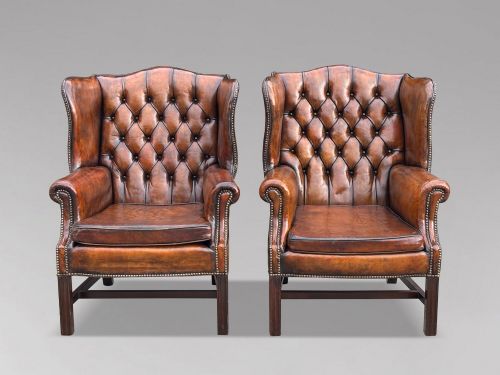
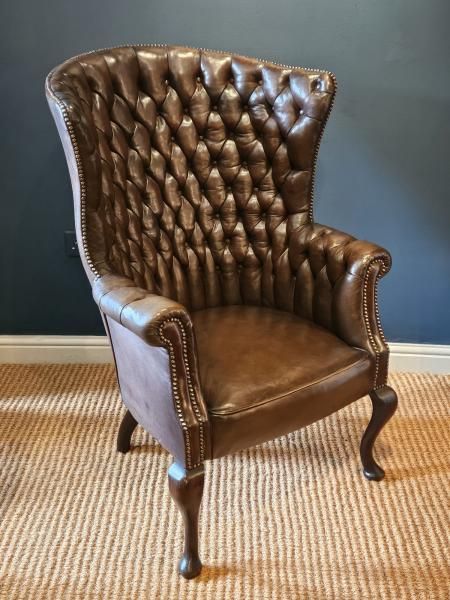
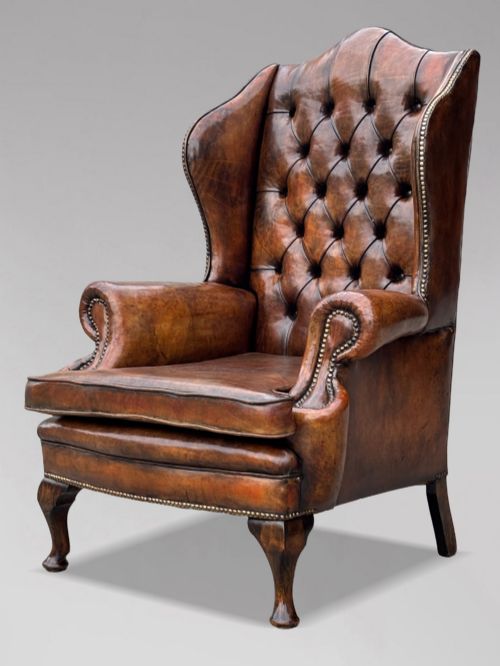
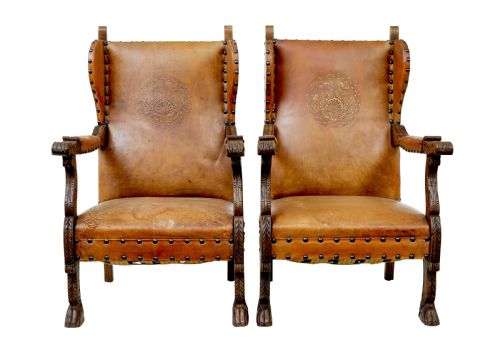
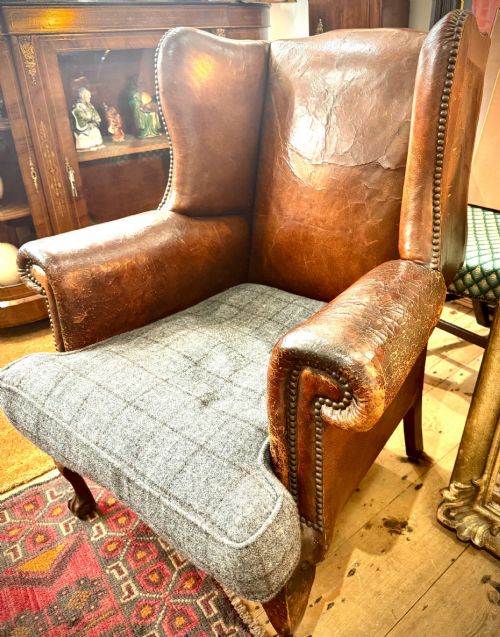


Victorian Leather Wing Chair
A victorian leather wing chair brings deep comfort and formal presence to a room, formed around tall protective sides and rich hides.
Victorian Leather Wing Chair
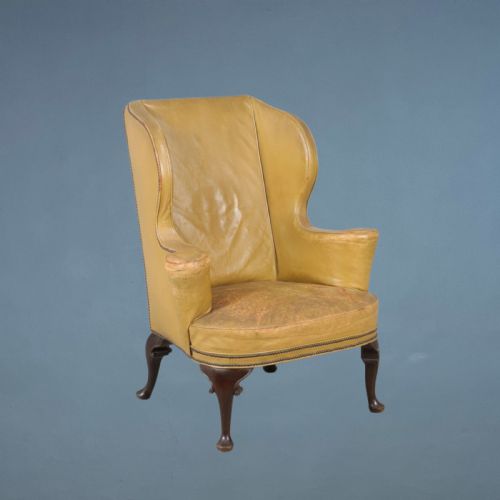
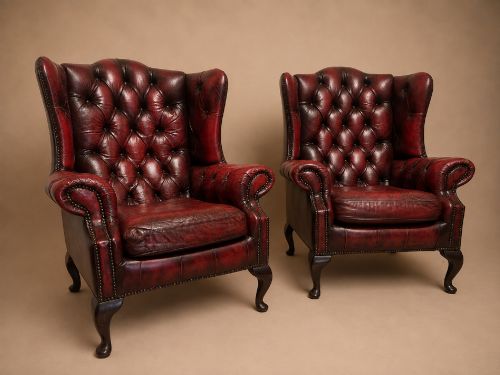
A victorian leather wing chair combines substantial padded seating with flanking upholstered panels designed originally to shield the sitter from draughts. You will encounter versions spanning the nineteenth century alongside pieces from the early twentieth century, taking the form of library armchairs, club chairs, and occasionally matching pairs.
Beyond standard seating, the evidence includes related variants such as porters chairs, invalid chairs, and button-backed sofas. Most pieces emerge from the Victorian period, though occasional examples stretch back to the Regency era or forward into the nineteen-twenties.
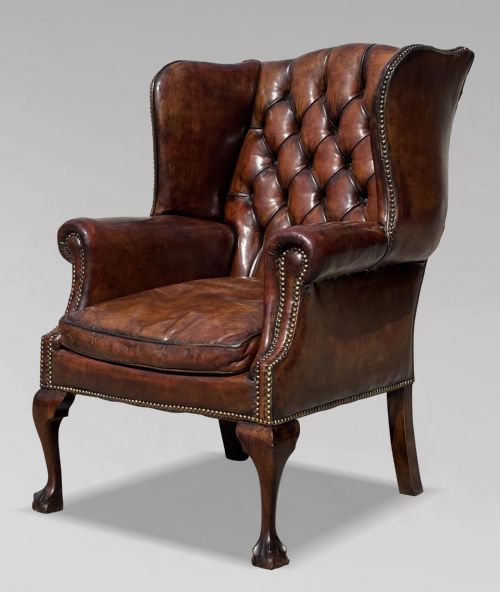
The silhouettes range from straightforward library models to large carved armchairs resting on cabriole legs or wooden frames. These seats serve equally well beside a fireplace or anchoring a study.
How they were made
Frames rely on sturdy timbers including mahogany, oak, walnut, and assorted hardwoods, providing the structural skeleton for heavy upholstery. Iron and brass components appear in mechanical reclining frames or wheel attachments.
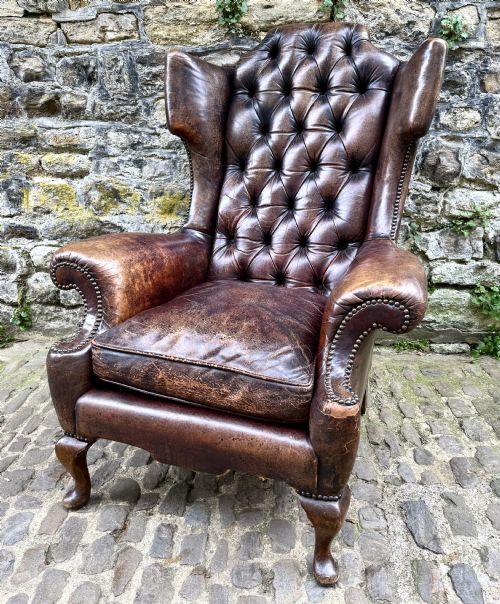
The distinctive upholstery utilises leather hides, sometimes hand-dyed, hand-coloured, or embossed, secured frequently with deep buttoning. Wool stuffing and traditional padding provide the interior volume behind the leather skin.
Listings feature woods like mahogany, oak, walnut, and hardwood, paired with leather, wool, and brass components.
What varies in quality
The character of the hide defines much of the distinction, separating uniform factory finishes from rich hand-dyed leathers with natural patination. Superior examples display careful hand-finishing, deep buttoning work, and robust timber frames.
Carved details on the wooden legs and arms indicate higher craftsmanship, ranging from simple turned supports to elaborate lion carvings. The integrity of the internal frame and the depth of the wing proportions also separate standard seating from exceptional library pieces.
J Foot And Son·John Ward·Gillows
The Victorian Leather Wing Chair Glossary
- Wingback
- An armchair featuring protective side panels attached to the arms and back. These extensions historically trapped heat and blocked cold air.
- Buttoning
- Upholstery technique where deep indentations are secured with twine through the padding. This method keeps the stuffing firmly anchored.
- Cabriole leg
- A furniture leg that curves outward and then tapers inward. It often terminates in a carved foot.
- Porters chair
- A high-enclosed armchair designed for hall attendants. They feature hooded backs to keep out hall draughts.
Victorian Leather Wing Chair: Frequently Asked Questions
What is a wing chair used for?
These chairs provided seated comfort near firesides by using side panels to deflect cold draughts away from the head and neck. They served primarily in libraries, parlours, and hallways.
Over time they evolved into general reading chairs and formal gentleman's seating, offering a private enclosure within an open room.
How do I identify a Victorian piece?
Victorian examples display characteristic timber framing such as mahogany, oak, or walnut, paired with heavy leather upholstery. Look for traditional construction methods and period stylistic revivals.
Many pieces also feature button-backed upholstery, hand-dyed hides, and structural forms dating from the nineteenth century.
Are pairs common in these chairs?
Matching pairs do appear across nineteenth-century listings, often taking the form of library armchairs or large club seating. These matched sets usually share identical framing timber and leather tones.
Finding a true pair requires checking for consistent dimensions, matching leg carvings, and uniform wear patterns across both pieces.
What is a porters chair?
A porters chair is a specialised form featuring an enclosed hood or high wing structure designed to shelter a doorkeeper stationed in a draughty entrance hall. They often incorporate enclosed sides and sturdy wooden frames.
These pieces offered maximum protection against cold air currents in large country houses and grand town residences.
How do I care for antique leather?
Antique leather benefits from gentle cleaning and occasional conditioning to maintain the suppleness of the hide. Avoid placing these chairs in direct sunlight or beside intense heat sources.
Preserving the natural patination requires minimal intervention, allowing the historical surface character to remain intact over decades of use.