
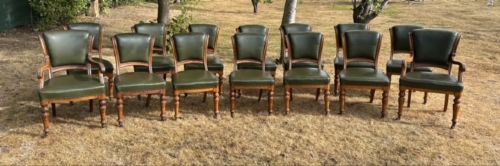
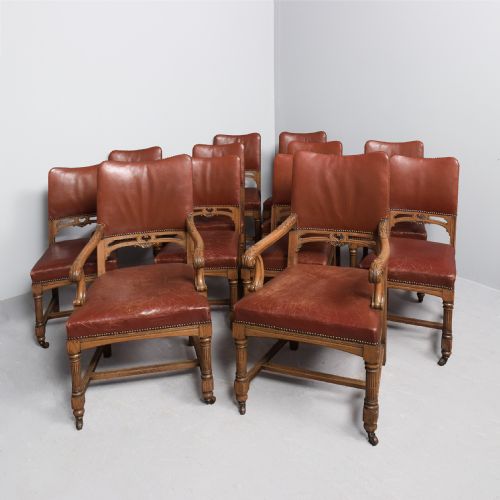
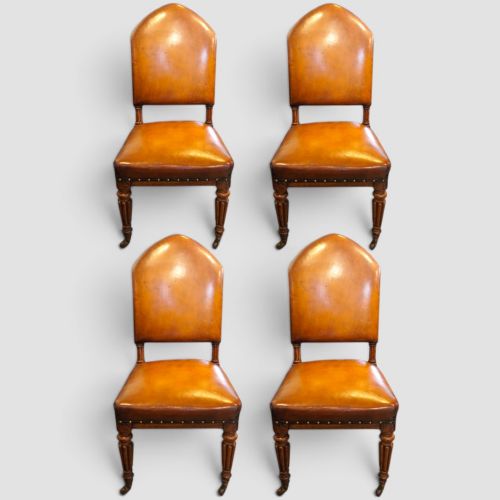
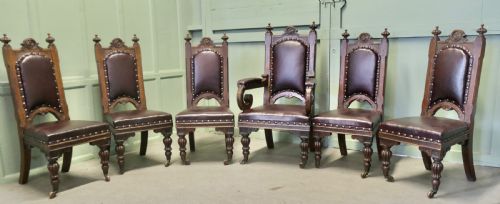
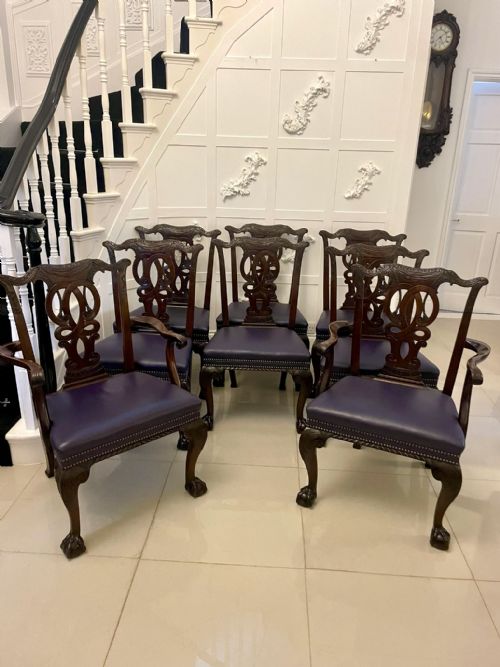
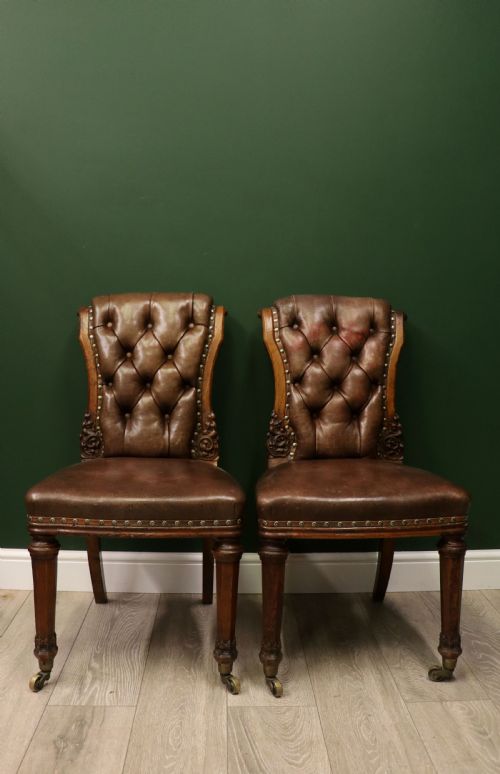
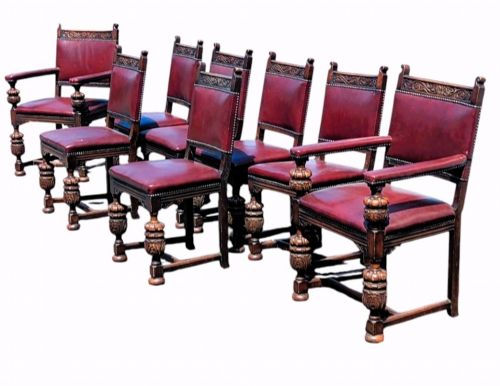

Victorian Leather Side Chairs
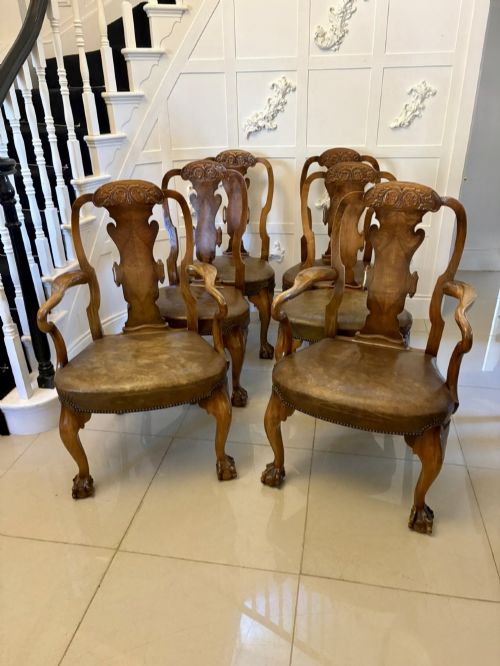
These victorian leather side chairs bring substantial nineteenth-century timber frames and patinated hides directly into everyday dining rooms and libraries.
Victorian Leather Side Chairs
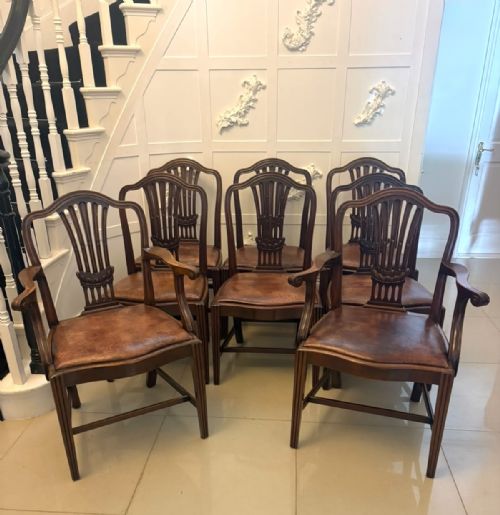
When you search for victorian leather side chairs, you encounter robust seating frames built across the nineteenth century, including specific decades like eighteen-fifty, eighteen-sixty, eighteen-seventy, eighteen-eighty, and the edwardian period.
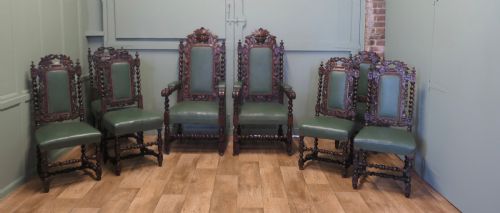
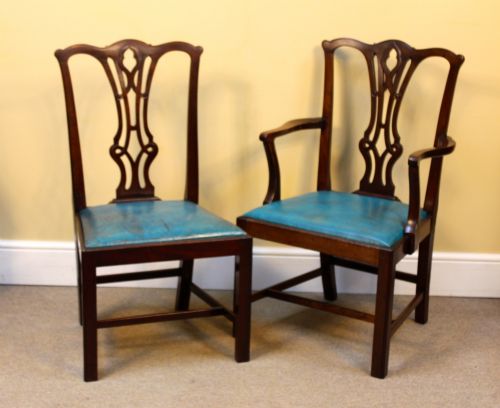
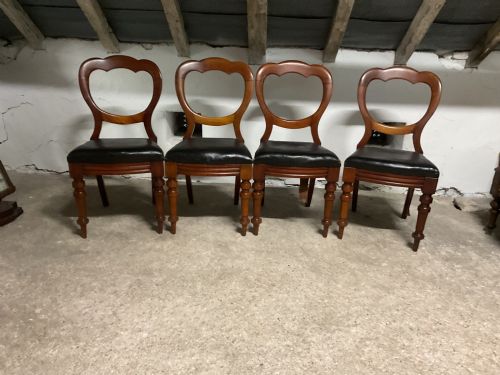
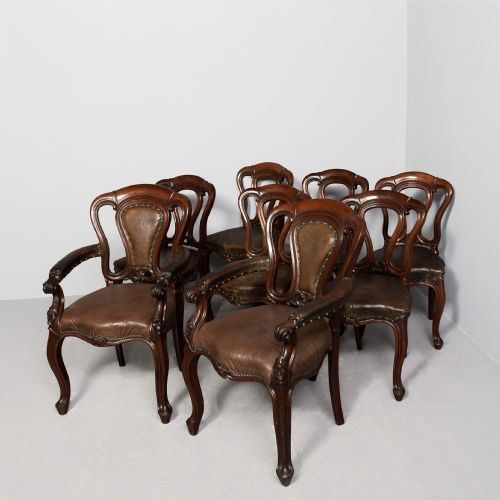
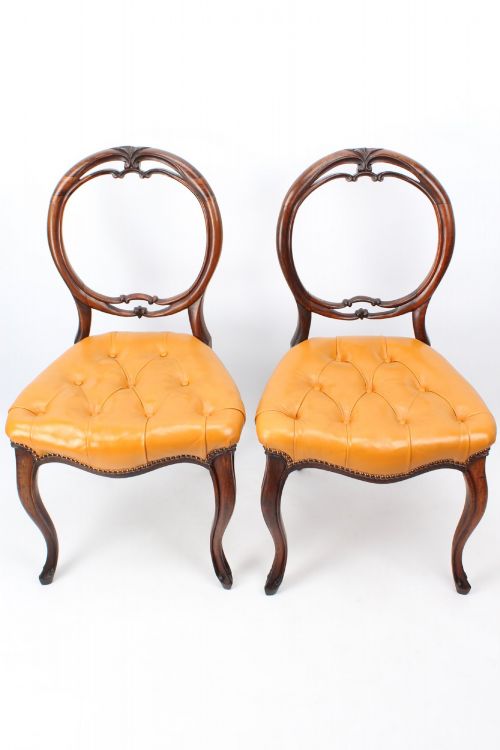
The core inventory comprises dining chairs, hall chairs, and occasional library pieces shaped in styles ranging from standard victorian and balloon back to gothic revival, jacobean revival, regency, and chippendale style.
Makers and retail houses such as John Taylor and Son, Lamb of Manchester, William Walker and Sons, and designs attributed to Charles Bevan or A. W. N. Pugin surface within these nineteenth-century groupings.
Materials and Construction
Carpenters utilised dense hardwoods including mahogany, oak, walnut, rosewood, and golden oak to construct durable frames that support pegged or screwed joinery.
Upholstery techniques combined sturdy inner webbing and stuffing with applied hides, Spanish leather, or buttoned leather secured using brass studding.
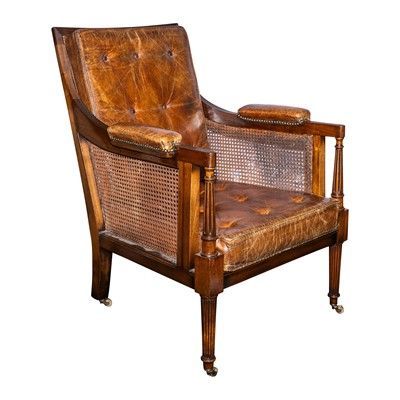
Carved ornament, bobbin turning, sabre legs, shield backs, and cane inserts appear alongside structural timber elements to finish individual seats.
Victorian Leather Side Chairs Retail Price Guide 2026
Typical asking prices for victorian leather side chairs among the pieces listed under this phrase on Sellingantiques today, from the lower quarter to the upper quarter. They describe what is for sale here now, not the wider market.
One diminutive nineteenth-century child's chair squeezes buttoned leather and a rosewood turned frame into miniature proportions.
Craft and Integrity
The hierarchy of worth rests upon the depth of the initial timber carving, the choice of dense grain woods like rosewood or figured mahogany, and the integrity of the structural frame.
Originality dictates value, separating pieces retaining their early leather and authentic joinery from those altered by modern interventions or mismatched repairs.
John Taylor and Son·Lamb Of Manchester·William Walker and Sons·Charles Bevan
The Victorian Leather Side Chairs Glossary
- Balloon Back
- A rounded, oval-shaped chair back popular during the nineteenth century. This curved profile mimics an inflated balloon and provides ergonomic lower back support.
- Bergère
- An enclosed armchair with upholstered sides and a cane or padded back. These seats often incorporate mahogany or walnut frames designed for library settings.
- Gothic Revival
- An architectural and decorative style drawing on medieval forms. Pieces display pointed arches, heavy tracery, and formal structural severity in oak.
- Bobbin Turned
- A form of woodturning resembling a string of beads or bobbins. Lathes shape the timber components into repeating spherical nodes.
- Sabre Leg
- A concave, outwardly curved chair leg tapering toward the foot. This classical support provides stability while maintaining a slender profile.
Victorian Leather Side Chairs: Frequently Asked Questions
How do I date these chairs?
Dating relies on identifying timber choices, turning styles, and specific design revivals recorded across the nineteenth century. Details like balloon backs or heavy gothic carving point to distinct decades.
Comparing structural joinery and recorded maker signatures provides a clearer chronology for each individual piece.
Are these suitable for daily dining?
Most nineteenth-century frames utilise dense hardwoods like oak and mahogany, making them structurally robust for regular seating use. The joined timber supports heavy daily wear.
Leather upholstery further provides a durable surface that withstands frequent use when properly maintained.
What is a carver chair?
A carver is an armchair designed to match a set of smaller side chairs, traditionally placed at the head of a dining table. These frames feature integrated armrests.
They share the stylistic motifs and timber species of the accompanying side chairs.
How do I care for antique leather?
Historic hides require gentle cleaning and periodic conditioning to prevent the material from drying out or cracking over time. Avoiding direct sunlight preserves the natural tone.
Maintaining a stable indoor humidity protects both the leather upholstery and the underlying hardwood frame.