


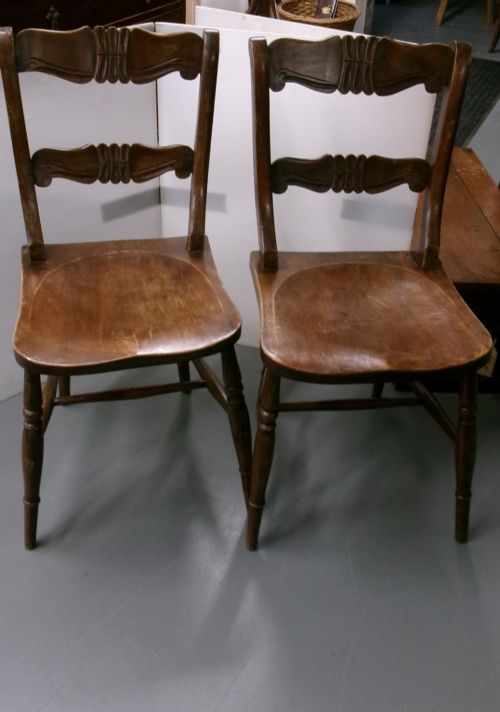


Late Victorian Dining Chairs
Late victorian dining chairs provide solid seating around a dining table, combining period timber frames with supportive upholstered or wooden seats.
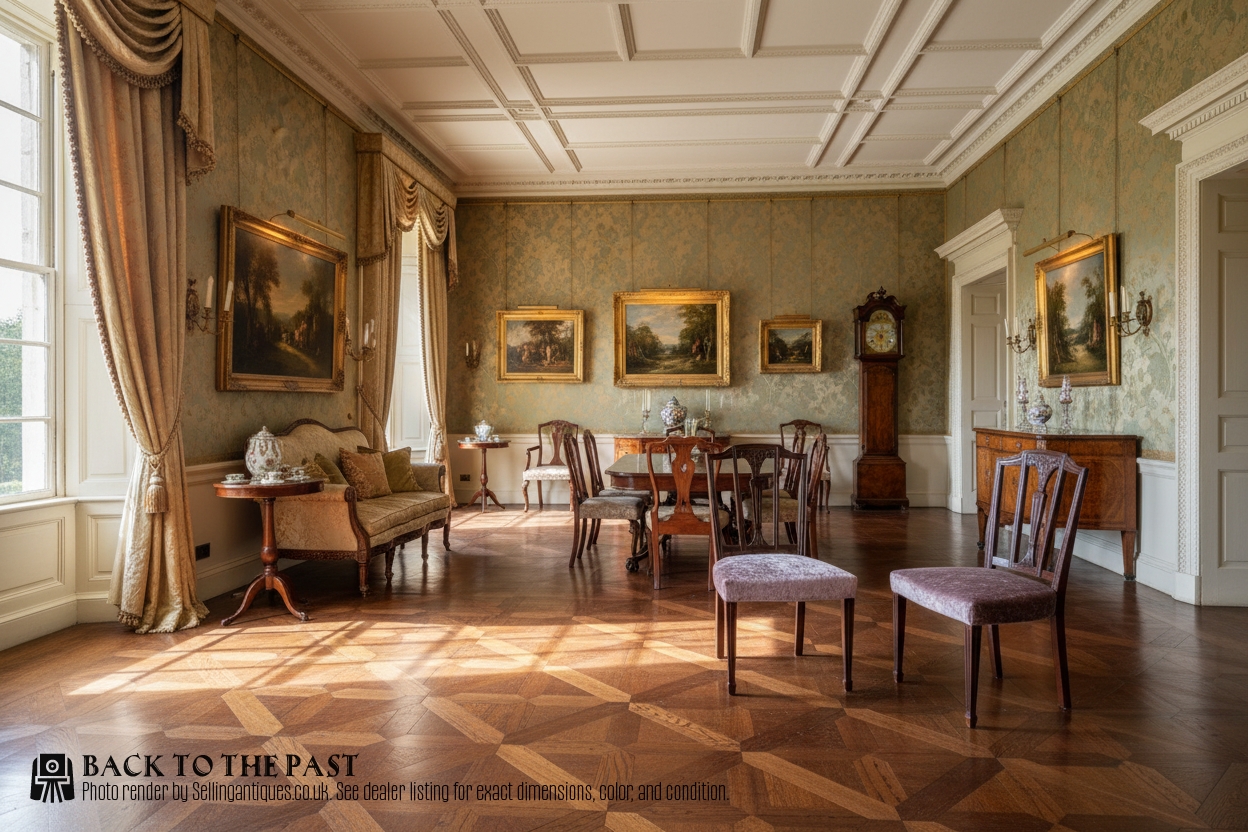
What late victorian dining chairs are
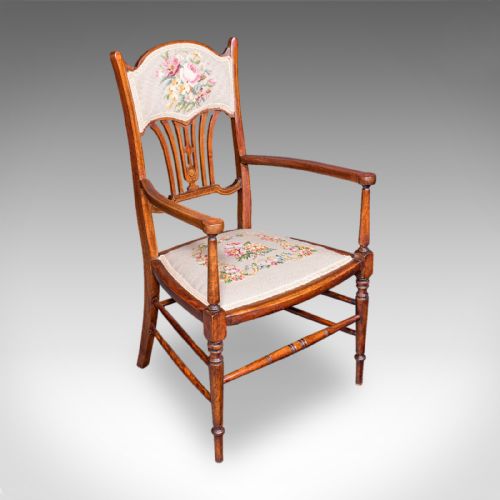
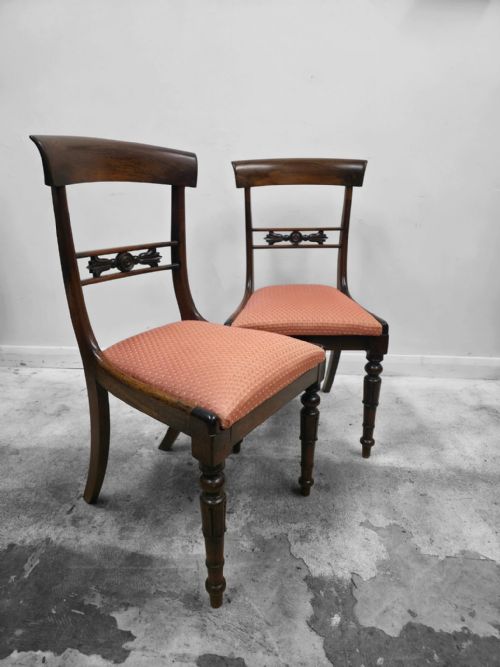
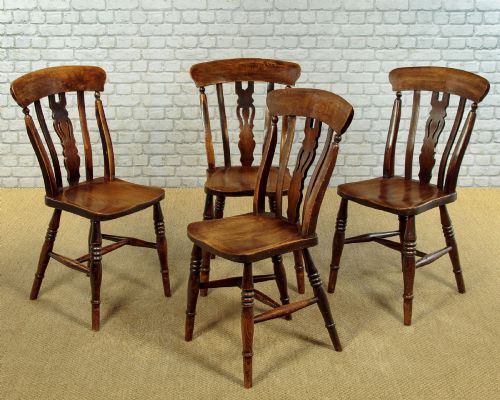
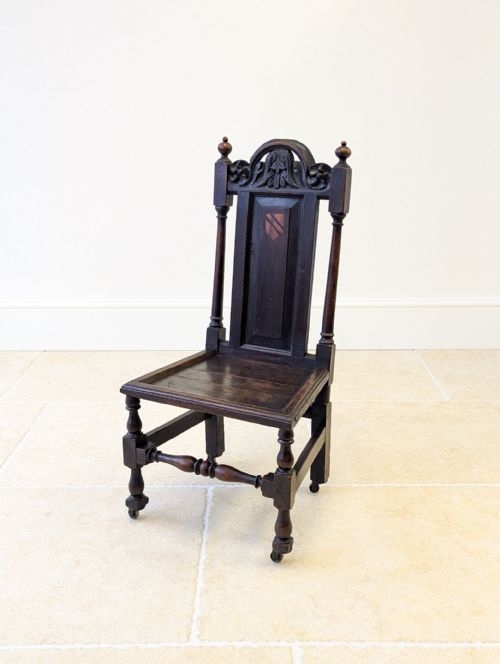
When you search for late victorian dining chairs, you encounter seating produced around eighteen ninety to nineteen hundred, often offered in matched sets rather than single items. The listings on this page include mahogany, oak, walnut, and mixed timbers shaped into dining chairs and side chairs.
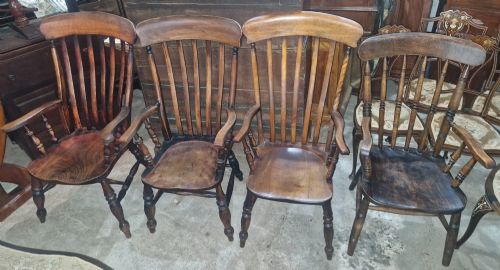
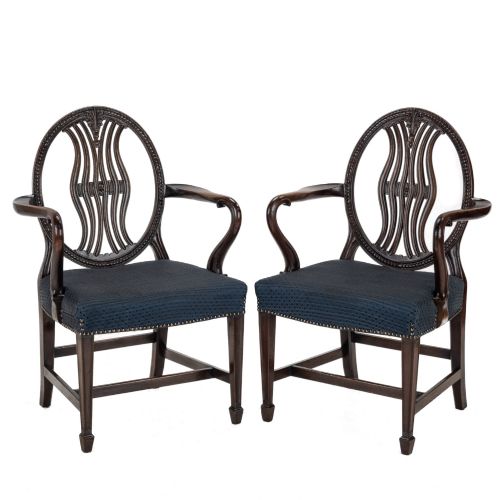
You meet several distinct aesthetic revivals within these pieces. Makers drew heavily on Chippendale, Hepplewhite, Queen Anne, and Gothic styles alongside vernacular Windsor and kitchen formats.
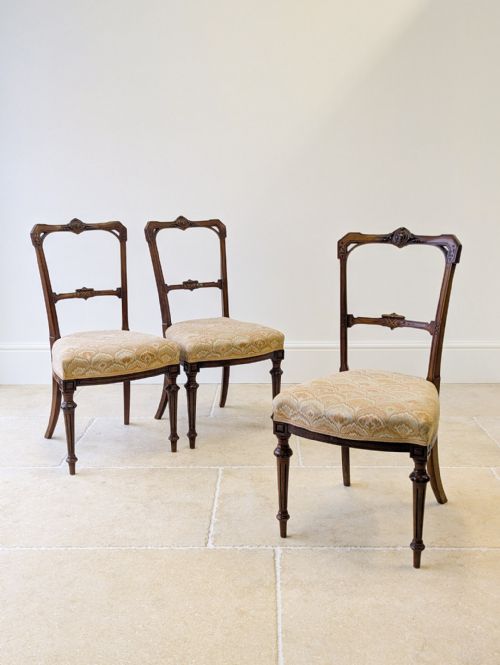
Sets range from pairs up to groups of ten, reflecting the scale of dining arrangements of the period. Mahogany and oak predominate, frequently featuring carved splats, balloon backs, or ladder backs.
How they were made
Cabinetmakers utilised hardwoods such as mahogany, oak, and walnut for the structural frames, often joining components with traditional mortise and tenon construction. Vernacular kitchen chairs combine timbers like beech, elm, ash, and rush.
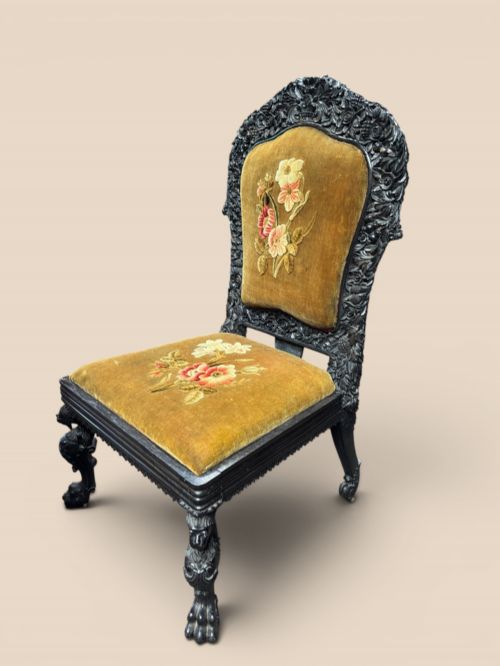
Upholstered versions incorporate materials including leather, fabric, damask, tapestry, velvet, and brass tacks. Carved details on splats and crest rails demonstrate hand-tooling on revival motifs.
Retail Price Guide 2026
Typical UK retail prices for late victorian dining chairs, calculated from the Sellingantiques database of over a million retail prices indexed since 2003. This retail price guide relies exclusively on Sellingantiques data; no external sources or auction records are used, so the figures do not describe the wider market.
Listings feature mahogany, oak, walnut, beech, elm, and ash across Victorian, Chippendale Revival, Hepplewhite Revival, and Windsor forms.
What varies in quality
The degree of carving depth and crispness separates standard production from finer workshop output. Robust timber selection and tight joinery ensure structural integrity across larger sets.
Original upholstery materials and intact secondary timbers preserve historical integrity. The uniformity of a matched set influences desirability compared to assembled groups.
Waring & Gillows·Goodall, Lamb & Heighway
The Late Victorian Dining Chairs Glossary
- Balloon-back
- A chair back shaped in a continuous curved oval resembling a balloon. This form is common in Victorian seating.
- Splat
- The vertical wooden strip down the centre of a chair back. Carved splats often define the revival style of the piece.
- Carver armchair
- A chair with arms designed to sit at the head of a dining table. These accompany sets of side chairs.
- Chippendale style
- A furniture design style featuring pierced splats and cabriole legs or Marlborough legs. Late nineteenth-century makers revived these eighteenth-century motifs.
- Windsor
- A timber chair constructed with turned legs and spindles socketed into a solid wooden seat. Beech and elm versions serve as farmhouse kitchen seating.
Frequently Asked Questions
How many late victorian dining chairs usually come together?
Sets typically run in sizes of two, four, six, or eight. Larger sets of ten or more appear occasionally.
Matching larger groups requires careful comparison of timber grain and carved details to ensure uniformity around a table.
What timbers were used for late victorian dining chairs?
Mahogany, oak, and walnut form the primary woods for formal dining rooms. Beech, elm, and ash appear in farmhouse and kitchen chairs.
Secondary woods often support the internal frame construction beneath upholstery.
What are revival styles in these chairs?
Cabinetmakers of the period drew on earlier eighteenth-century designs by Chippendale and Hepplewhite. They also utilised Queen Anne and Gothic Revival motifs.
These revivals adapted older aesthetic vocabulary to late nineteenth-century proportions and manufacturing methods.
How do I care for antique chair upholstery?
Leather seats benefit from periodic conditioning to maintain flexibility. Fabric and velvet upholstery requires gentle vacuuming with a soft brush attachment.
Avoid placing antique chairs in direct sunlight to prevent fading on damask and tapestry surfaces.