

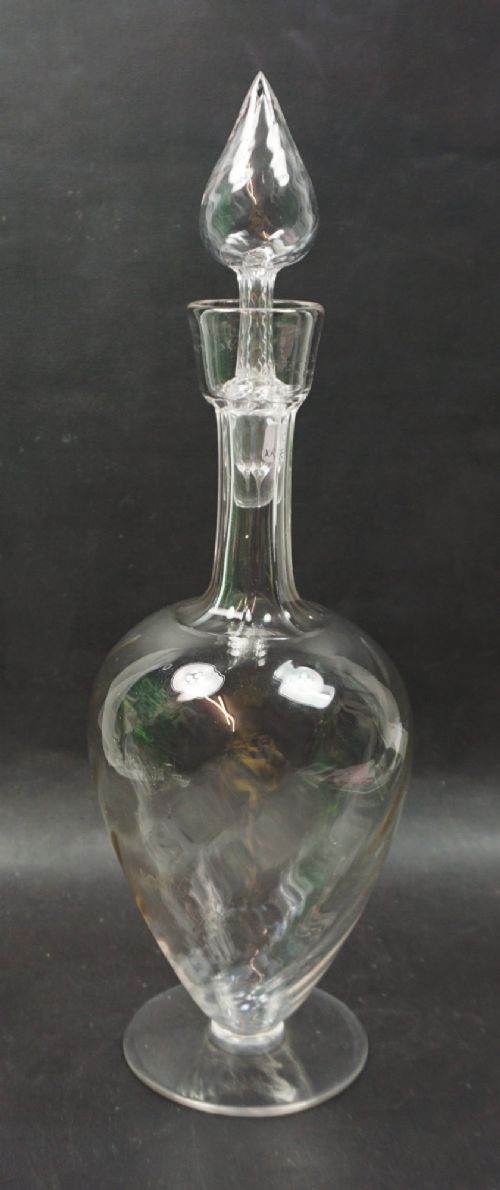
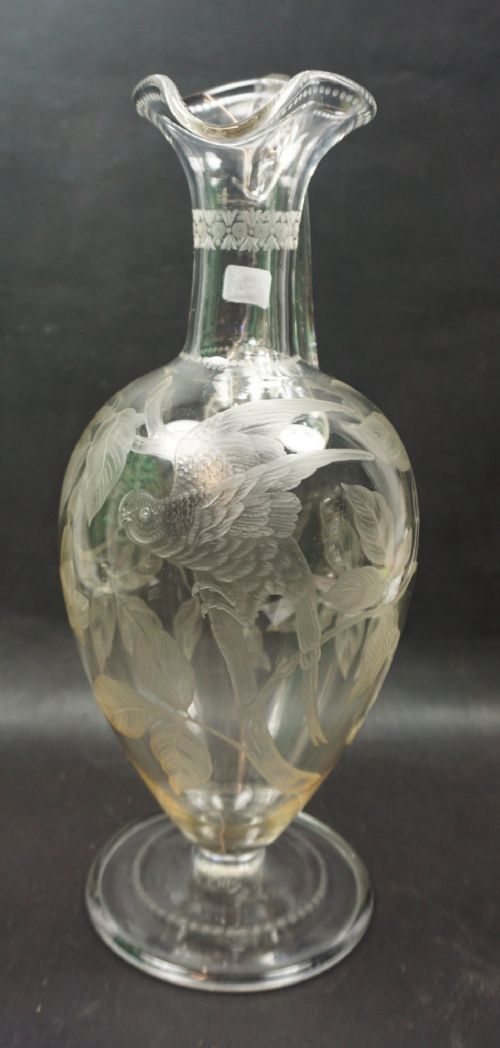
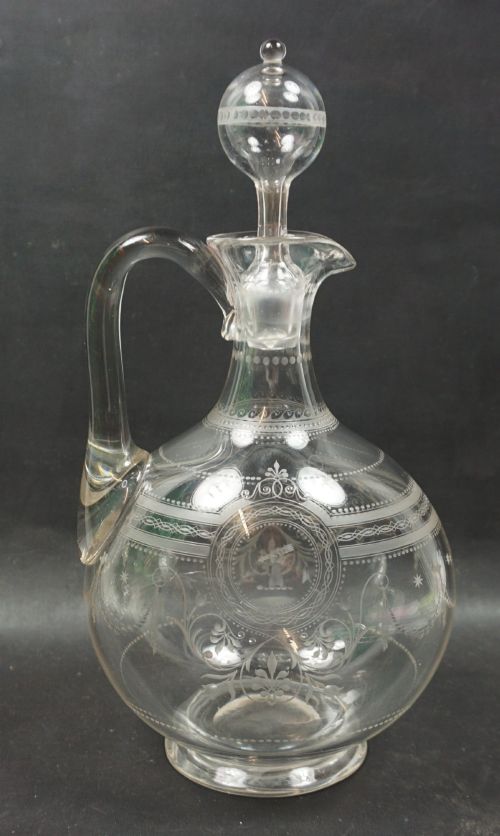
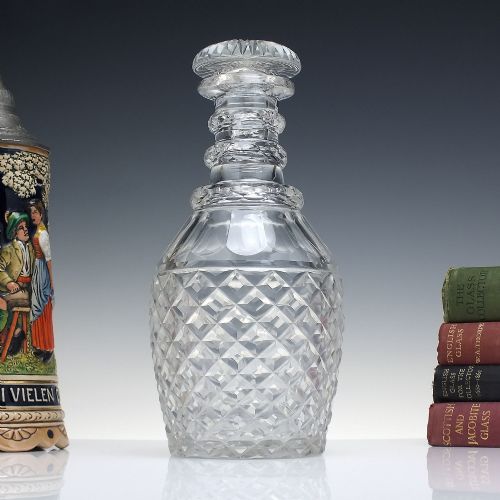


Victorian Lead Crystal Decanter
A victorian lead crystal decanter brings heavy brilliance and deep wheel-cut patterns to the dining table or sideboard.
Victorian Lead Crystal Decanter
A victorian lead crystal decanter is a heavy vessel designed for serving wine, spirits, or water, originating predominantly from the nineteenth century. These vessels range from early examples dated around eighteen fifty through to late examples produced near nineteen hundred.
The most common form on this page is the single or paired cut glass decanter, often accompanied by related items such as carafes and ewers. Buyers frequently encounter pieces displaying distinct periods including eighteen sixty, eighteen seventy, and eighteen eighty.
While the majority of pieces align with the Victorian era, the selection also includes items from the eighteenth century and the broader nineteenth century. These objects function equally well as practical barware and decorative centrepieces.
How they were made
Makers utilised lead crystal and clear cut glass, shaping the heavy material through blowing before applying deep surface cutting and occasional engraving. This high lead content yielded the characteristic refractive sparkle and substantial weight expected of the form.
Mounts and stoppers occasionally incorporate silver plate to complete the vessel. The combination of thick glass and precise wheel-cutting defined the standard manufacturing approach of the period.
Victorian Lead Crystal Decanter Retail Price Guide 2026
Typical asking prices for victorian lead crystal decanter among the pieces listed under this phrase on Sellingantiques today, from the lower quarter to the upper quarter. They describe what is for sale here now, not the wider market.
Heavy Victorian decanters double as impromptu arm workouts when pouring after a long dinner.
What varies in quality
The crispness of the cutting across the body and the weight of the metal distinguish superior examples from standard production. Sharper facets and heavier lead crystal create stronger light refraction and a more resonant ring when tapped.
Design complexity also sets pieces apart, moving from simple panel cuts to intricate geometric patterns and engraved details. The overall harmony of the proportions and the finish of the stopper complete the assessment.
The Victorian Lead Crystal Decanter Glossary
- Lead Crystal
- Glass containing a high proportion of lead oxide, which increases brilliance, weight, and softness for cutting. This material gives Victorian decanters their characteristic heft.
- Cut Glass
- Glass decorated by holding the vessel against a rotating abrasive wheel to carve facets and patterns. It forms the primary decorative technique seen on these decanters.
- Carafe
- An open-topped glass vessel used for serving wine or water without a stopper. It shares materials with the decanter but lacks the sealed closure.
- Ewer
- A large jug with a flared spout and a handle, utilised for pouring liquids. Several Victorian examples appear alongside traditional decanters.
Victorian Lead Crystal Decanter: Frequently Asked Questions
What is a victorian lead crystal decanter?
A victorian lead crystal decanter is a heavy glass vessel produced during the nineteenth century to hold and serve wine or spirits.
These pieces feature deep cut patterns in clear crystal and typically include a matching glass stopper.
How do you date a decanter?
Dating relies on the style of the cutting, the shape of the body, and any recorded period details from eighteen fifty to nineteen hundred.
Early Victorian examples often display distinct cutting profiles compared to late nineteenth century pieces.
Were these decanters made in pairs?
Makers produced both single decanters and matched pairs intended for side-by-side service on the dining table or bar.
Pairs appear frequently across eighteenth century, mid Victorian, and late Victorian listings.
Can you use them for whisky?
These vessels were originally manufactured to hold spirits like whisky and wine for formal dining and barware use.
Today they function both as functional decanting vessels and decorative room displays.