
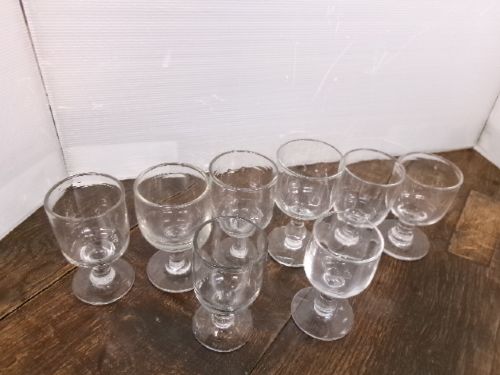


Early Victorian Glassware
Early victorian glassware brings substantial lead glass decanters, cut celery vases and coloured rummers to the table.
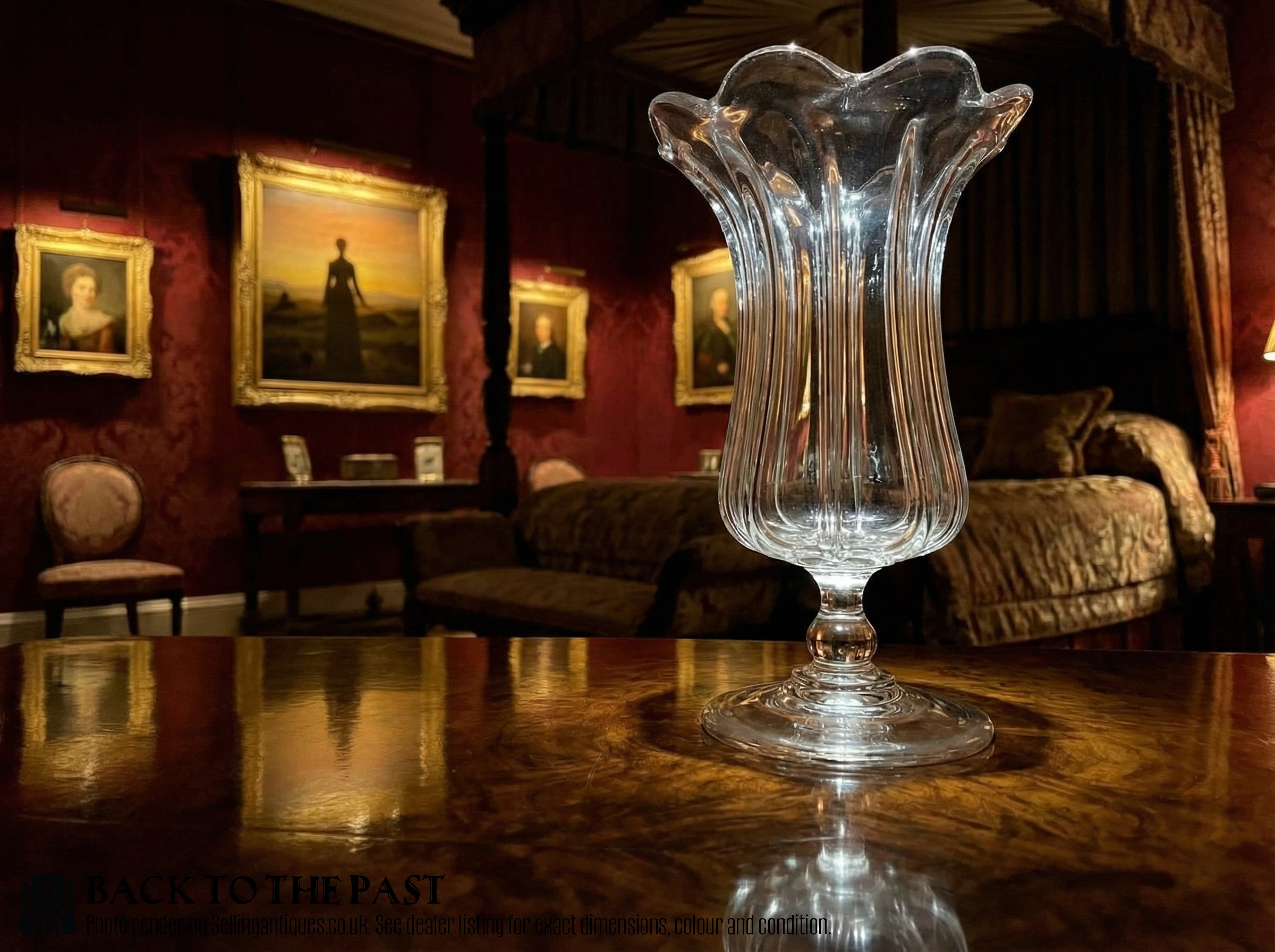
Early Victorian Glassware
Early victorian glassware covers table services and drinking vessels produced during the mid-nineteenth century, alongside transitional pieces carrying William IV and Georgian characteristics. Buyers searching for early victorian glassware typically find decanters, celery vases, rummers, wine glasses and custard cups.
The material record on this page shows heavy reliance on lead glass and flint glass, often enhanced by rich cobalt and amethyst hues. Forms range from utilitarian apothecary carboys to decorative table services intended for dining display.
How early victorian glassware was made
Maker operations utilised heavy lead glass and flint glass formulations to achieve exceptional clarity and weight in decanters and rummers. Artisans shaped molten metal by hand before applying deep wheel-cut decoration, ribbing and etching to surfaces.
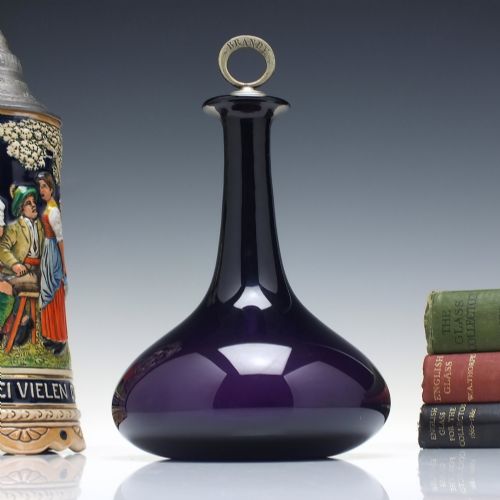
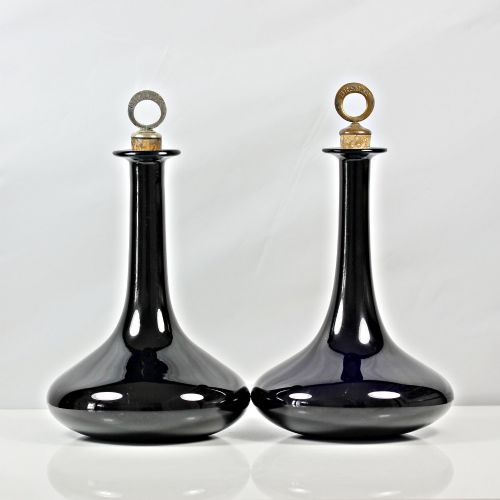
Colouring agents produced distinctive amethyst glass, green wine glasses and Bristol blue rum decanters. Artisans occasionally integrated metal mounts and delicate gold leaf details onto vessel bodies.
Listings feature lead glass, flint glass and coloured varieties including amethyst, green and Bristol blue alongside metal and gold leaf.
What varies in quality
Quality rests in the crispness of the wheel cutting and the depth of the metal rather than surface ornamentation alone. Superior vessels display sharp, clean facets and well-balanced proportions without distortion in the glass body.
The richness and consistency of colours such as amethyst and Bristol blue set finer examples apart from paler or muddier tones. Heavier lead glass handles and rings on decanters indicate superior craftsmanship.
The Early Victorian Glassware Glossary
- Lead glass
- Glass containing lead oxide, known for its high refractive index and heavy weight. This composition allowed for deeper cutting by nineteenth-century artisans.
- Flint glass
- A clear, brilliant glass variety used extensively for nineteenth-century decanters and tableware. It provides the necessary clarity for detailed wheel-cutting.
- Rum decanter
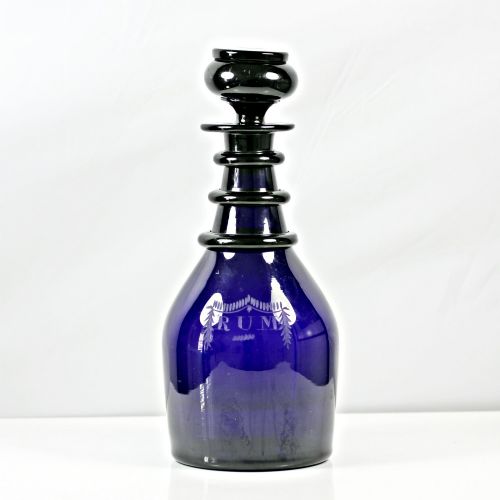
- A short, heavy-based decanter featuring three or more neck rings, originally designed for spirits. Bristol blue examples are particularly sought after by collectors.
- Celery vase
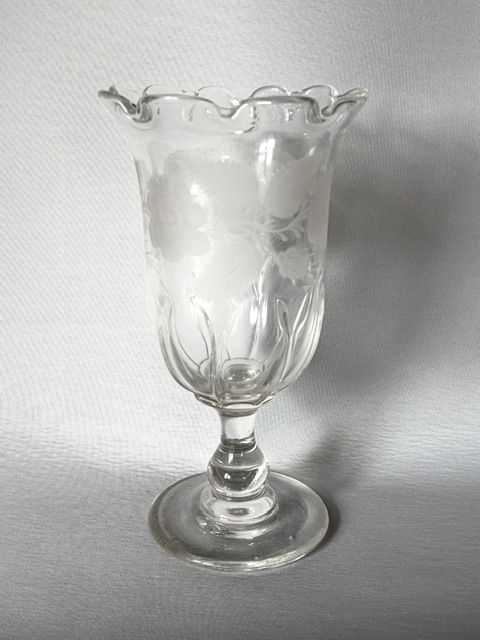
- A tall vessel raised on a foot, created to display celery stalks upright on the dining table. Victorian examples often feature heavy ribbing or etched patterns.
- Rummer
- A large, sturdy drinking glass used for ale, wine or punch during the Georgian and Victorian periods. They typically sit on a short stem with a substantial foot.
Early Victorian Glassware: Frequently Asked Questions
Can I use these glasses daily?
Many buyers enjoy using early glassware for special dinners, provided they handle heavier rummers and wine glasses with care. Hand-washing is essential to preserve the integrity of the material.
Keep them away from modern dishwashers and microwaves to protect the historic lead glass.
What is a rum decanter?
A rum decanter is a sturdy, flat-bottomed spirit bottle featuring distinct rings around the neck for secure gripping at sea or on the dining table. Nineteenth-century versions often appear in deep Bristol blue glass.
These vessels were built heavier than wine bottles to withstand active use.
Why are some decanters ringed?
The raised rings around the neck of a decanter provided a secure grip for greasy or wet hands during nineteenth-century dining. They also added structural reinforcement to the vessel neck.
Craftsmen formed these rings by hand while the glass remained hot on the blowing iron.
How to spot lead glass?
Lead glass feels noticeably heavier than standard soda-lime glass and produces a resonant musical ring when tapped gently on the rim. It also displays greater brilliance and dispersion of light through cut facets.
Nineteenth-century makers relied on this heavy metal for items requiring deep cutting.