

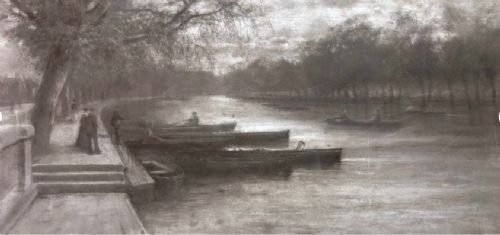
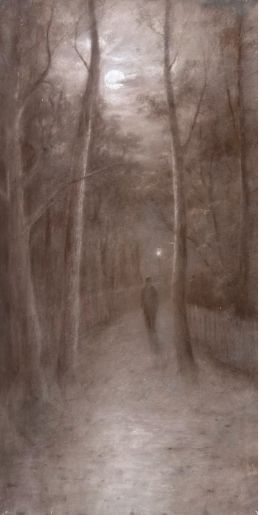
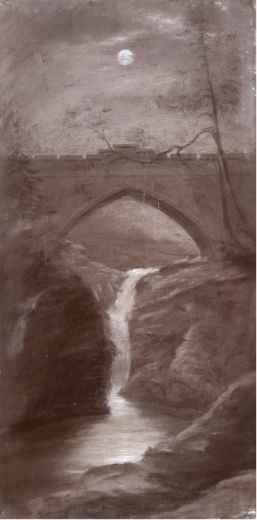
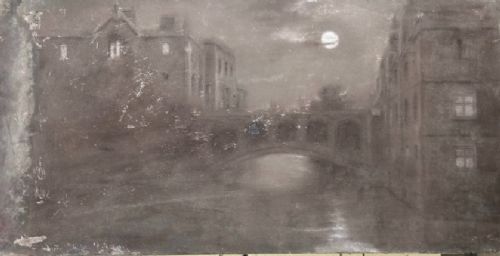


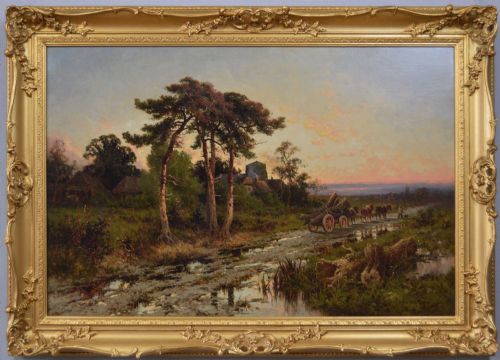


Victorian Landscape Drawing
These Victorian landscape drawing examples capture nineteenth-century rural and urban topography through delicate works on paper.
Victorian Landscape Drawing
A victorian landscape drawing records topography, rural scenery and atmospheric views through works executed primarily on paper.
The pieces on this page span the nineteenth century into the Edwardian era, incorporating watercolours, charcoal, ink and sepia.
Subjects range from river valleys and coastal bays to moonlit street scenes and architectural landmarks across Britain and Italy.
Materials and technique
Artists utilised watercolour pigments, charcoal and ink applied to paper, occasionally extending to canvas supports.
Techniques combine crisp architectural penwork with tonal charcoal blending and fluid watercolour washes.
Listings feature works spanning the nineteenth century, including Georgian and Edwardian examples executed in watercolour, charcoal and ink.
Distinctions in quality
Quality rests upon atmospheric control, particularly in tonal works influenced by Whistler and Grimshaw, where light defines mood.
Skilled handling of perspective and fluid pigment application separate accomplished works from routine topographical studies.
Alfred Young Nutt·William Manners·John Charles Maggs·Charles H Poingdestre·John Richard Worsdale·George De Paris·Henry H Parker·John Baragwanath King·Henry Bright·John Joseph Cotman·Thomas Lound
The Victorian Landscape Drawing Glossary
- Charcoal
- A dry drawing medium burnt from wood, offering deep blacks and soft smudged shadows suitable for nocturnal scenes.
- Sepia
- A brown pigment derived from cuttlefish ink, used extensively for monochromatic drawings and tonal landscapes.
- Tonalism
- An artistic style focusing on shadow, atmosphere and sombre palettes rather than crisp local colour.
- Watercolour
- Pigments ground in a water-soluble binder, washed across paper to create transparent layers of tone.
Victorian Landscape Drawing: Frequently Asked Questions
How do I care for a victorian landscape drawing?
Keep works on paper away from direct sunlight to prevent fading of watercolour pigments and yellowing of the support. Framing behind UV-protective glass preserves the delicate charcoal and ink mediums.
Maintain stable indoor humidity levels to protect nineteenth-century paper from warping or foxing over time.
Were these drawings meant as finished artworks?
Many pieces served as finished exhibition works, while others functioned as field sketches or preparatory studies for larger oil paintings. Artists frequently signed and dated completed watercolours intended for private patrons.
Sketchbooks also provided artists with reference material for studio compositions depicting British and European scenery.
What distinguishes tonalist landscapes from standard views?
Tonalist works prioritise atmospheric mood, twilight shadows and subdued palettes over strict topographical accuracy. Artists captured nocturnal or misty effects influenced by contemporary aesthetic movements.
Standard views focus on precise architectural details and clear daylight illumination of specific landmarks.
How can I tell the period of a drawing?
Paper types, framing styles and artist signatures provide primary clues for dating nineteenth-century works. Subject matter and stylistic influences, such as late Victorian nocturnal moods, further narrow the timeframe.
Archival records or inscribed titles on the reverse often confirm the exact year or decade of execution.