


Traditional Ink Artwork
Traditional ink artwork brings together delicate brushwork and historic motifs, offering a tangible connection to classical eastern and western draughtsmanship.
Traditional Ink Artwork
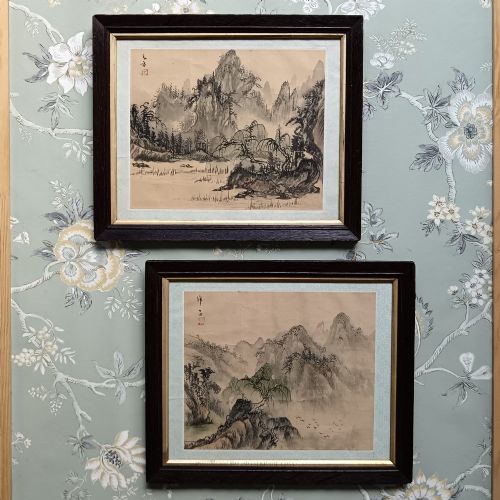
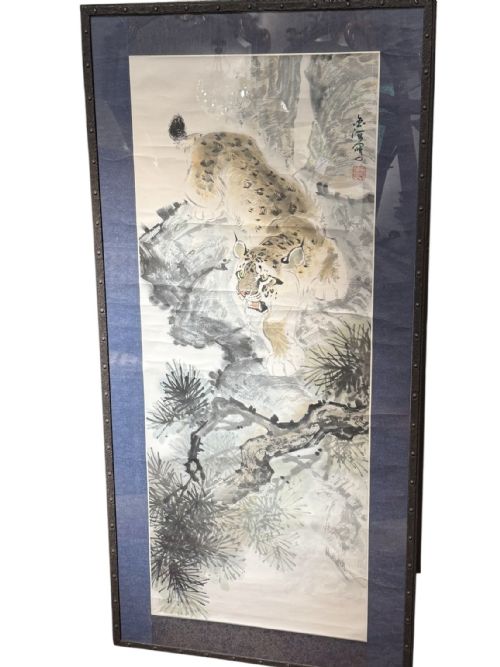
Traditional ink artwork encompasses paintings, watercolours, sketches, and etchings spanning from the nineteenth century through the mid-twentieth century. Buyers searching for traditional ink artwork will encounter pieces ranging from Chinese silk paintings and scroll work to British landscape watercolours and silhouette art.
The selection on this page covers diverse regional traditions, featuring mid-century Chinese portraits and landscape studies alongside nineteenth-century British church drawings. Works appear on paper, silk, and card, often mounted within original wood and glass frames.
How they were made
These works rely primarily on liquid ink applied to absorbent paper or fine silk using traditional animal-hair brushes and steel pens. Watercolour, gouache, and pastel frequently supplement the ink lines to build tone and colour.
Framing methods reflect the era of production, utilising wood surrounds and glass protection to preserve fragile paper and silk supports from environmental degradation.
Listings span from the early nineteenth century through the nineteen-sixties, incorporating both British topographical watercolours and Chinese painted silk.
What varies in quality
Quality rests upon the confidence of the draughtsmanship and the expressive clarity of the brushstrokes. Masterful control over ink dilution and line weight distinguishes accomplished academic or traditional execution from simpler decorative output.
The preservation of the paper or silk support, alongside the integrity of original artist seals and period framing, elevates the standing of a piece within its genre.
Ya Ming·James Dobie·W Dendy Sadler·Fred Lawson·John Thistle·Thomas Monro
The Traditional Ink Artwork Glossary
- Shan Shui
- Traditional Chinese landscape painting style depicting scenery such as mountains, rivers and waterfalls. These compositions use brush and ink rather than more conventional western oil paints.
- Scroll
- A length of paper or silk rolled onto wooden cylinders for storage and unrolled for viewing. This format is traditional for displaying Asian ink paintings and calligraphy.
- Etchings
- Printmaking technique where lines are incised into a metal plate with acid before ink is applied and transferred to paper. This method produces fine, detailed graphic lines.
- Gouache
- An opaque water-based paint that provides solid, matte colour coverage. Artists often combine it with ink and watercolour to create highlights in works on paper.
Traditional Ink Artwork: Frequently Asked Questions
How should I display traditional ink artwork?
Keep these pieces away from direct sunlight to prevent the ink and pigments from fading over time. Maintaining stable indoor humidity levels also protects fragile paper and silk supports.
Use professional framing with acid-free backing materials when re-framing is necessary. This preserves the condition of older works without damaging the original paper or margins.
How do I identify Chinese ink styles?
Look for characteristic brush techniques, artist seals, and traditional subject matter such as landscape mountains, plum blossom, or animals. Silk paintings and hanging scrolls often follow classical composition rules.
Compare the signature and seal stamps with known mid-century or early twentieth-century formats. Material analysis of the paper or silk can further clarify the period of production.
Are these works original or printed?
Examine the surface under magnification to check for actual brush texture, ink pooling, and plate impressions from etching. Original works show distinct hand-applied lines rather than uniform dot patterns from modern printing.
Signatures, stamps, and slight irregularities in the ink application confirm a unique hand-drawn or hand-painted origin.
What framing is typical for these pieces?
Many pieces retain their original wood frames, sometimes paired with glass to protect the delicate media underneath. Gilding and simple moulded timber are common across nineteenth and early twentieth-century British examples.
Original framing adds historical context, though conservation standards may occasionally require updating internal mounts to protect the artwork from acidic backing boards.