




Vintage Ink Study
These vintage ink study works on paper span several centuries, offering collectors immediate glimpses of composition and line.
Vintage Ink Study
A vintage ink study brings together original drawings, watercolours, and mixed media works spanning the 18th century to the post-war period. Buyers searching this phrase typically encounter framed artworks and works on paper showing everything from architectural facades to figurative compositions.
The materials range from monochrome ink and wash to combinations of gouache, pastel, and watercolour set within wood frames. Pieces originate from periods including the Edwardian era, 19th Century Realism, and 20th Century Modernism.
Most examples concentrate on direct observation, capturing subjects such as musicians, landscapes, and architectural details with immediacy. The selection reflects diverse European traditions from Dutch Renaissance influences to the Modern British school.
Materials and execution
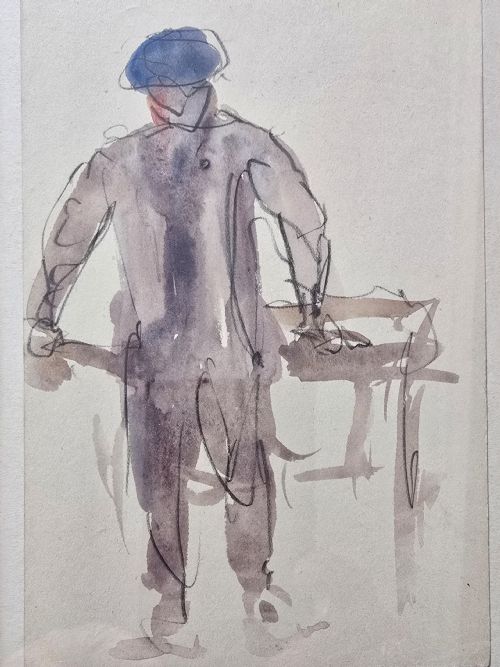
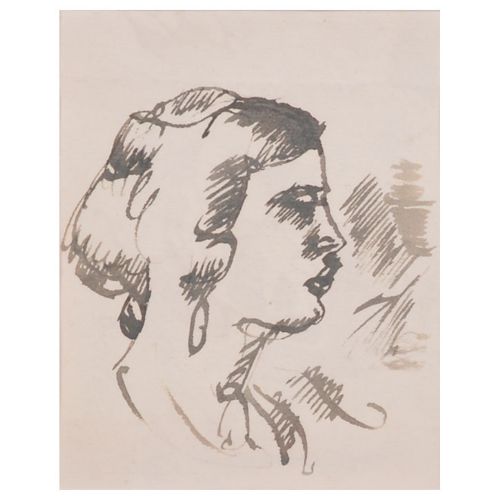
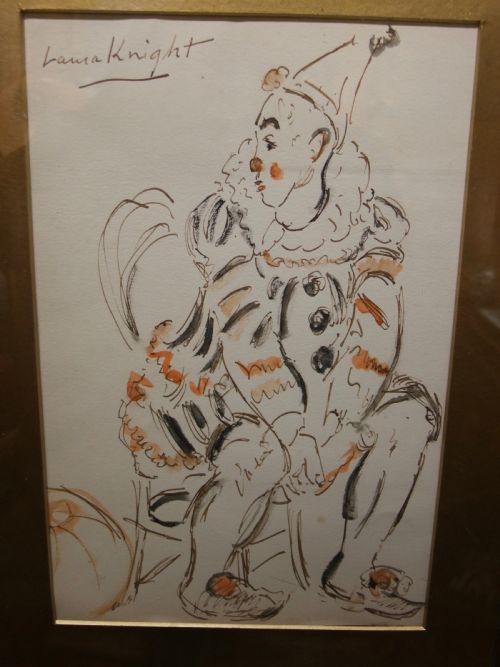
Artists executed these pieces primarily on paper substrates, employing fluid ink lines often reinforced with wash, watercolour, or gouache to build tone and depth. Pen work provides the foundational structure, while supplementary pigments introduce shadow and colour.
Many works retain their period wood frames, protecting delicate paper surfaces and water-soluble media from environmental wear. The combination of ink with pastel or gouache demonstrates a fluid approach to sketching directly from life or imagination.
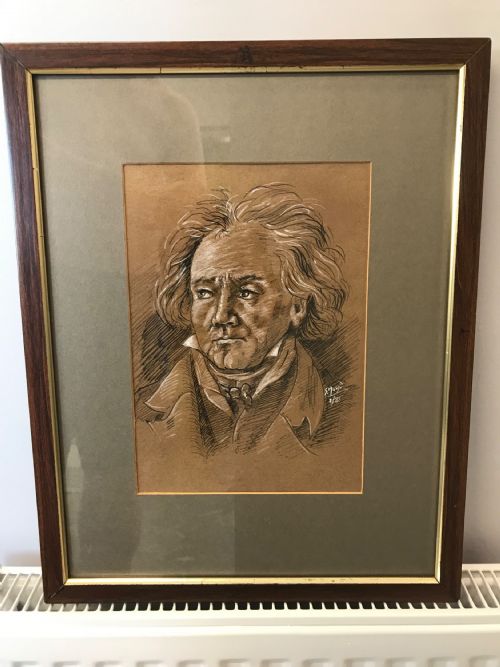
Even Beethoven makes an appearance on paper, caught in ink wash long after conducting his final symphony.
Assessing quality and execution
Quality rests on the sureness of the line and the artist's ability to capture form economically within a study. Stronger pieces reveal confident penwork and harmonious tonal washes that animate the subject without clutter.
The preservation of the paper and the stability of water-soluble inks and watercolours also determine the standing of a work. Finer examples maintain their original vibrancy and structural integrity within appropriate period framing.
Ludwig van Beethoven·Michael Healy·Lucien Freud·Lawrence Stephen Lowry·Johan Noah Bemmel·John Duncan Fergusson·Dame Laura Knight·Thomas Monro
The Vintage Ink Study Glossary
- Gouache
- An opaque water-based paint that provides solid, flat areas of colour and highlights. It is frequently combined with ink to add density to works on paper.
- Wash
- A thin, transparent layer of diluted ink or watercolour applied with a brush to create tonal depth and shadow. Artists use it to model form quickly behind pen lines.
- Monochrome
- Executed in a single colour or shades of one hue, typically black or sepia ink. This approach focuses attention entirely on line, tone, and composition.
- Study
- A preparatory or exploratory drawing made to record an observation or test a composition. These works often capture a spontaneous energy absent in finished paintings.
Vintage Ink Study: Frequently Asked Questions
What defines a vintage ink study?
A vintage ink study is an original work on paper where ink forms the primary medium, often accompanied by wash, watercolour, or gouache.
These pieces range from rapid compositional drafts to detailed architectural and figurative renderings created across the 18th, 19th, and 20th centuries.
How should works on paper be displayed?
Works on paper require protection from direct sunlight to prevent the fading of inks, watercolours, and pigments.
Displaying them behind glass in stable indoor environments helps preserve the integrity of both the paper substrate and the framing.
Are these pieces original or prints?
The selection consists of original hand-drawn and painted works rather than mass-produced reproductions.
Close inspection reveals the physical texture of ink lines, brushstrokes, and hand-applied washes directly on the paper surface.
How do I identify the period of a drawing?
Period attribution relies on stylistic markers such as modernist abstraction, 19th-century realism, or Edwardian portraiture conventions.
Frame construction, paper types, and recorded artist signatures or attributions further help establish the date of creation.