



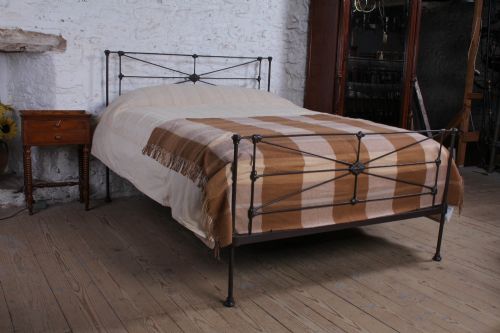
Victorian King Size Bedstead
A victorian king size bedstead brings nineteenth-century presence and grand scale to a modern bedroom.
Victorian King Size Bedstead
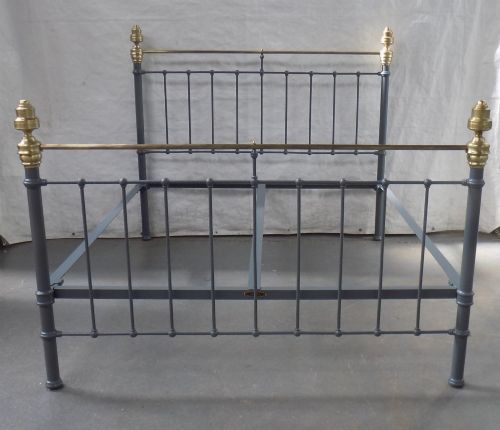
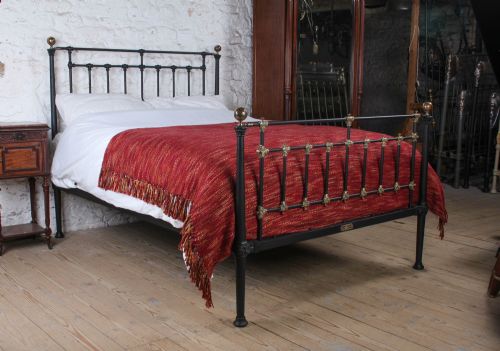
A victorian king size bedstead is a large sleeping frame dating from the nineteenth century, often accommodating modern mattresses with extended widths. These pieces appear frequently in brass, iron, or timber configurations such as mahogany and maple.
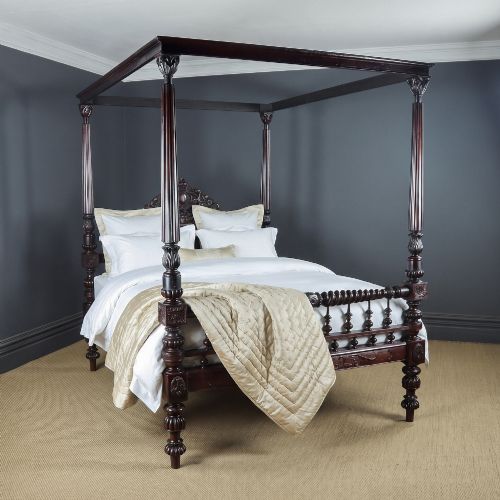
Buyers encounter numerous variations, including half tester models, four poster designs, and low-end or no-end frames. The selection spans straightforward utilitarian iron framework to highly decorative brass and cast combinations.
Origins range from British workshops to French provincial makers and Anglo-Indian colonial cabinetmakers. Styles stretch from Gothic Revival and Aesthetic Movement to Arts and Crafts and Art Nouveau interpretations.
Materials and Construction
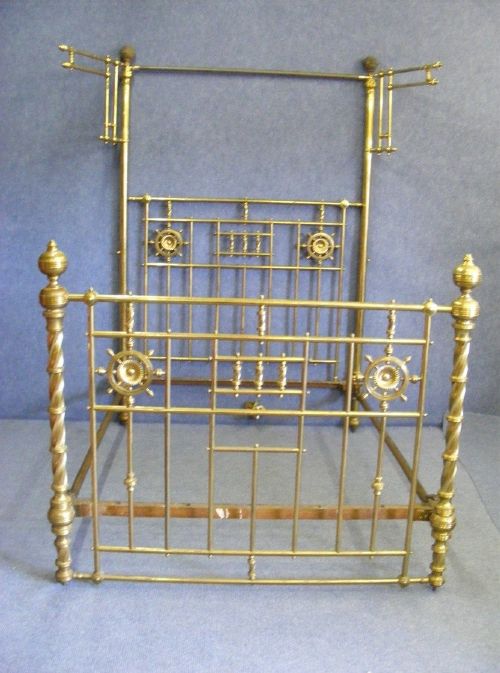
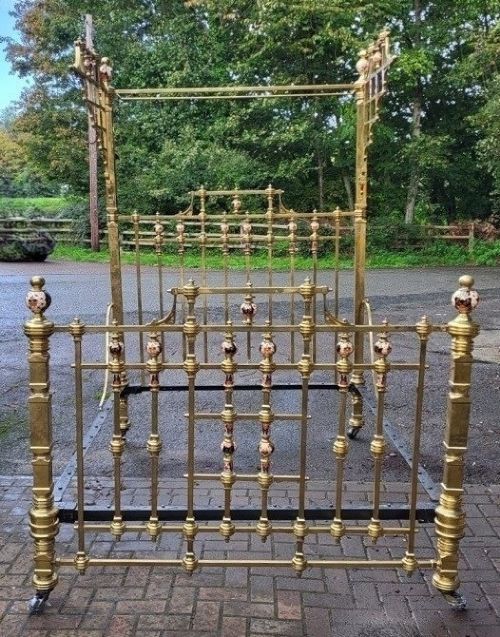
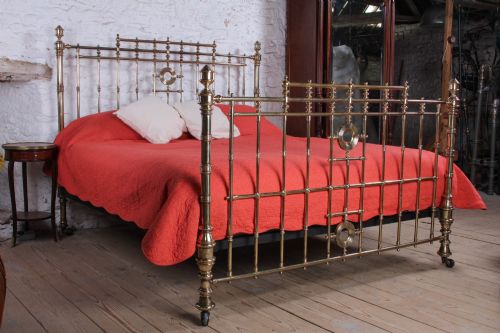
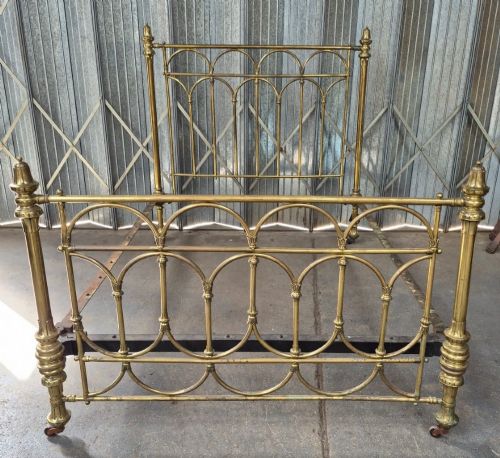
Makers constructed these frames using heavy-gauge iron, brass tubing, and solid hardwoods such as mahogany and maple. Brass components often feature detailed castings, finials, and ceramic or mother-of-pearl accents.
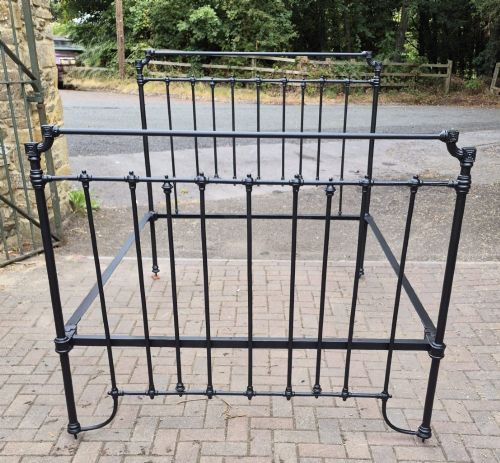
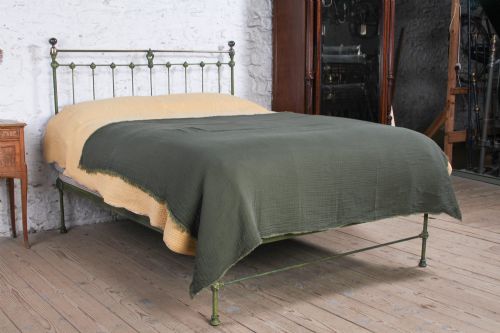
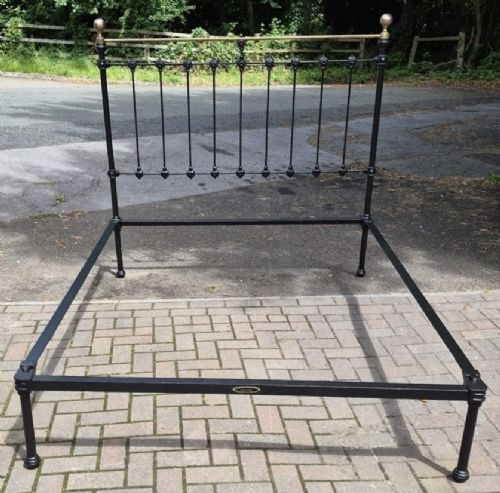
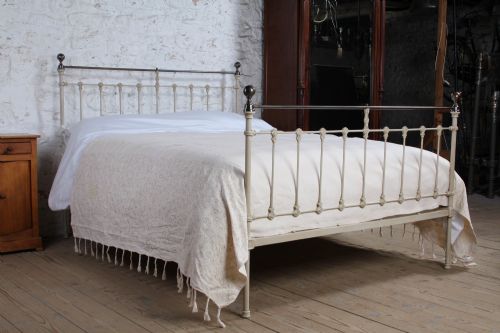
Iron frames utilise cast iron for structural joints and decorative corners, paired with wrought iron rails and spindles. Surface finishes include original paintwork, burnished metal, and japanned black coatings.
Joints and connections rely on sturdy metal dovetail wedges and bolts designed to bear substantial weight while allowing complete disassembly. Timber frames incorporate hand-carved panels and turned posts.
Factors of Quality
The sophistication of the brass castings and the weight of the metal framework set finer pieces apart from standard models. Elaborate decorative motifs, such as Gothic tracery or Aesthetic Movement detailing, indicate higher workshop ambition.
The integrity of the original joints, castors, and rails determines the structural merit of the bedstead. Pieces retaining their complete set of matching brass finials and original manufacturer stamps command greater distinction.
Timber selection and the depth of hand-carving define quality in wooden and four poster variants. Superior examples display carefully figured mahogany or maple with precise joinery rather than plain secondary woods.
Maple & Co·RW Winfield·James Shoolbread & Co
The Victorian King Size Bedstead Glossary
- Half Tester
- A wall-mounted or bed-attached canopy projecting partially over the head of the bedstead. This feature frequently supports decorative drapery.
- Dip-Rail
- A top rail on the headboard or footboard that curves downward toward the centre. This shaping softens the silhouette of metal frames.
- No End
- A bedstead configuration featuring a tall headboard but lacking a high footboard. This design suits modern rooms with restricted sightlines.
- Japanned
- A heavy black or dark lacquer finish applied to iron framework to mimic Asian export lacquer. Makers used this technique to protect metal from rust.
- Winfield
- A notable nineteenth-century manufacturing firm known for innovative metal bedstead construction and patent mechanisms. Their pieces often bear stamped brass registry marks.
Victorian King Size Bedstead: Frequently Asked Questions
Will a modern king mattress fit these beds?
Many nineteenth-century frames were built to historical dimensions that differ slightly from contemporary standard sizes. Dealers often adapt or extend the internal side rails to accommodate modern mattress lengths safely.
Buyers should verify internal measurements before purchasing to ensure proper support slats and mattress placement.
How do I assemble an antique metal bed?
These frames typically use a wedge-lock or bolt system where the side rails slot directly into the headboard and footboard posts. Tapping the joints gently with a rubber mallet settles the metal wedges firmly into place.
Checking that the frame is square on the floor prevents stress on the side rails and ensures the bed remains sturdy during use.
How do I care for brass and iron frames?
Painted iron surfaces require only gentle dusting with a dry cloth to prevent moisture accumulation. Avoid harsh chemical polishes on aged brass surfaces to preserve their natural patina.
Applying microcrystalline wax to bare metal components helps protect against oxidation without altering the historic finish.
What is the difference between iron and brass beds?
All-iron frames utilise cast and wrought components finished in paint or black japan, offering a sturdy and sometimes understated appearance. Brass models incorporate brass tubing and decorative castings that introduce bright metallic warmth to a room.
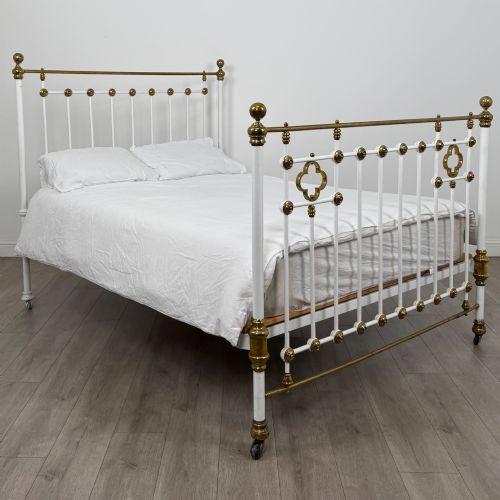
Many examples combine both materials, using black or white painted iron frames embellished with gleaming brass finials and rails.