




Antique Brass Detailed Bed
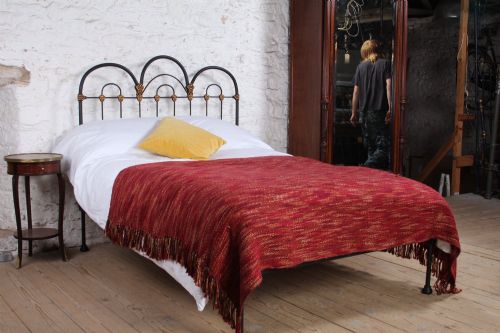
An antique brass detailed bed brings solid Victorian weight and French metalwork into a bedroom.
Antique Brass Detailed Bed
When you search for an antique brass detailed bed, you are looking at substantial metal frames dating from the late nineteenth century up to the nineteen-twenties. These pieces combine heavy structural metal with polished brass ornamentation, reflecting Victorian, Edwardian, and French design traditions.
The versions you are most likely to meet on this page span single, double, and king sizes in various configurations. Many examples pair iron frameworks with brass details, while others present full brass construction or incorporate painted wood and marquetry inlay.
How they were made
These beds rely on robust combinations of cast iron, wrought iron, and polished brass to form the structural framework and decorative elements. Metal components are joined with traditional casting and assembly methods suited to heavy daily use.
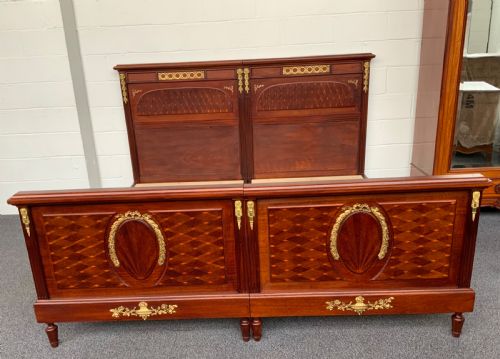
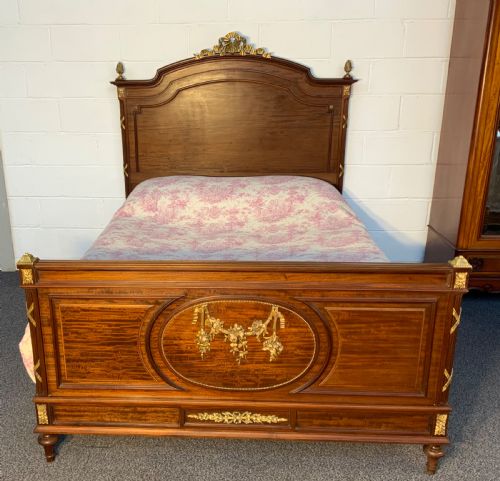
Selected examples integrate painted wood panels or mahogany sections featuring marquetry inlay. The decorative components utilise cast brass motifs, hoops, and detailed tubing applied to iron bases.
Some iron frames are officially described as having no end, keeping your toes delightfully unconstrained.
What varies in quality
The distinction between standard examples and the finest pieces lies in the complexity of the metalwork and the finish of the brass. Superior items exhibit crisper cast details, heavier gauge tubing, and more elaborate French or Victorian ornamentation.
Integration of secondary materials also alters the character of the piece. While simple iron and brass variants focus on utilitarian strength, higher quality models incorporate marquetry inlay, mahogany elements, or sophisticated French neoclassical styling.
The Antique Brass Detailed Bed Glossary
- Bedstead
- A framework of a bed upon which the mattress is supported. This term frequently appears in historical listings for metal and wooden frames.
- Marquetry inlay
- Decorative patterns formed by inserting thin pieces of wood into a veneered surface. This technique appears on specific Edwardian examples.
- King size
- A larger bed scale providing extended width compared to standard doubles. The listings include several metal frames built to this proportion.
- Victorian
- A period spanning the reign of Queen Victoria, associated here with heavy iron and brass construction. Pieces from this era often feature robust proportions.
- Edwardian
- The period following the Victorian era, characterised by lighter decorative touches. Items from this time occasionally blend brass detailing with inlaid woods.
Antique Brass Detailed Bed: Frequently Asked Questions
How do I choose the right size?
Check the listed dimensions carefully against your room space, as historical bed sizes differ from modern mattress standards. Single, double, king, and super king formats all appear across the inventory.
Ensure you account for the headboard and footboard heights when planning your placement, especially for models with prominent brass tubing or hoop details.
Are modern mattresses compatible?
Most antique metal beds require careful measurement to ensure a modern mattress fits securely within the side rails. Some frames accommodate standard modern sizes with appropriate base supports.
Consult the specific width and length measurements of the frame before sourcing your mattress to guarantee a proper fit.
How do I care for brass and iron?
Dust the metal surfaces regularly with a soft cloth to prevent the accumulation of grime on the brass detailing and iron frames. Avoid abrasive cleaners that can strip historical finishes.
Apply suitable metal polishes sparingly only where necessary, maintaining the natural patina developed over the decades.
How do I identify the period?
Examine the stylistic cues and material combinations to determine the era of manufacture. Victorian and Edwardian pieces often display distinct casting techniques and decorative motifs.
French stylistic influences, such as Belle Epoque or neoclassical forms, provide further clues regarding the design origin and date.