




Victorian Kidney Shaped Table
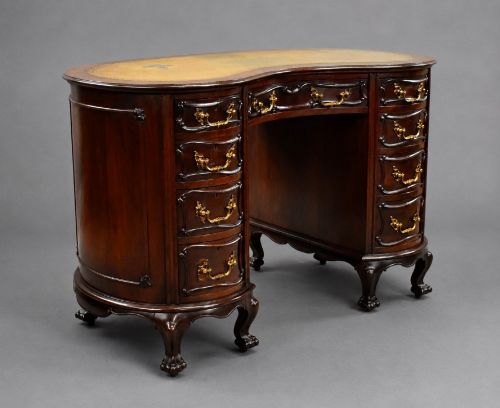
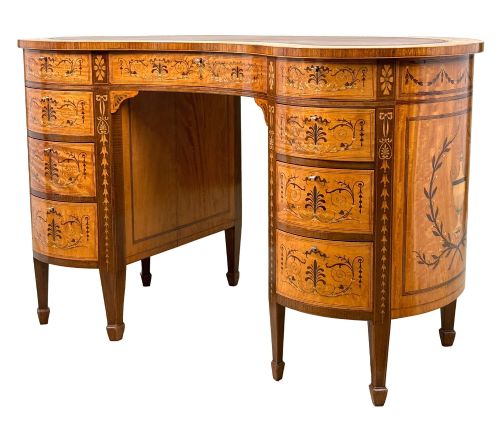
A victorian kidney shaped table offers a curved silhouette designed to hug the body, making it an elegant and practical choice for writing or dressing.
Victorian Kidney Shaped Table
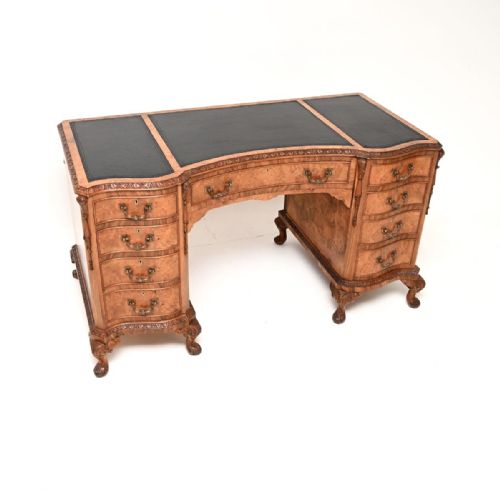
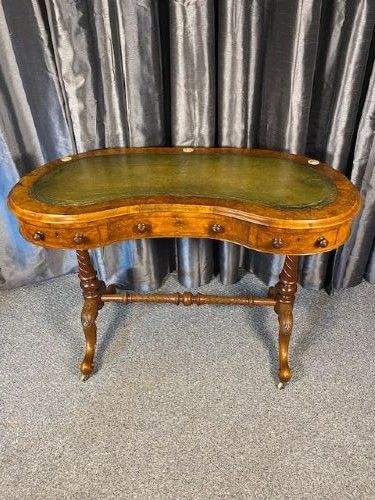
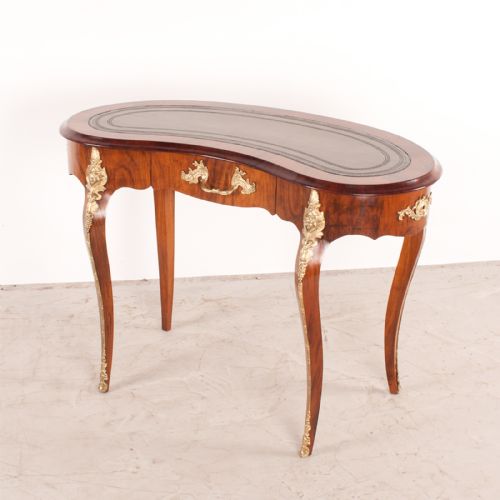
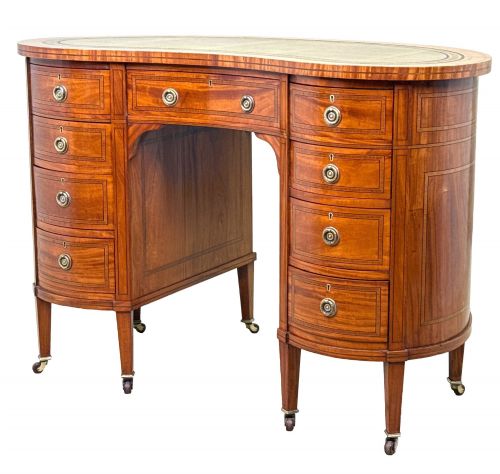
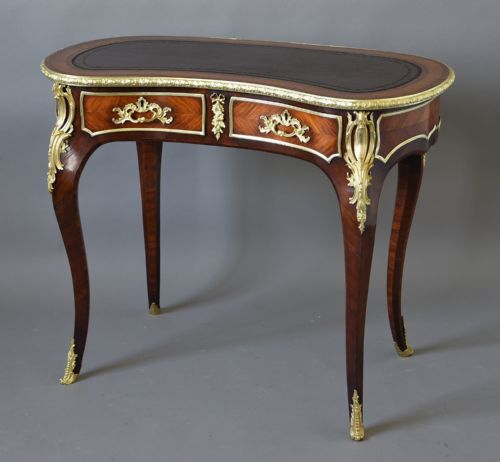
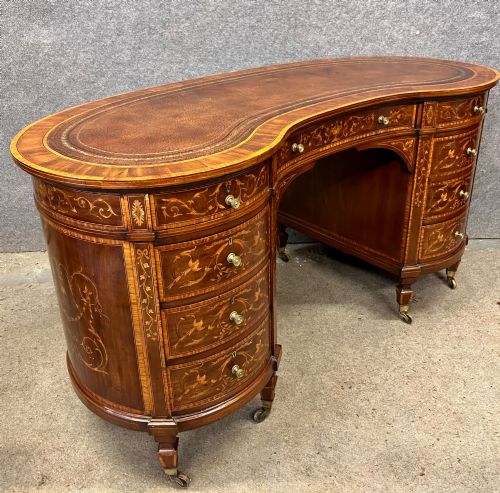
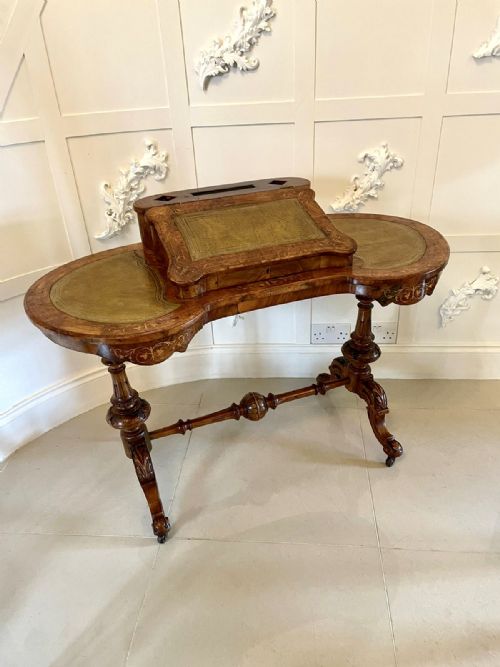
A victorian kidney shaped table presents a distinctive curved top that allows the user to sit comfortably nestled within the concave front. These pieces primarily function as writing desks, dressing tables, or side tables originating from the nineteenth century.
Makers of this era employed the distinctive kidney form for ladies writing desks and occasional tables, often finished with delicate legs and inset leather writing surfaces. The selection frequently includes examples in burr walnut and mahogany produced during the mid to late Victorian decades.
Materials and Construction
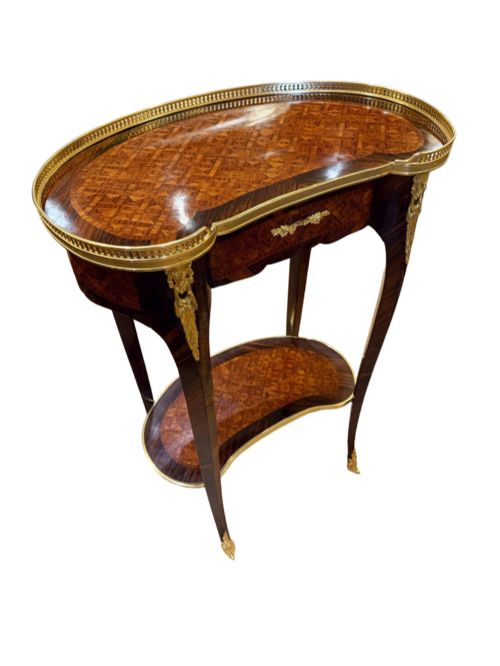
Cabinet makers utilised richly figured timbers such as burr walnut, mahogany, satinwood, and rosewood, frequently applying contrasting crossbanding and marquetry inlay to the curved top. Brass handles, ormolu mounts, and leather writing inserts provide traditional detailing across these nineteenth-century pieces.
The curved perimeter required precise joinery to shape the timber rails and drawers to the characteristic kidney profile. Freestanding variants often feature polished backs, allowing placement in the centre of a room rather than against a wall.
Curved drawers meant cabinet makers had to plane timber against the grain, testing patience and skill.
Craftsmanship and Proportion
Quality rests in the selection of wood veneers, where highly figured burr walnut or meticulously matched satinwood elevates a piece above standard mahogany versions. The fineness of the marquetry inlay and the weight of cast ormolu mounts further distinguish standard production from exceptional cabinet work.
Proportion and execution of the curve dictate the visual balance of the table. Superior examples maintain crisp lines in the drawers and legs while integrating structural stability into the complex curved frame.
Edwards & Roberts·Wolfe & Hollander·Williams and Gibton·Gillows
The Victorian Kidney Shaped Table Glossary
- Crossbanding
- A strip of veneer run perpendicular to the grain of the main surface, often bordering the edge of a table top.
- Marquetry
- Decorative patterns formed by inserting pieces of various coloured woods into a veneered surface.
- Ormolu
- Gilded bronze mounts applied as decorative ornaments to furniture legs, drawers, or aprons.
- Burr walnut
- Timber taken from a growth on a walnut tree, yielding a swirling, highly figured grain pattern.
- Parquetry
- Geometric mosaic woodwork arranged in patterns such as cubes or chequers on tabletops.
Victorian Kidney Shaped Table: Frequently Asked Questions
Where were these tables used?
These tables served primarily in private libraries, boudoirs, and drawing rooms as writing desks or occasional surfaces. Their compact, curved design suited intimate domestic spaces.
Larger variations functioned as centre desks where finished back panels allowed placement away from walls. Dressing tables also utilised the shape to accommodate a seated user.
How do I date a piece?
Dating relies on timber choice, secondary woods, and decorative styles associated with mid to late nineteenth-century production. Burr walnut and heavy marquetry often point towards the central decades of the era.
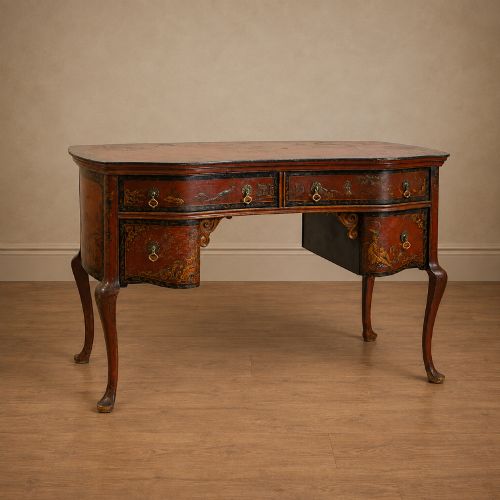
Later Victorian and Edwardian examples occasionally exhibit lighter satinwood or painted Chinoiserie decoration. Maker stamps within drawer linings offer precise chronological markers.
Are the leather tops original?
Many nineteenth-century writing tables retain contemporary replacement leather inserts rather than initial factory hide. Traditional tooling with gold leaf often accompanies period-appropriate restorations.
Examination of the surrounding wooden rebate reveals whether the leather sits flush with historical methods of gluing and trimming.
Can these fit in modern rooms?
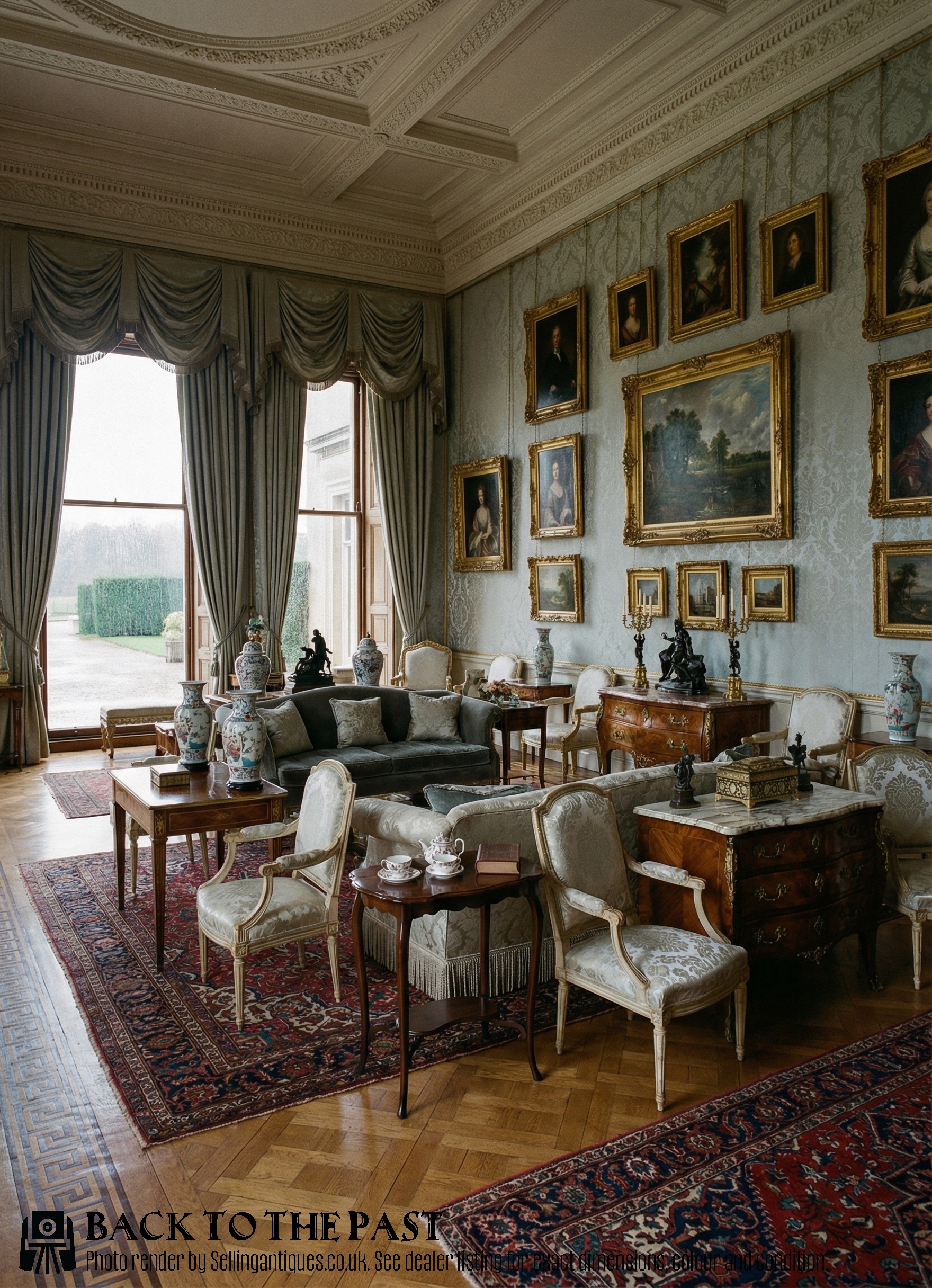
The shallow depth of the curved top allows these tables to function effectively as compact desks or hallway side tables in contemporary interiors. Their finished backs permit freestanding placement.
Smaller occasional and lamp variants occupy minimal floor space while providing surface area for lighting or display.