




Victorian Japanese Bronzes
Victorian Japanese bronzes bring together Western aesthetic ambition and Meiji craftsmanship, creating striking centrepieces that anchor a room with distinct historical weight.
Victorian Japanese Bronzes
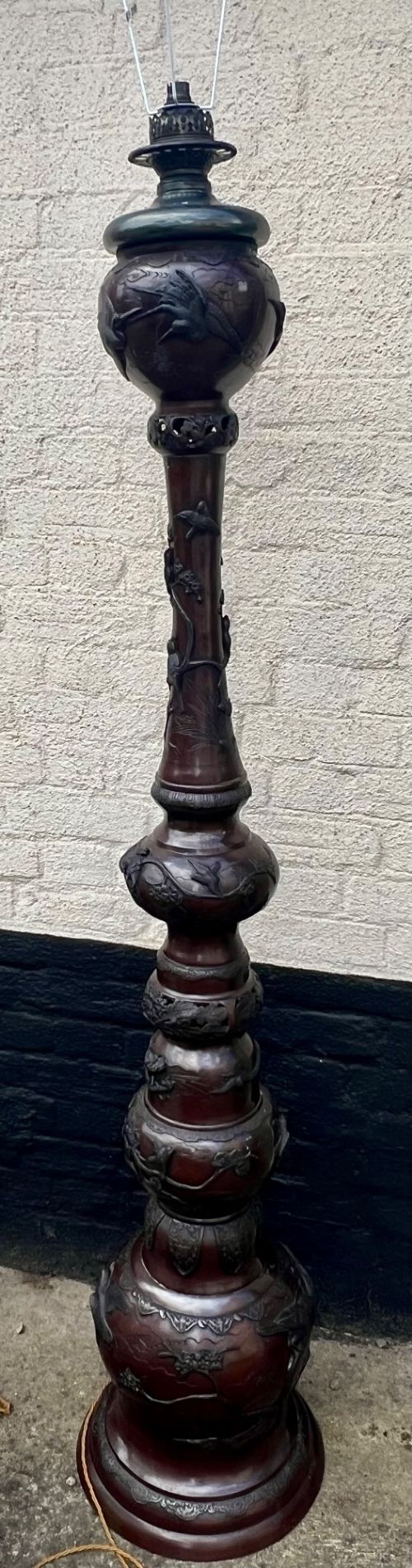
Victorian Japanese bronzes encompass a diverse array of decorative and functional objects produced during the nineteenth century, including vases, jardinieres, table lamps, and floor lamps. These pieces reflect the intense nineteenth-century British fascination with Eastern design, merging domestic Victorian display spaces with imported craftsmanship.
The objects commonly trace their origins to the Meiji and Edo periods, arriving in Britain during the Victorian era through expanding international trade and exhibitions. Vases and planter bowls dominate the selection, often appearing in matched pairs alongside utilitarian forms like dinner gongs and censers.
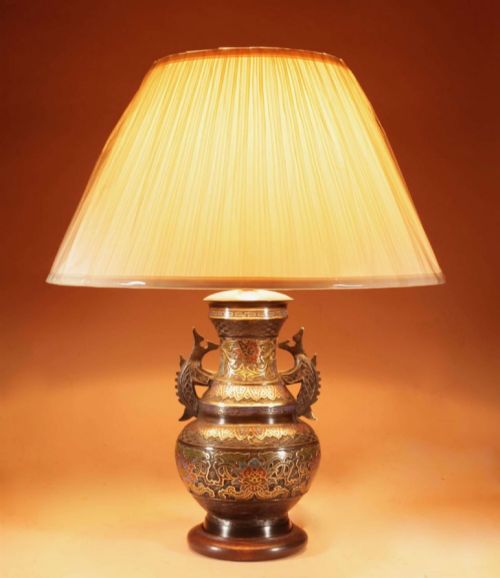
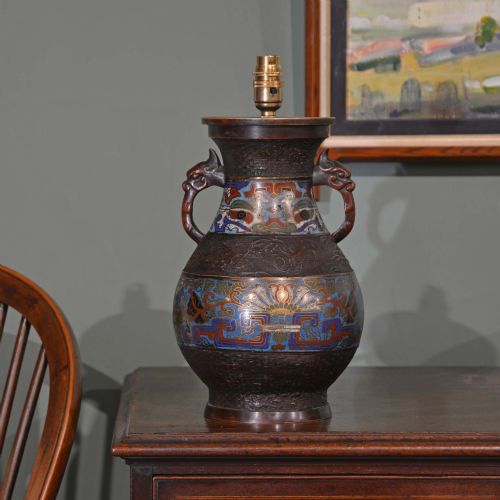
Buyers encounter variations spanning from patinated bronze surfaces to items incorporating champlevé and cloisonné enamel work. These works frequently intersect with the broader Japonisme movement, demonstrating how Western makers integrated imported Japanese elements into local furniture and lighting.
Materials and construction methods
The primary material across these pieces is bronze, utilised alongside patinated and gilt bronze finishes to create tonal depth and visual contrast. Makers employed traditional casting techniques to shape intricate vessels, urns, and figural components.
Enamel enrichment appears frequently through champlevé and cloisonné techniques, adding vibrant colour fields directly onto the metal ground. Secondary materials such as brass, hardwood, and fabric support items like lamps and side tables.
Surface treatment relies heavily on patination to achieve dark, rich metallic tones that highlight chased or cast details. The integration of wooden elements, particularly in tables and lamp bases, demonstrates the collaborative nature of cross-cultural manufacturing.
Materials recorded in current inventory include patinated bronze, gilt bronze, champlevé, cloisonné, brass, hardwood, and fabric.
Distinctions in execution and design
The distinction between standard commercial output and superior craftsmanship rests in the crispness of the casting and the precision of surface decoration. Finer examples display deeply undercut details, cleanly applied enamel work, and carefully controlled patination that ages uniformly.
Proportion and structural integrity separate exceptional decorative items from routine production, particularly in matched pairs of vases or large floor lamps. The harmony between the bronze vessel and any added elements, such as hardwood stands or mounts, determines the overall refinement of the piece.
Gabriel Viardot
The Victorian Japanese Bronzes Glossary
- Meiji Period
- The era in Japanese history spanning from 1868 to 1912, corresponding with significant modernisation and a surge in decorative arts exported to the West. Pieces from this period are noted for technical mastery in metalwork.
- Japonisme
- A late nineteenth-century Western artistic movement influenced by Japanese art and design. This aesthetic shaped European decorative objects and furniture, blending domestic forms with Eastern motifs.
- Champlevé
- An enamelling technique where troughs or cells are sunk into the metal surface and filled with vitreous enamel before firing. It creates distinct colour boundaries within bronze designs.
- Cloisonné
- A method of decorating metal objects by affixing wires to the surface to form compartments that hold enamel paste. The piece is then fired and polished to a smooth finish.
- Censer
- A vessel traditionally designed for burning incense, frequently cast in bronze with pierced lids and dragon motifs. These ritual objects were adapted for decorative display in Victorian interiors.
- Jardiniere
- A large ornamental pot or planter designed to hold growing plants or flower arrangements. In bronze, these items serve as substantial interior focal points.
Victorian Japanese Bronzes: Frequently Asked Questions
How do I distinguish Edo period pieces from Meiji period ones?
Edo period items originate from the era preceding the 1868 Meiji restoration, often bearing different stylistic conventions focused on traditional domestic or ritual use. Meiji pieces reflect the opening of trade and the subsequent surge in works specifically tailored for Western export markets.
Examination of the patination, signature styles, and decorative motifs helps identify the transition between these two historical periods within bronze collections.
How should I care for patinated bronze surfaces?
Patinated bronze requires minimal intervention to preserve its historic finish, relying primarily on gentle dusting with a soft, dry cloth. Avoid abrasive cleaners, polishes, or commercial metal liquids that can strip away the original chemical patina.
Maintaining a stable indoor humidity level prevents moisture damage to both the metal body and any integrated enamel or wooden components.
What is the difference between champlevé and cloisonné?
Champlevé involves carving or casting depressions directly into the bronze body to hold the enamel colour. Cloisonné uses thin metal wires soldered onto the surface to create the enclosed cells for the enamel paste.
Both techniques result in durable, colourful decoration, but the physical structure of the surface reveals which method the maker utilised.