


Victorian Jam Pan
These robust victorian jam pan vessels bring tangible nineteenth-century utility and warmth into modern spaces.
Victorian Jam Pan
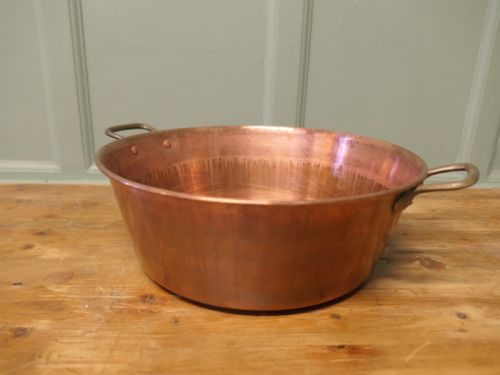
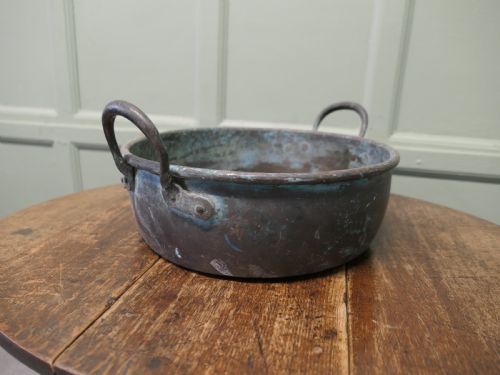
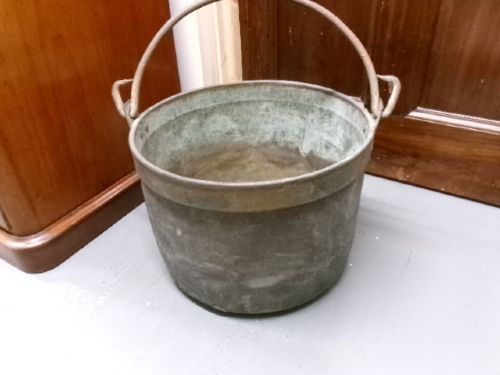
A victorian jam pan serves as a primary piece of nineteenth-century cookware designed for preserving fruit and boiling sugar over open hearths or stoves. These items appear in formats such as large preserving pans, two-handled bowls, cauldrons, and cream setting pans.
Most examples hail from the nineteenth century, with specific dates spanning from eighteen-sixty to nineteen-thirty in the recorded evidence. Buyers regularly encounter pieces styled within a rustic farmhouse or country aesthetic.
Beyond the kitchen, these vessels frequently function as planters and jardiniere containers within domestic interiors and fireplace settings. The predominant forms maintain generous proportions intended for heavy domestic output.
Materials and construction methods
Metal fabrication defines the construction, utilising heavy sheets of copper and brass shaped into deep bowls. Many items incorporate contrasting wrought iron swing handles and iron fixings attached securely to the primary body.
Riveting techniques secure handles and seams on numerous examples, visible through structural overlapping and metal pins. Surface textures range from polished finishes to mottled brass and patinated copper surfaces shaped during the nineteenth century.
Function categories shift from kitchenware and saucepans to fireplace accessories, planters, and preserving pans.
Factors of distinction
Substance and weight separate heavier domestic hardware from lighter domestic utensils, visible in the thickness of the metal walls. Substantial gauge copper and brass provide structural integrity that survives centuries of use.
The integration of complementary metals, such as brass handles on copper bodies or wrought iron swing attachments, dictates the decorative presence of each vessel. Maker attribution also elevates certain pieces, evidenced by specific workshop stamps like Hodges and Sons.
Hodges and Sons
The Victorian Jam Pan Glossary
- Jam Pan
- A wide, open metal vessel designed for boiling fruit and sugar to make preserves. Its shallow depth allows rapid evaporation of moisture during cooking.
- Swing Handle
- A flexible arched handle attached to pivots on opposite sides of a pan or cauldron. This allows the handle to drop flat against the side when not in use.
- Cream Setting Pan
- A specialised wide domestic vessel used in dairies for holding milk to allow cream to rise to the surface. These share similar shallow metal construction with preserving pans.
- Cauldron
- A large metal cooking pot featuring a rounded base and a handle, traditionally hung over an open fire. Nineteenth-century versions often utilise heavy copper or brass.
- Jardiniere
- An ornamental pot or stand for holding plants and flowers, often repurposed from antique copper or brass cookware. These bring industrial metal textures into interior decor schemes.
Victorian Jam Pan: Frequently Asked Questions
What were victorian jam pan vessels used for?
These vessels were utilised primarily for domestic preserving, boiling large quantities of fruit and sugar over heat sources.
In modern settings, they serve alternative purposes as decorative planters, jardiniere displays, or fireside accessories.
Are these pans made of copper or brass?
The evidence shows items manufactured in both solid copper and brass, frequently featuring iron swing handles.
Some pieces combine copper bodies with contrasting brass handles or incorporate tin linings.
How do I style a jam pan at home?
These pieces fit naturally into rustic farmhouse and country interior schemes as freestanding floor vessels or tabletop containers.
Many owners fill them with large plants or position them near fireplaces to hold hearth accessories.
How can I tell the age of these pans?
Dating relies on recorded nineteenth-century periods, manufacturing traits like hand-riveting, and specific maker marks when present.
Stylistic indicators point towards Victorian country and rustic farmhouse traditions spanning the eighteen-sixty to nineteen-thirty eras.