


Victorian Ironstone Pitcher
A victorian ironstone pitcher is a sturdy, heavy ceramic vessel built for daily service, combining utilitarian strength with bold nineteenth-century decoration.
Victorian Ironstone Pitcher
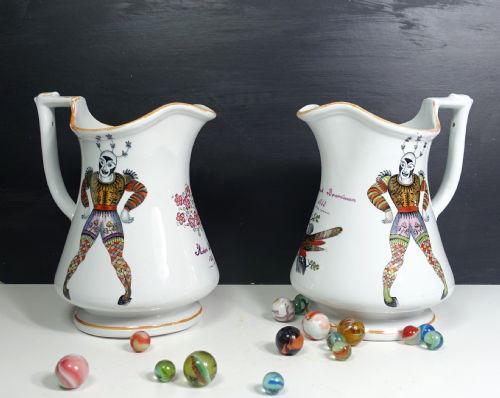
A victorian ironstone pitcher serves as a durable household container, typically encountered in forms ranging from standalone pouring vessels to large components of matching jug and basin sets. These pieces reflect nineteenth-century domestic routines, where heavy utilitarian wares required both practical capacity and decorative appeal.
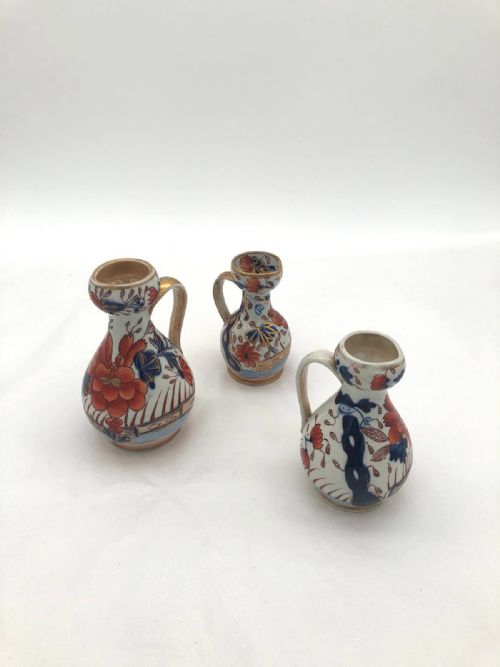
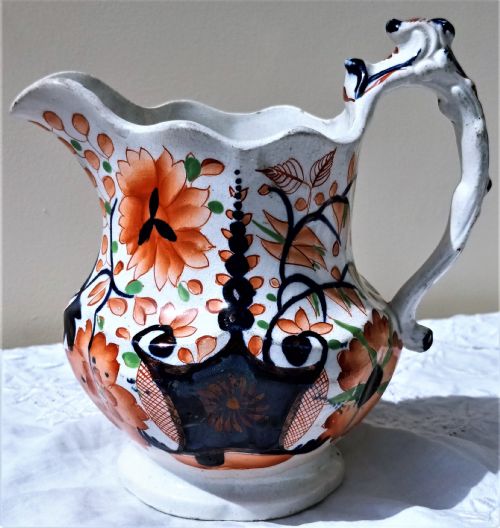
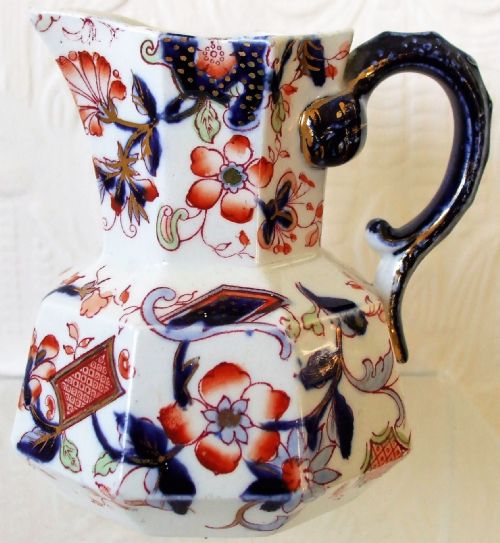
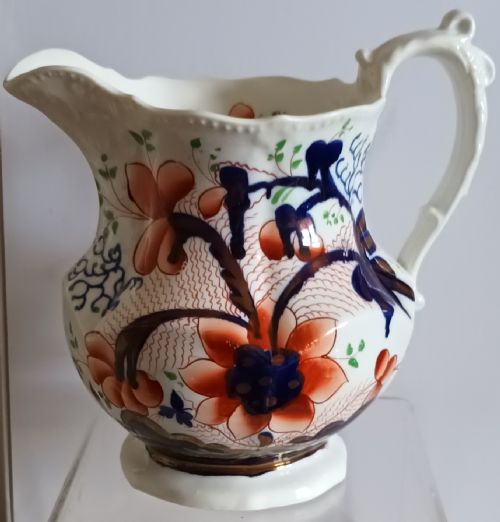
The selections span various distinct patterns and regional styles, including bold Chinoiserie motifs, Imari palettes, and vibrant Gaudy Welsh designs. Buyers will frequently encounter specialised shapes such as the serpentine Hydra form or octagonal profiles that demonstrate the versatility of nineteenth-century ceramic design.
Origins trace across multiple periods of production, encompassing pieces from the Georgian era through the late nineteenth century and into the early twentieth century. These domestic containers bridge the gap between heavy kitchen utility and the rich, colourful display typical of the period's dining and washstand displays.
How they were made
Potters utilised a dense, vitreous earthenware body known as ironstone, fired at high temperatures to achieve exceptional durability and a heavy, stone-like substance. This robust ceramic foundation was then coated in a smooth glaze to seal the surface for daily liquid containment.
Decoration relied upon hand-applied enamel colours and cobalt blue underglaze transfers, frequently augmented with gilt or gold leaf detailing. Specialised shapes required skilled moulding and shaping, particularly for grotesque handles and complex serpent or hydra spouts.
Listings feature ironstone, ceramic, earthenware, and porcelain materials decorated with enamel, glaze, gilt, and gold leaf across the nineteenth century.
What varies in quality
Quality rests upon the crispness of the moulding and the complexity of the decorative scheme, distinguishing simple utilitarian vessels from highly ornate display pieces. Sharp definition in relief-moulded details, such as snake handles and octagonal facets, marks superior craftsmanship.
The precision and vibrancy of the enamel painting, alongside the richness of any gold leaf or gilt accents, elevate certain examples above standard production runs. Complete sets and unusual pattern variations demonstrate a higher tier of nineteenth-century ceramic output.
Mason's Ironstone·Keeling and Co·Livesley Powell and Co·Davenport
The Victorian Ironstone Pitcher Glossary
- Ironstone
- A heavy, dense ceramic body patented in the nineteenth century for its durability and resistance to chipping. It provides a robust alternative to porcelain while maintaining a refined appearance.
- Hydra jug
- A distinctive pouring vessel featuring a serpent-formed handle and an undulating rim shape. This classical revival form became particularly popular among nineteenth-century makers.
- Gaudy Welsh
- A vibrant, informal pottery style characterised by rich cobalt blue, copper lustre, and iron-red floral patterns. It was produced primarily for domestic use in Welsh and English households.
- Chinoiserie
- A decorative style reflecting European interpretations of Chinese and East Asian artistic traditions. These patterns typically feature imaginary landscapes, pagodas, and exotic figures.
- Puzzle jug
- An interactive ceramic vessel pierced with hidden spouts or perforated necks designed to confound the drinker. Solving the puzzle requires covering specific holes to draw the liquid successfully.
Victorian Ironstone Pitcher: Frequently Asked Questions
How were these pitchers used?
These vessels served practical roles in nineteenth-century households for carrying water, pouring liquids at the dining table, or functioning as part of a matching washstand basin set.
Their heavy construction ensured they could withstand the rigours of daily domestic service while remaining decorative enough to display in living spaces.
How do I care for ironstone?
Wash these ceramics gently by hand in warm water using mild soap, avoiding harsh abrasive scrubbers that might damage the surface glaze or wear away gilt accents.
Keep them away from rapid temperature changes and modern dishwashers to preserve the historic ceramic body and hand-painted enamels.
Are these pitchers waterproof?
Most ironstone vessels remain fully vitreous and watertight, making them entirely suitable for holding fresh cut flowers or serving water during meals.
Inspect each piece individually for any historic hairline fractures that might compromise the internal glaze before filling them with liquid.
What defines a jug and basin set?
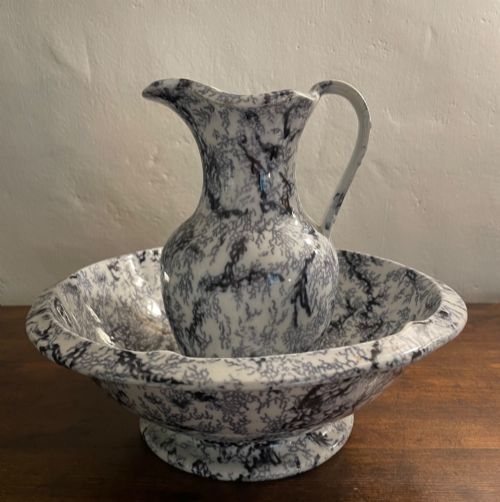
A jug and basin set comprises a large pitcher paired with a matching deep bowl, designed historically for morning washing routines in a bedroom or dressing room.
These paired items share identical decorative patterns, colourways, and ceramic bodies, creating a cohesive visual display on antique washstands.