

Victorian Iron Umbrella Stand
A victorian iron umbrella stand brings sturdy metalwork and practical hallway storage together in designs ranging from geometric grilles to figurative castings.
Victorian Iron Umbrella Stand
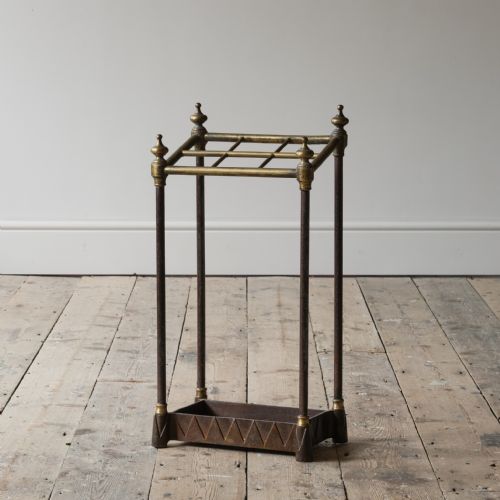
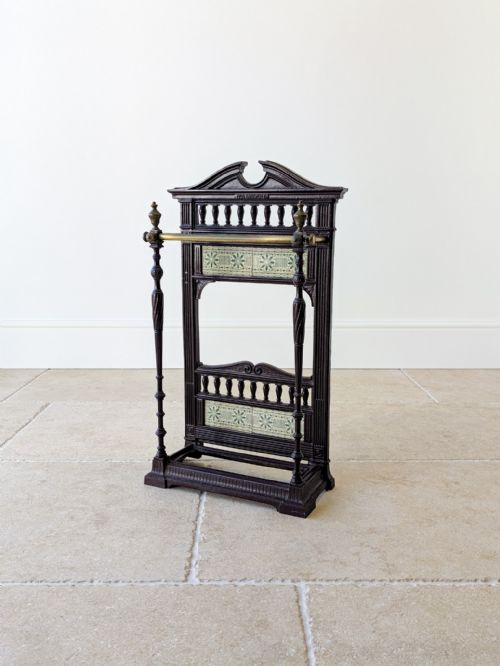
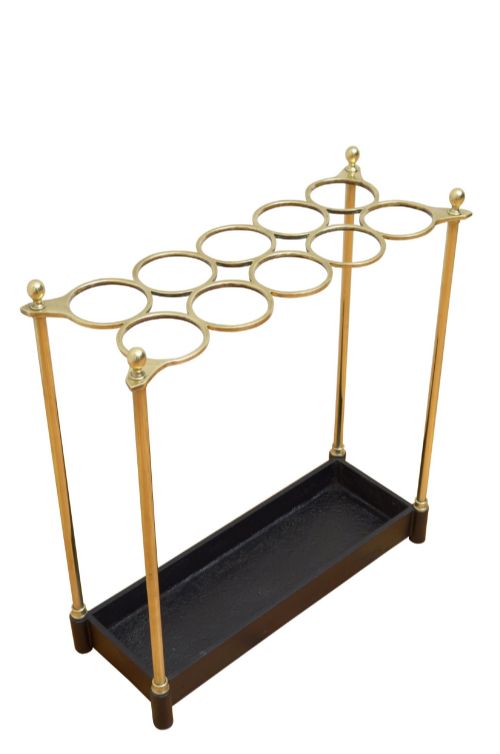
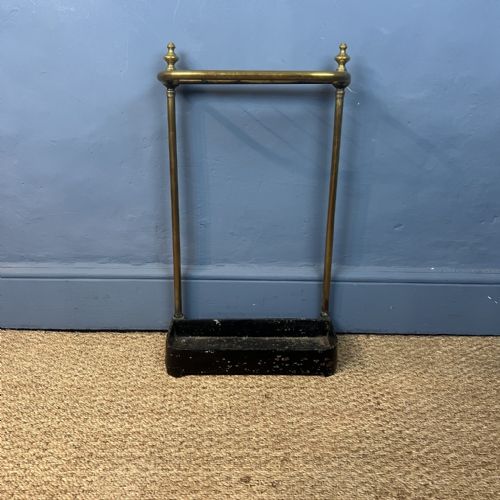
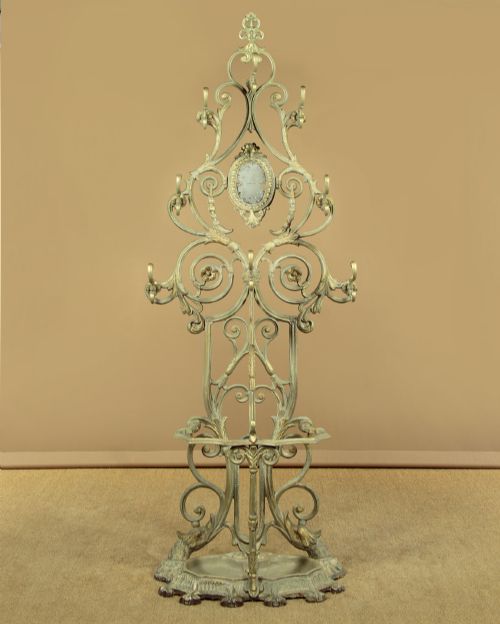
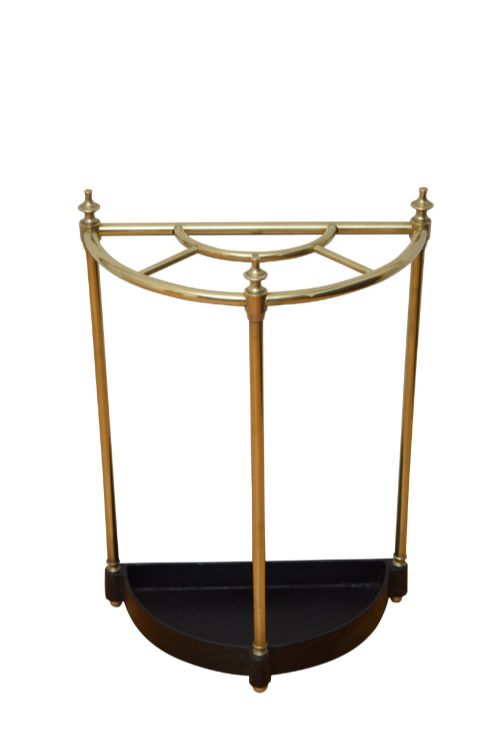
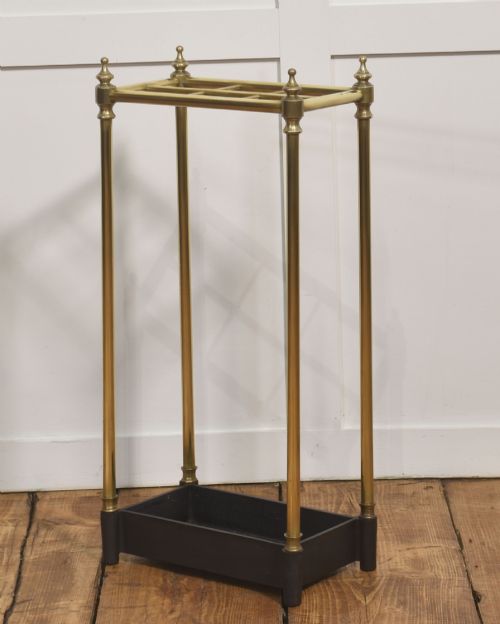
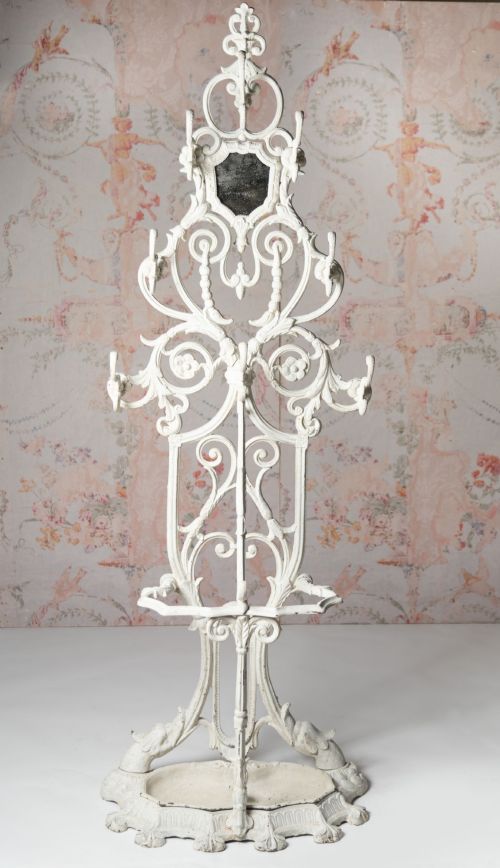
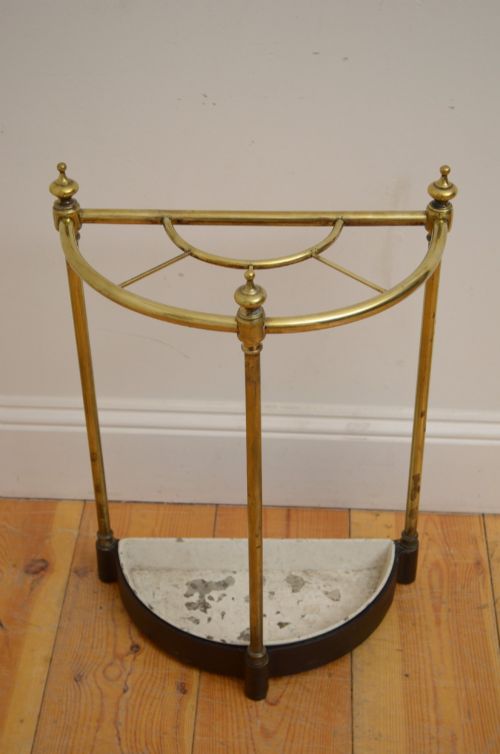
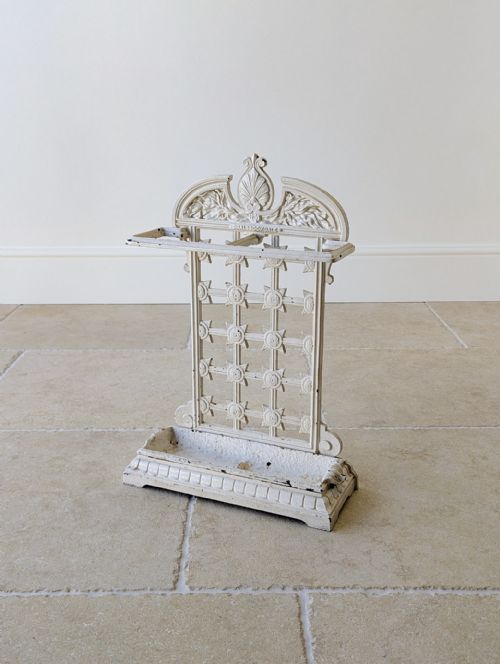
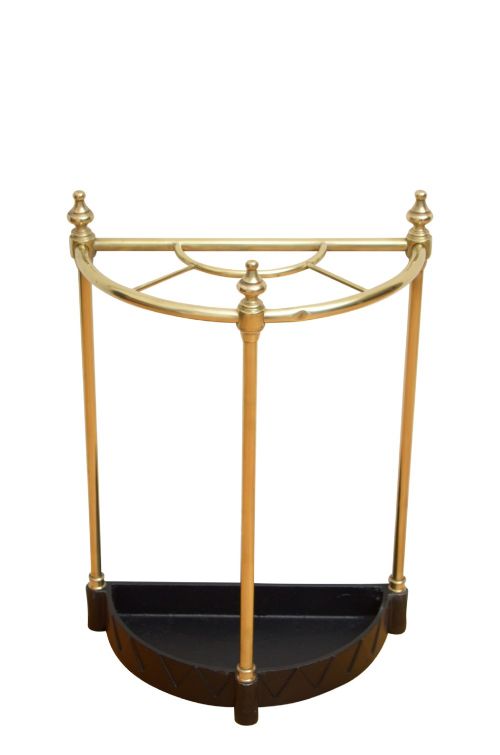
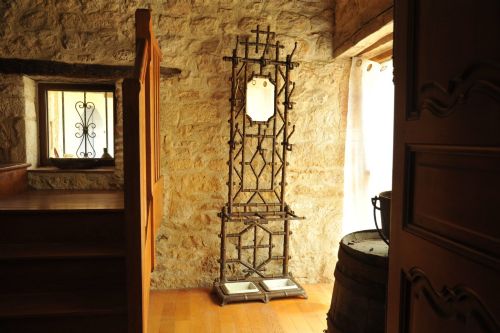
A victorian iron umbrella stand is a practical piece of hallway furniture designed to hold wet walking sticks and umbrellas upright. The forms vary from compact half-moon shapes meant to hug a wall to substantial freestanding corner units and combined coat racks.
Most examples originate from the nineteenth and early twentieth centuries, spanning periods from the Victorian era into the Edwardian years. They appear frequently in cast iron alongside brass framing, ceramic drip pans, and painted finishes intended to withstand daily dampness.
How they were made
Foundries utilised sand-casting techniques to shape molten iron into intricate openwork patterns, structural frames, and decorative motifs. Skilled makers combined this heavy metal with rolled brass tubing, steel rods, and timber components such as oak or pitch pine.
Surface treatments often included protective black paint, enamel coatings, or japanning to prevent rust in busy entrance halls. Removable ceramic or metal drip trays were integrated at the base to catch water run-off from wet sticks.
Listings combine cast iron and brass with oak, pitch pine, glass, and ceramic elements across Victorian and Edwardian periods.
What varies in quality
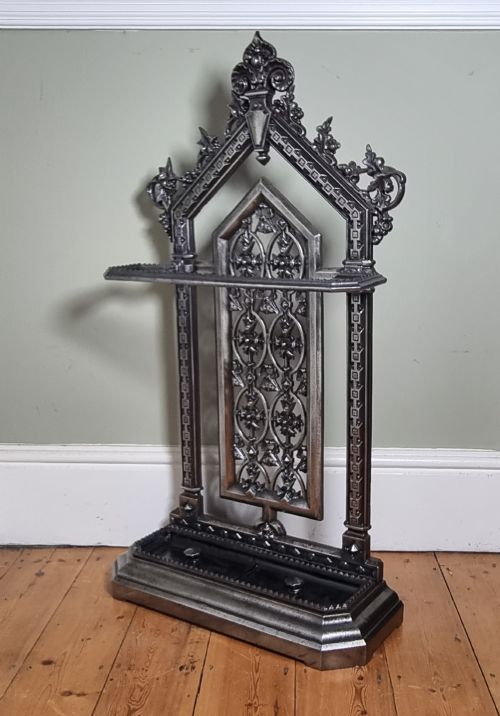
The definition and depth of the iron casting separate standard foundry output from exceptional artistic work. Crisp detailing in figurative elements, such as animal figures or botanical scrollwork, indicates superior pattern-making.
Maker attribution and registration marks stamped into the metal elevate the standing of a piece. Robust structural integrity, complete original drip trays, and undamaged brass finials or framing also distinguish finer examples.
Coalbrookdale·Thomas Jeckyll·Falkirk Ironworks·A. Kenrick & Sons
The Victorian Iron Umbrella Stand Glossary
- Demi-lune
- A half-moon shape designed to sit flush against a hallway wall. This profile allowed stands to occupy narrow corridors without blocking foot traffic.
- Drip tray
- A removable metal or ceramic tray placed at the bottom of the stand. It collected water from wet umbrellas to protect wooden hallway floors.
- Japanning
- A type of durable black varnish finish applied to ironwork. It provided a glossy protective coating that resisted moisture.
- Finial
- A decorative terminal ornament usually found on the top corners or rails of a stand. These brass or iron knobs often screwed into place to secure the frame.
Victorian Iron Umbrella Stand: Frequently Asked Questions
Where did these stands sit?
These umbrella stands stood in the entrance halls and porches of nineteenth-century homes to keep wet items away from living areas.
Their compact footprints suited narrow corridors, while corner models utilised awkward architectural angles.
How do I stop rust?
Keep the iron clean and dry by emptying the base tray regularly after wet weather.
Applying a light wax or oil coat helps protect painted or bare metal surfaces from moisture damage.
Are drip trays original?
Many surviving stands retain their fitted metal or ceramic trays, though replacements are common due to breakage.
Matching materials and correct sizing help identify whether a tray belongs to the original frame.
What styles are common?
Common styles include geometric Gothic Revival patterns, Aesthetic Movement designs, and ornate French Art Nouveau castings.
Faux bamboo motifs and figurative animal designs also appear frequently across the period.