


Dark Iron Stick Stand
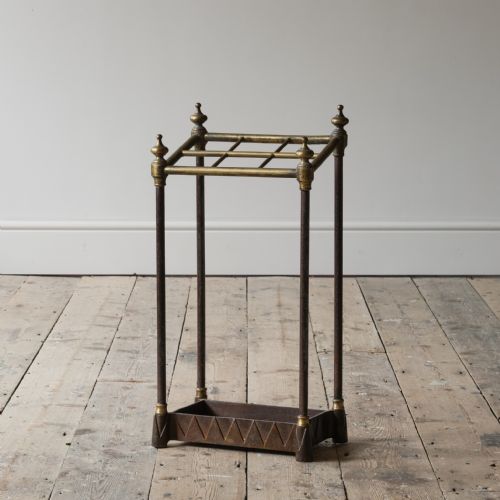
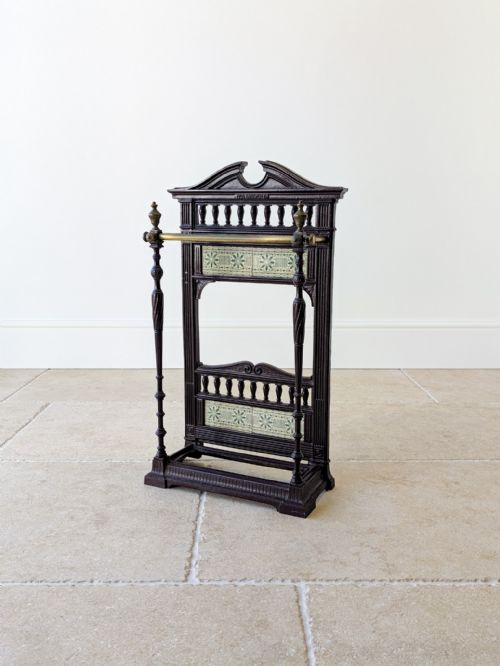
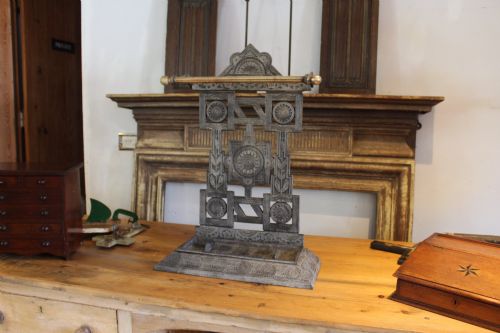
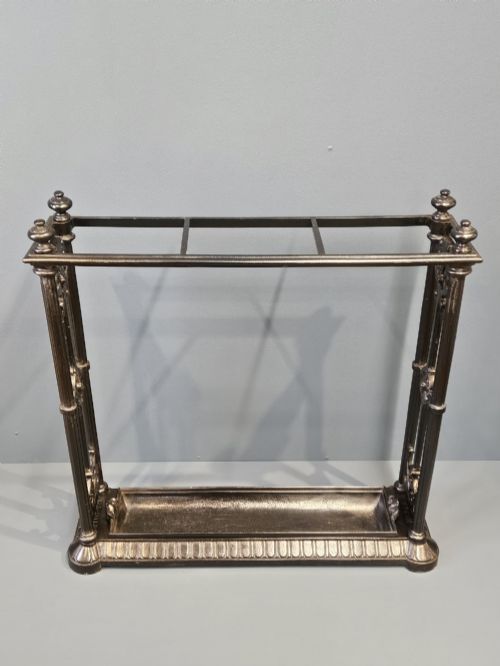
These dark iron stick stand examples anchor a hallway with solid weight and crisp metalwork, offering a practical place for wet umbrellas and heavy walking canes.
Dark Iron Stick Stand
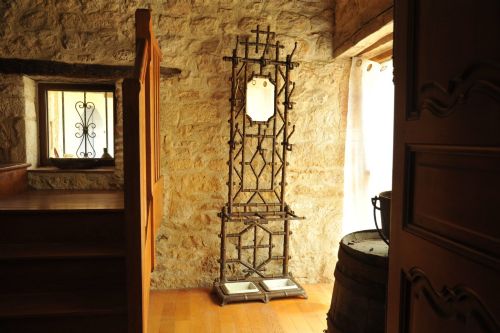
A dark iron stick stand is a robust entryway accessory designed to hold umbrellas, walking canes, and occasional hall accessories like hats and coats. These pieces appear in varied forms ranging from dedicated floor cylinders to large hall stands incorporating mirrors and wooden barrels.
The versions most common on this page date from the nineteenth and early twentieth centuries, spanning Victorian, Edwardian, and Art Nouveau periods. They originate from British, French, and Belgian workshops, utilising durable metals to withstand daily household traffic.
Makers often fashioned these objects to suit specific stylistic tastes, including the Aesthetic Movement, Gothic Revival, and Jacobean taste. Buyers encounter both compact standalone rings and expansive combinations that anchor an entire entrance hall.
How they were made
Foundries primarily shaped these objects using cast iron or wrought iron, pouring molten metal into detailed moulds to achieve intricate patterns, openwork grilles, and structural umbrella loops. Artisans frequently integrated brass components or ceramic drip trays to manage moisture from wet umbrellas.
Certain pieces combine metal frames with organic materials, utilising oak barrels with coopered staves or incorporating mirror glass and wooden panels into larger hall stands. Faux bamboo textures and naturalistic plant motifs emerge directly from the metal casting process.
Object forms include standalone umbrella rings, faux bamboo hat stands, and multi-functional hall stands with integrated mirrors.
What varies in quality
Quality rests upon the crispness of the casting and the depth of the ornamentation, where sharper botanical details and clearer foundry marks distinguish superior production. Lesser examples exhibit softened edges and simpler geometric bars without sculptural relief.
The integrity of the construction also separates standard utilitarian models from ambitious artistic pieces attributed to known designers or prominent foundries. The presence of original matching drip pans and uncompromised structural joints elevates the standing of any piece.
Coalbrookdale·Thomas Jeckyll·Shoolbred·Falkirk
The Dark Iron Stick Stand Glossary
- Cast iron
- A hard, relatively brittle alloy of iron and carbon that can be cast in a mould. Foundries used this material to create intricate openwork patterns and heavy frames for domestic hall furniture.
- Drip tray
- A shallow basin positioned at the base of a stand to catch water from wet umbrellas. These trays are often removable for easy emptying and cleaning.
- Faux bamboo
- A decorative motif carved or cast to imitate natural bamboo stalks. This style gained popularity during the nineteenth century under the influence of Japanese design.
- Hall stand
- A large piece of entrance furniture combining a stick stand with a coat hook panel, glove box, and central mirror. These multi-functional items anchored grand Victorian and Edwardian foyers.
- Coopered
- Constructed from wooden staves fitted together side by side and bound with metal hoops. This traditional barrel-making technique appears on wooden umbrella barrels.
Dark Iron Stick Stand: Frequently Asked Questions
Where should I place a stick stand?
These pieces belong in an entrance hall or porch where guests arrive and outdoor gear collects near the door.
Ensure the floor beneath the stand can handle occasional moisture from damp umbrellas resting inside the iron loops.
How do I clean cast iron?
Dust the metal surfaces regularly with a soft dry cloth to prevent dirt accumulation within the intricate crevices and cast patterns.
Avoid harsh liquid cleaners that might strip historical patination from the dark iron surface.
Can these hold heavy walking canes?
The substantial weight and solid metal construction of these stands provide robust support for heavy wood and metal walking sticks.
Their sturdy bases prevent tipping even when loaded with multiple heavy canes.
How do I identify the period?
Examine the decorative motifs, such as Aesthetic Movement plant forms or Gothic Revival arches, which reflect nineteenth-century design trends.
Foundry marks and registration numbers cast into the iron often point toward specific production decades.