




Victorian Inlay Parlour Table
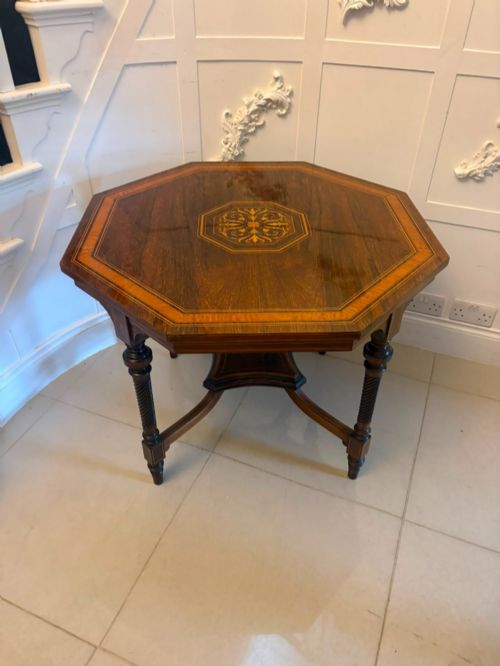
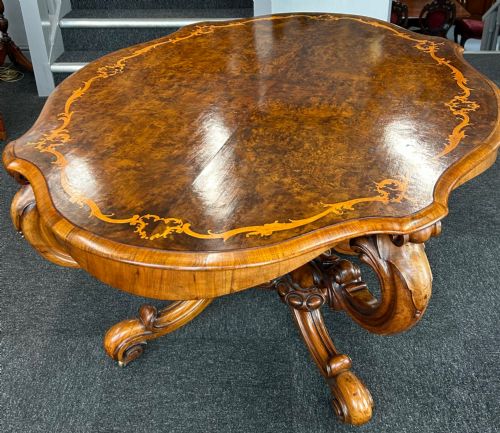
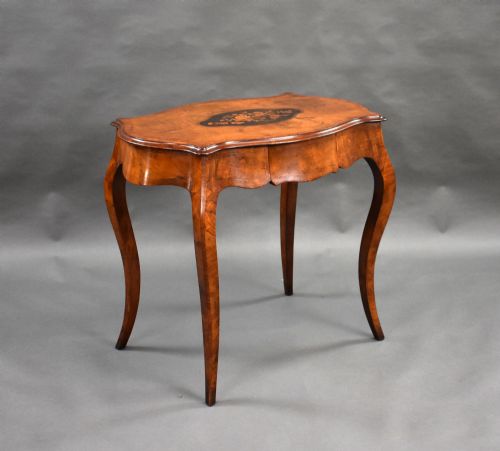
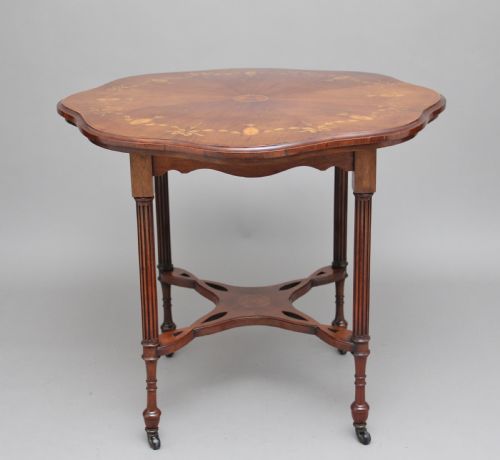
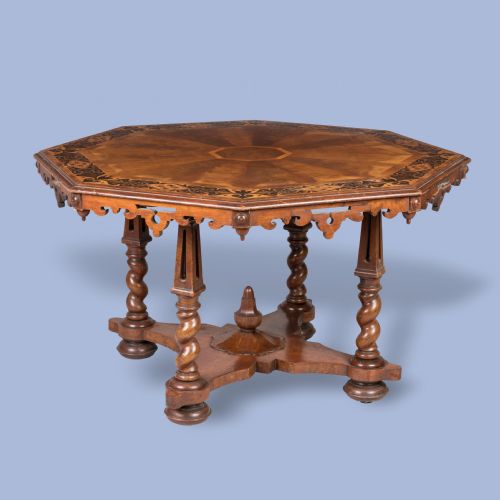
These Victorian inlay parlour table pieces offer rich timber surfaces and delicate floral motifs, designed to anchor a formal nineteenth-century reception room.
Victorian Inlay Parlour Table
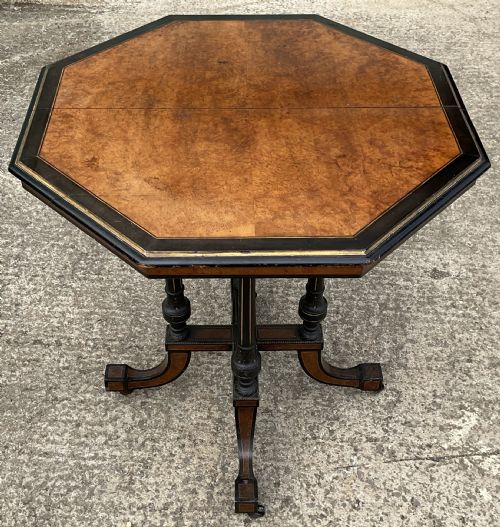
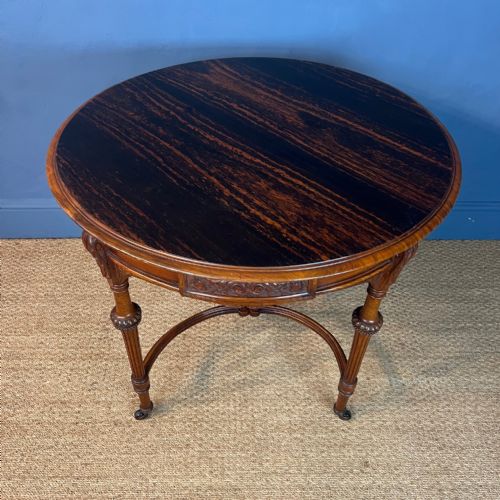
A victorian inlay parlour table typically takes the form of a centre table, occasional table, or games table designed for drawing room use. The pieces appearing here span from the mid-nineteenth century through the Edwardian period, capturing a range of distinct shapes.
Oval and octagonal formats dominate the selections, alongside shaped rectangular tops and specialised basket base supports. Walnut, burr walnut, and rosewood form the primary structural foundations across these examples.
Makers utilised boxwood inlay and marquetry inlay to decorate the timber surfaces with scrolling foliage and geometric bands. Buyers will encounter both freestanding pedestal formats and four-legged occasional designs within the current selection.
Construction and Materials
Cabinet makers built these tables using solid timber carcases faced with figured veneers like burr walnut and rosewood. The natural grain patterns provided a rich, dark backdrop for lighter decorative elements.
Inlay work relied on contrasting timbers such as boxwood, carefully cut and fitted into recessed channels within the primary surface. Marquetry panels combined multiple wood species to create pictorial or floral motifs across the tabletop.
One listed piece incorporates a golf game table, proving Victorians took their leisure pastimes right into the parlour.
Quality Variations
The sophistication of the marquetry and boxwood inlay sets individual pieces apart, ranging from simple border lines to complex floral arrangements. Figured walnut and burr walnut veneers display varying degrees of natural grain movement and depth.
Base construction also indicates standard, with carved pedestal columns and basket supports requiring greater joinery skill than standard four-leg frames. The crispness of the timber finishing and the integration of brass fittings further define the tier of each piece.
James Winter
The Victorian Inlay Parlour Table Glossary
- Marquetry inlay
- The practice of fitting contrasting wood veneers into a prepared surface to form decorative pictures or patterns. This technique required considerable precision from the cabinet maker.
- Burr walnut
- A prized timber harvested from growth deformations on walnut trees, yielding highly swirled and mottled grain patterns. It was frequently selected for the primary tops of formal parlour tables.
- Centre table
- A freestanding piece designed to be viewed from all sides rather than pushed against a wall. These typically sat in the middle of Victorian reception rooms.
- Boxwood
- A dense, pale yellow timber commonly utilised for fine stringing and inlay work. Its light colour provided sharp contrast against darker woods like walnut and rosewood.
- Occasional table
- A smaller, movable table intended for specific, intermittent uses such as holding books or tea. They appear in various geometric shapes throughout the later nineteenth century.
Victorian Inlay Parlour Table: Frequently Asked Questions
What is a parlour table?
A parlour table is a decorative piece of furniture built for the formal reception rooms of nineteenth-century homes. These tables served as display surfaces for ornaments and books.
They stood centrally or against walls, anchoring the social space of the household.
How do I identify a Victorian table?
Victorian tables are identified by their characteristic timber choices, particularly walnut, burr walnut, and rosewood. Look for decorative marquetry inlay and boxwood details.
Construction methods and styling cues like pedestal bases or shaped oval tops also point to this period.
Where should I place a centre table?
Centre tables are designed as freestanding pieces meant to be viewed from all sides. They work best in open spaces where they can function as a visual focal point.
Ensure there is adequate clearance around the piece for movement.
What is marquetry inlay?
Marquetry inlay involves assembling small pieces of different coloured wood veneers to create pictures or geometric designs. Artisans fitted these directly into the tabletop.
This method added significant ornamental value to formal furniture.
Are these tables sturdy enough for daily use?
These tables were built to support books, ornaments, and occasional tea service in a nineteenth-century home. Their solid timber frames provide stable support.
Care should be taken to protect polished walnut and rosewood surfaces from moisture and heavy impacts.