

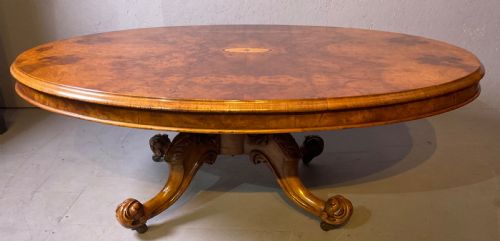
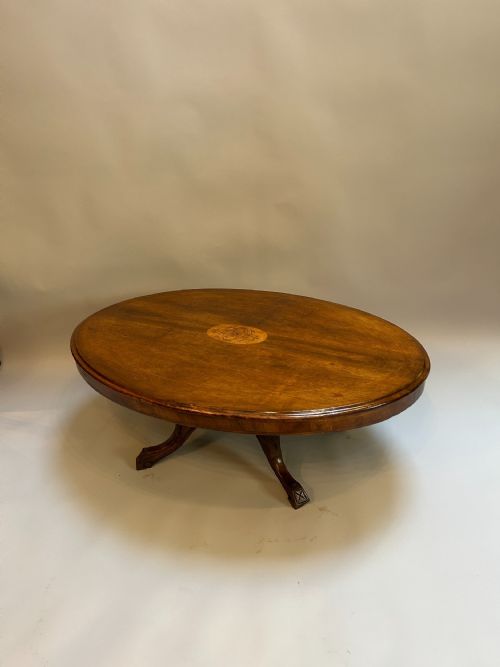


Marquetry Oval Centre Table
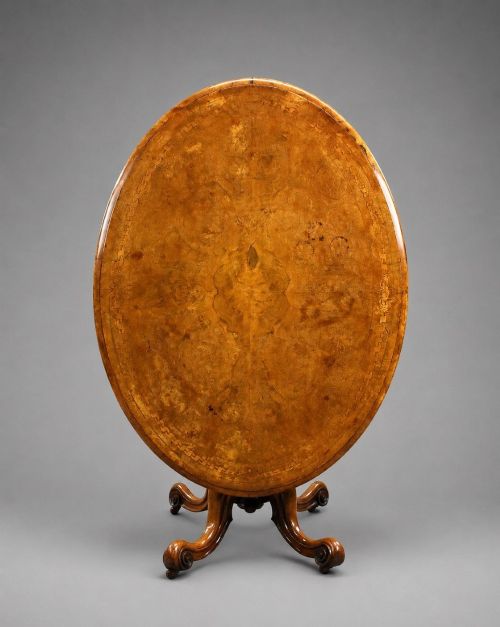
A marquetry oval centre table brings together elaborate inlaid timber and generous proportions, designed to anchor a principal room.
Marquetry Oval Centre Table
A marquetry oval centre table is a versatile piece of nineteenth and early twentieth century furniture, originating predominantly from the Victorian and Edwardian periods. These tables appear in forms such as occasional tables, breakfast tables, and loo tables, each designed to stand free in a room rather than against a wall.
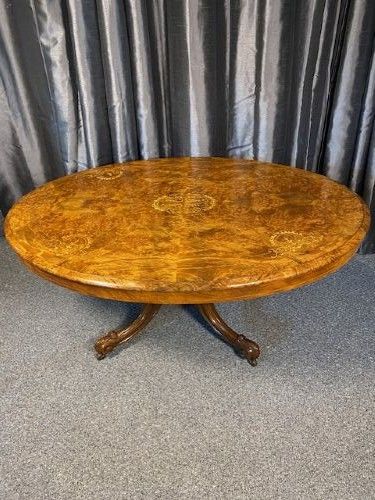
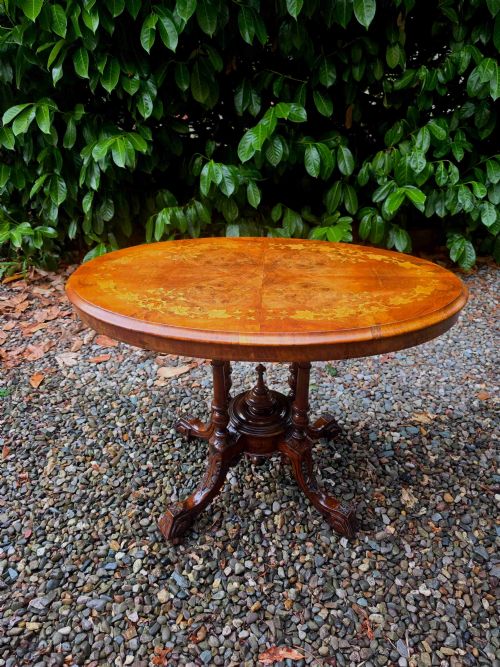
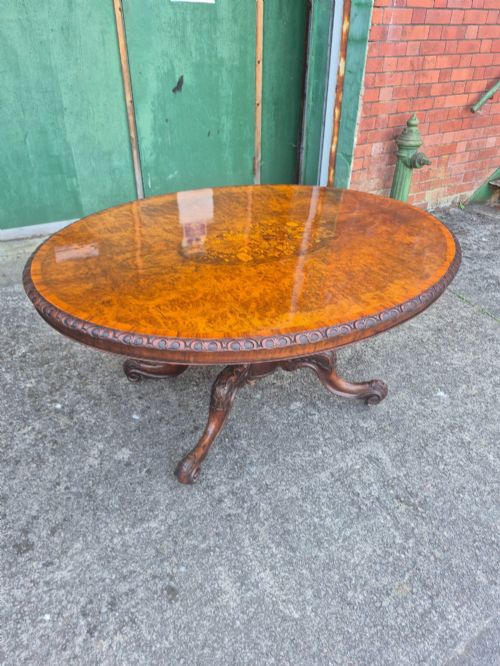
The version a buyer meets most frequently on this page is the Victorian burr walnut centre table, often featuring detailed marquetry inlay and an oval top supported by a central pillar or carved base. Alongside these, Edwardian satinwood examples and continental Louis XV and XVI style pieces surface regularly.
Makers and workshops of the nineteenth century produced these tables to serve multiple functions in the drawing room or parlour, shifting from formal dining and breakfast uses to displaying lamps and decorative objects.
How They Were Made
Cabinetmakers constructed these tables using a carcase of solid timber, such as walnut or mahogany, faced with finely figured veneers like burr walnut, satinwood, or sycamore. The distinct patterning on the top surface comes from selecting these highly figured wood growths.
Marquetry and boxwood inlay decorate the surfaces, alongside brass, gilt bronze, and amboyna mounts that define the Louis XV and Sheraton Revival styles. Artisans cut contrasting woods by hand to fit precisely into the veneer before polishing the surface to a sheen.
Object forms span from standard centre and occasional tables to specialist breakfast tables, loo tables, and tilt-top variants mounted on pillars.
What Varies in Quality
Quality rests principally on the crispness and complexity of the marquetry inlay and the choice of underlying timber. Tables utilising heavily figured burr walnut or exhibition-grade sycamore display a superior visual depth compared to plain walnut alternatives.
Construction details such as hand-carved bases, gilt bronze mounts, and the stability of tilt-top or pedestal mechanisms distinguish standard production items from exhibition-quality pieces made by prominent workshops.
Gillows·Jackson & Graham·A. Beurdeley
The Marquetry Oval Centre Table Glossary
- Marquetry
- Decorative veneer work formed by fitting together small pieces of various coloured woods to create pictorial or geometric patterns. This technique covers the tabletops.
- Burr Walnut
- Timber taken from the warted excrescence of a walnut tree, yielding a swirling, highly figured grain. Cabinetmakers prized this material for prominent table surfaces.
- Loo Table
- A large round or oval table designed for the nineteenth-century card game loo, often fitted with a tilt-top mechanism. They frequently double as centre tables.
- Satinwood
- A durable, yellowish wood with a lustrous satin-like sheen, popular in Sheraton Revival and Edwardian pieces. It provides a bright contrast to darker timbers.
Marquetry Oval Centre Table: Frequently Asked Questions
What is a centre table used for?
A centre table stands in the middle of a room rather than against a wall, allowing access from all sides. Historically, they served for displaying lamps, books, and decorative objects, or for serving tea.
Today, they function well as large coffee tables or focal points in spacious living rooms and entrance halls.
How do I tell Victorian from Edwardian pieces?
Victorian tables, dating from the mid to late nineteenth century, typically feature dark burr walnut veneers, rich marquetry, and heavier carved pedestals. They often employ tilt-top or loo table mechanisms.
Edwardian pieces, dating around the turn of the twentieth century, frequently lean towards lighter satinwood and Sheraton Revival styles with delicate inlay and slender legs.
How do I care for marquetry surfaces?
Marquetry surfaces require protection from direct sunlight and excessive heat to prevent the delicate inlaid veneers from drying out or lifting. Regular dusting with a soft, dry cloth maintains the finish.
Application of traditional beeswax polish preserves the lustre of the wood without building up a heavy residue.