


Victorian Inlaid Table
When you search for a victorian inlaid table, you are looking at nineteenth-century craftsmanship that combines rich woods with precise decorative detail.
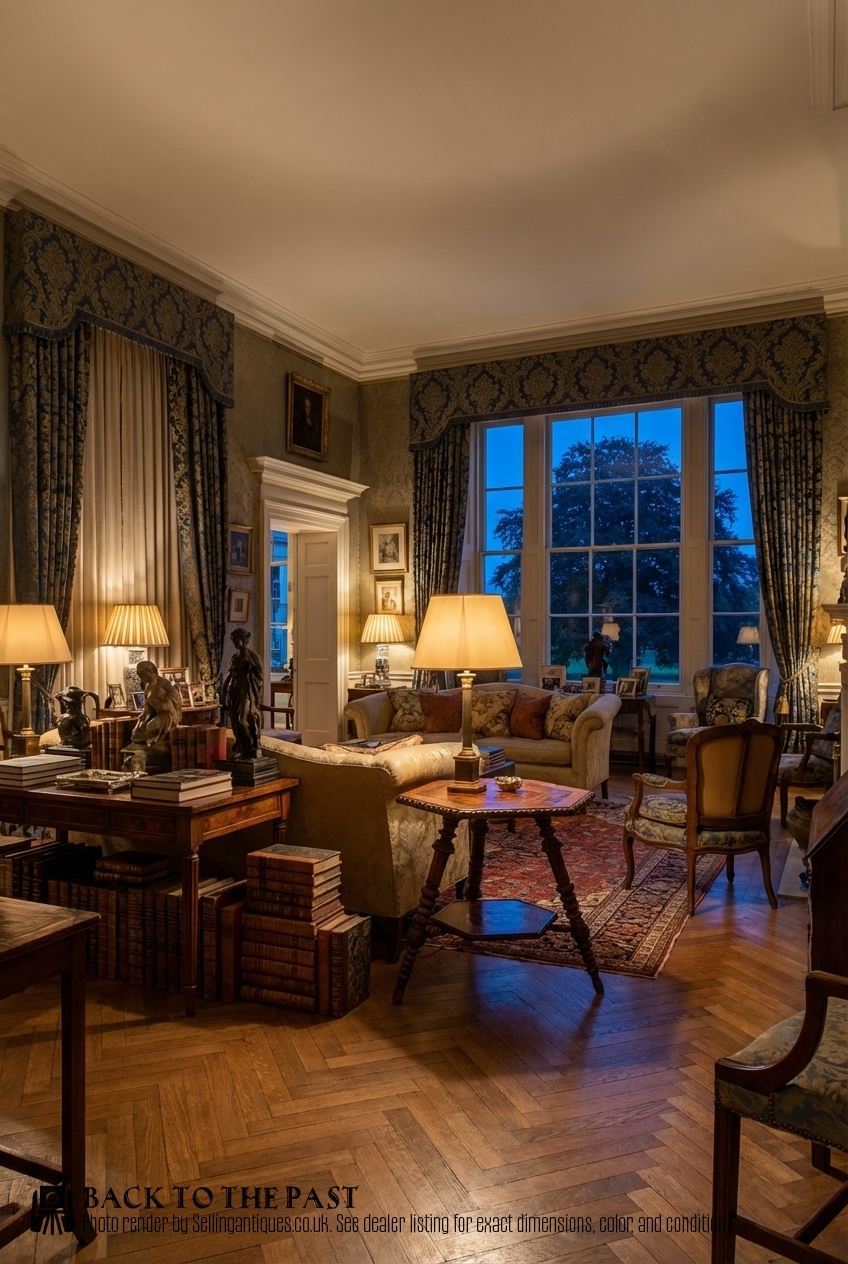
Victorian Inlaid Table
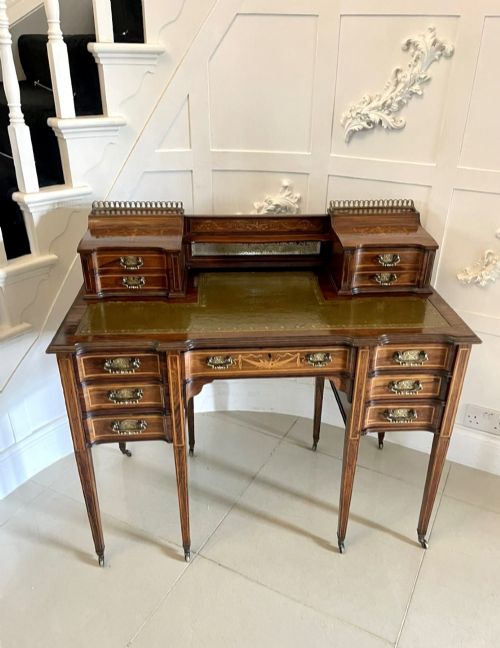
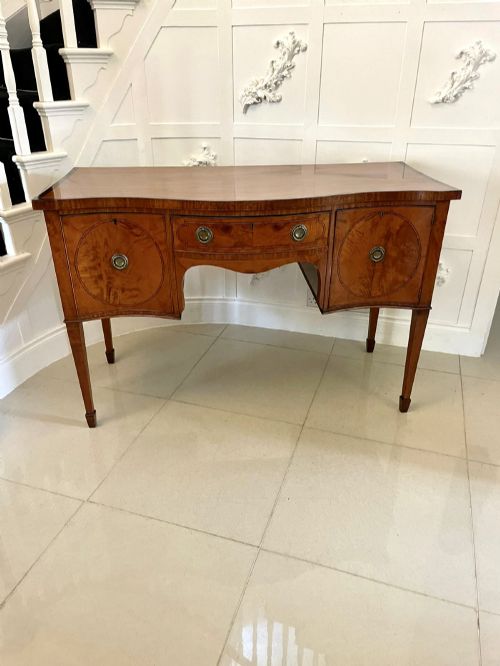
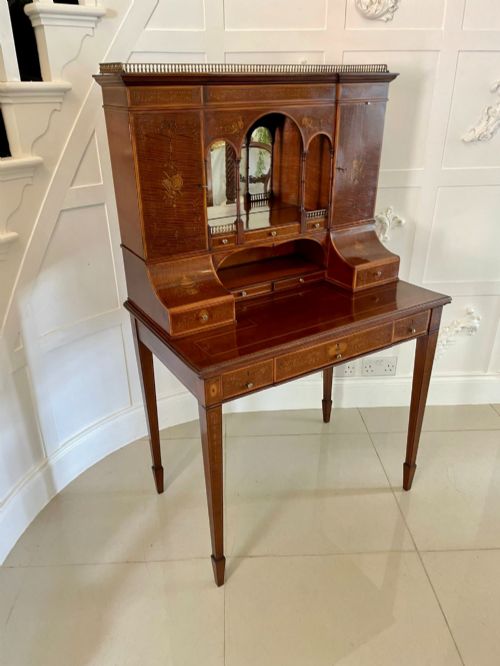
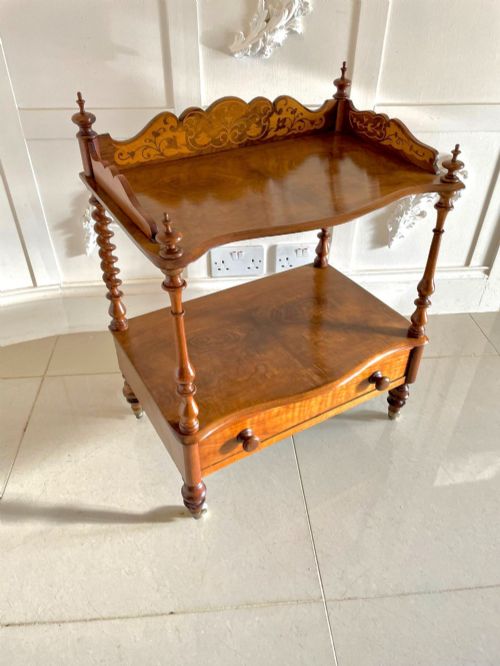
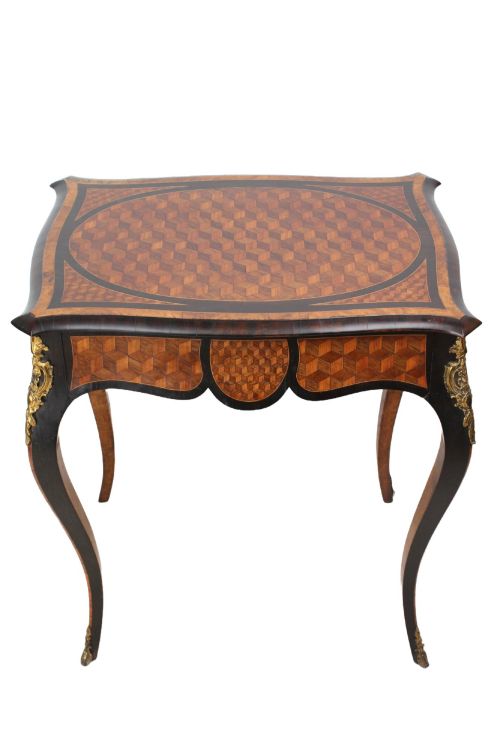
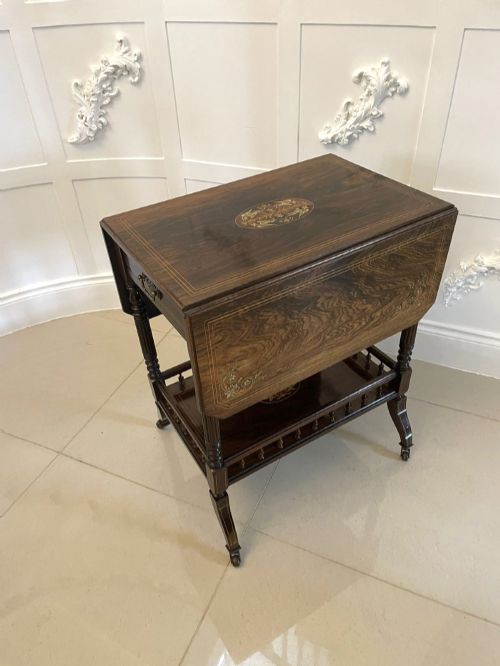
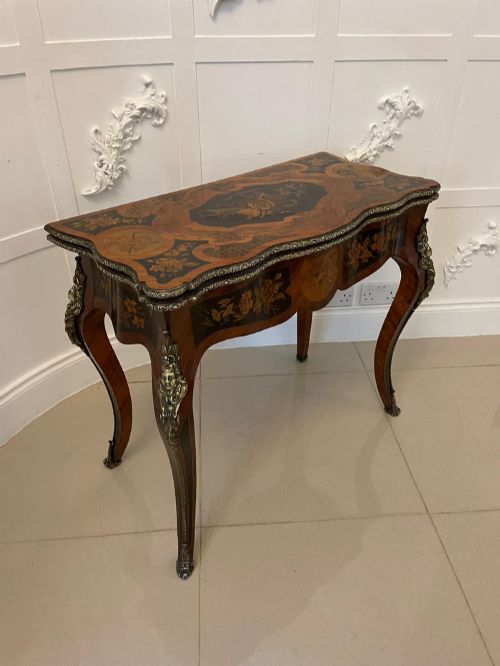
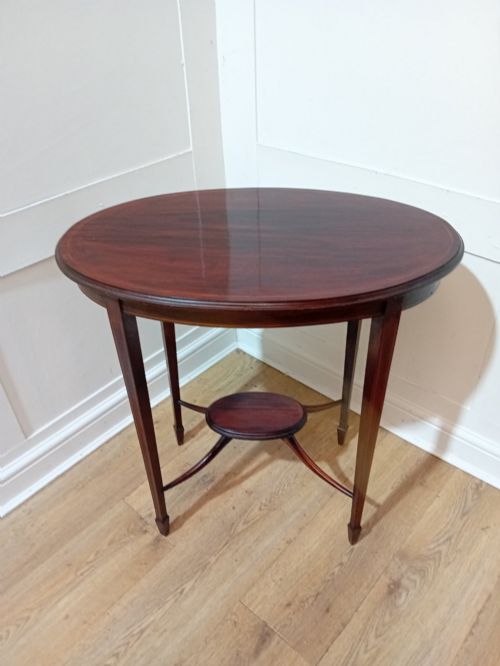
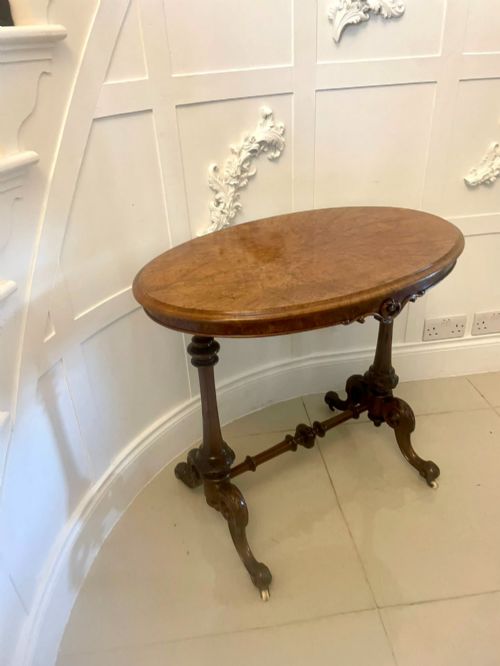
The victorian inlaid table appears in numerous domestic forms across this inventory, including lamp tables, centre tables, writing desks, and card tables. These pieces date principally from the nineteenth century, encompassing standard Victorian production alongside revival styles such as Sheraton Revival and Louis XV Revival.
Makers and workshops of the period utilised various specialised designs, from the compact occasional table to the larger loo table or breakfast table. Burr walnut, mahogany, and rosewood serve as the primary foundations for these forms, frequently augmented by contrasting wood inlay and marquetry.

Materials and Technique
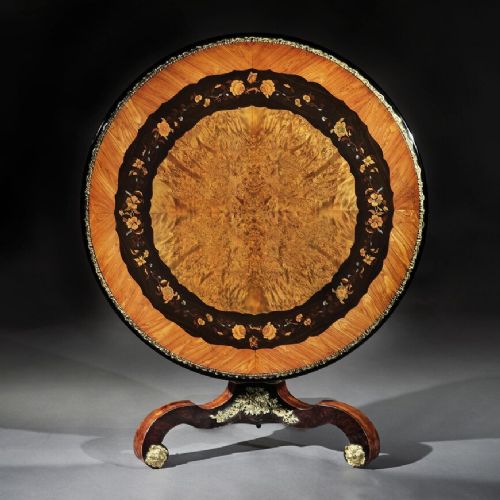
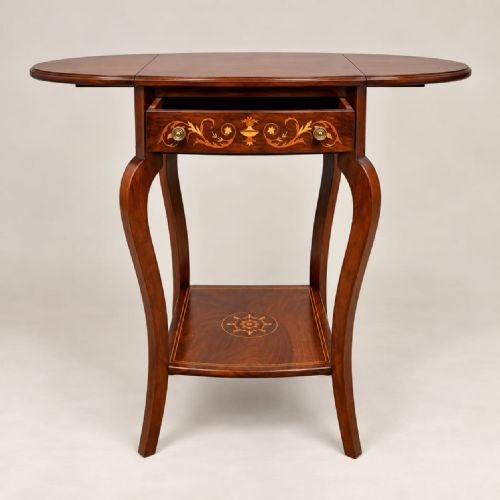
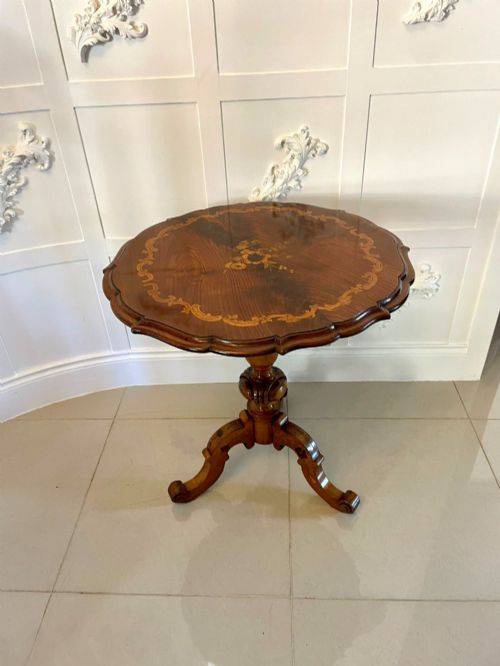
Cabinet makers constructed these tables using solid timbers and decorative veneers, selecting burr walnut, mahogany, rosewood, satinwood, and kingwood for their distinct grain patterns and rich natural colour. The surfaces then receive intricate wood inlay or pictorial marquetry, often combining multiple contrasting timbers to form floral or geometric motifs.
Metalwork and gilt accents such as brass fittings and ormolu mounts appear on specific revival and desk forms, providing structural support or decorative framing. Selected pieces also incorporate specialised joinery such as drop leaves, swivel tops, and folding mechanisms for games and card tables.
Victorian Inlaid Table Retail Price Guide 2026
Typical asking prices for victorian inlaid table among the pieces listed under this phrase on Sellingantiques today, from the lower quarter to the upper quarter. They describe what is for sale here now, not the wider market.
Listings demonstrate that burr walnut remains the most common primary timber for these tables, frequently paired with intricate marquetry and geometric parquetry.
Distinctions in Execution
Quality in these tables rests upon the precision of the cabinet work and the complexity of the surface ornamentation. Master workshops integrated wood inlay with seamless accuracy, ensuring that individual veneers sit flush within the primary timber body without visible gaps or uneven sanding.
The selection of the underlying wood grain also dictates distinction, as highly figured burr walnut or carefully matched satinwood elevates a piece above standard domestic output. Furthermore, the presence of secondary materials such as original brass handles, detailed ormolu mounts, or documented maker attribution separates standard production from exceptional examples.

Edward Holmes Baldock·JAS Shoolbred·Edwards and Roberts·Jackson and Graham·Gillows·Collinson and Lock
The Victorian Inlaid Table Glossary
- Marquetry
- Decorative veneer work arranged in pictorial or geometric patterns using various coloured woods. This technique requires exceptional precision to fit individual pieces together before application.
- Parquetry
- Geometric mosaic woodwork formed by small pieces of timber arranged in repetitive patterns. It frequently appears on tabletop surfaces and gaming boards.
- Ormolu
- Gilt bronze mounts applied to furniture edges and legs, particularly popular in French revival pieces. The metalwork adds ornate metallic contrast to the timber.
- Sutherland table
- A narrow drop-leaf table featuring exceptionally slender drop leaves that fold almost flat. This form maximises floor space in smaller nineteenth-century interiors.
- Loo table
- A large round or oval centre table designed for nineteenth-century card and social games. These tables often feature tilt-top mechanisms for convenient storage against a wall.
Victorian Inlaid Table: Frequently Asked Questions
What is a victorian inlaid table used for?
These tables served various domestic functions in nineteenth-century homes, ranging from general display and lamp placement to specialised writing and card playing. Different tabletop formats accommodated specific social activities.
Smaller occasional and lamp tables held lighting and decorative objects in drawing rooms, while larger centre and breakfast tables formed the focal points of principal rooms. Folding card tables and games tables provided surfaces for evening entertainment.
Where should I place a centre table?
Centre tables are designed to stand freely within a room rather than against a wall, allowing access from all sides. They function effectively in large hallways or the middle of a principal reception space.
Because these tables display detailed marquetry or parquetry across the entire tabletop, placing them where overhead light reveals the wood grain enhances their visual impact. Adequate surrounding floor space ensures the piece remains fully accessible.
How do I distinguish revival styles from original periods?
Revival pieces incorporate decorative elements and forms from earlier eras, such as seventeenth-century French motifs or eighteenth-century Sheraton designs, but date to the later nineteenth century. Examining the construction methods, secondary woods, and internal framing helps clarify the actual date of manufacture.
Makers often adapted historical aesthetics to Victorian domestic requirements, combining earlier decorative vocabularies with contemporary mechanical hardware and modern veneer techniques.