




Victorian Inlaid Sofa
When you search for a victorian inlaid sofa, you are looking at nineteenth-century seating crafted with decorative wood details that bring formal elegance to a room.
Victorian Inlaid Sofa
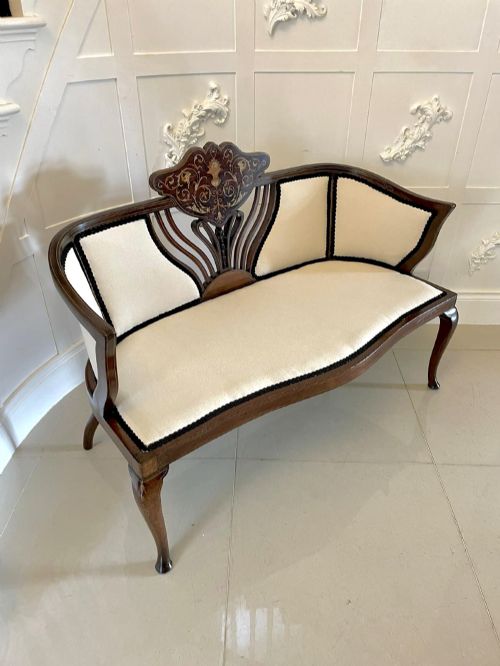
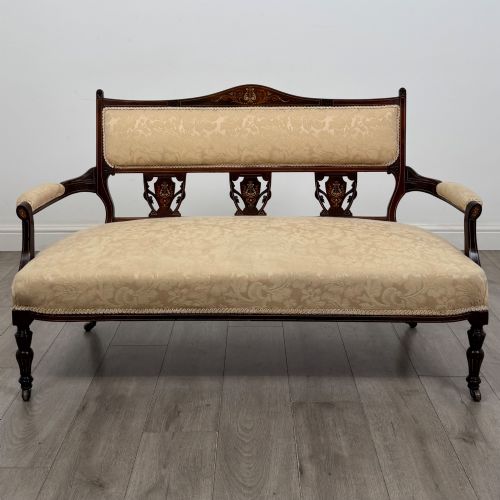
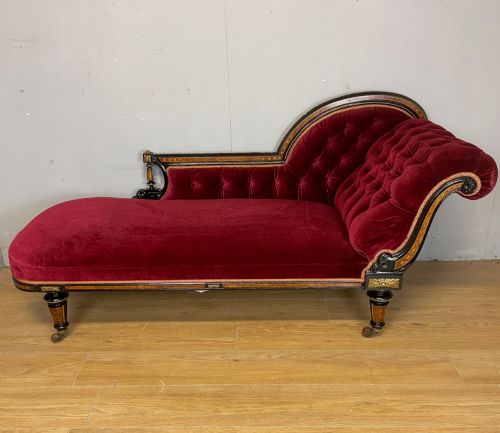
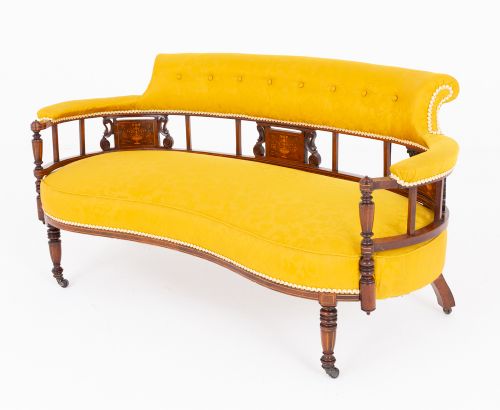
A victorian inlaid sofa is a nineteenth-century seat designed for formal reception rooms, featuring exposed timber frames ornamented with contrasting wood details. These pieces range from compact salon settees to double-ended couches upholstered in rich fabrics.
The versions most commonly met on this page date from the middle to the late nineteenth century, spanning the Victorian and late Victorian periods. Walnut, rosewood and mahogany form the primary structural timbers for these seating pieces.
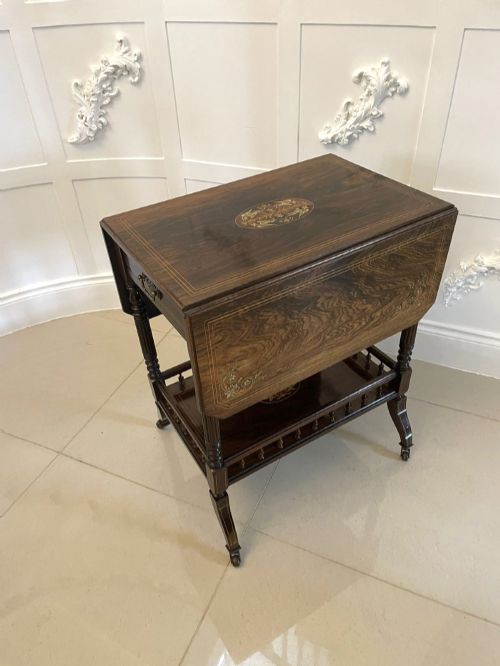
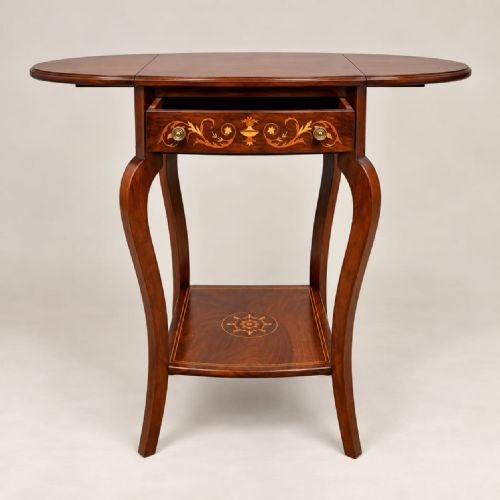
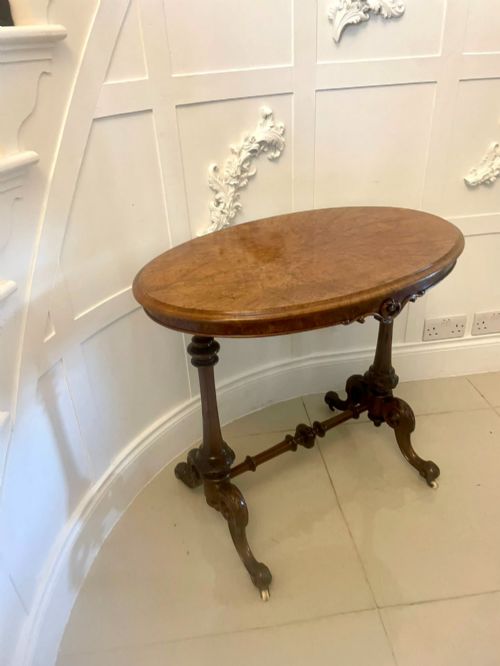
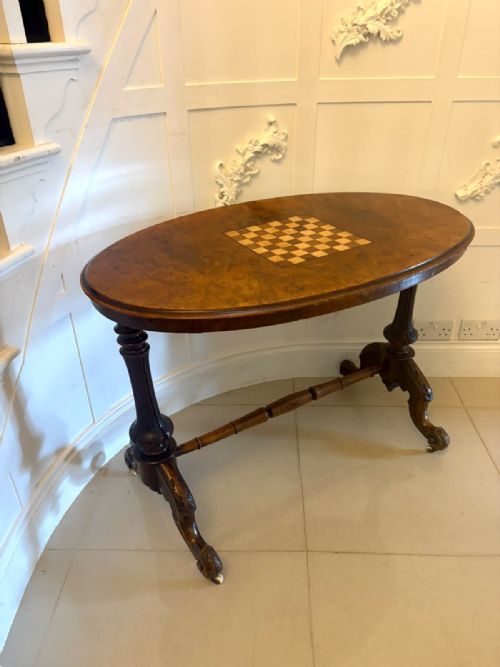
Makers of the period utilised stylistic revivals, incorporating Sheraton motifs and classical lines into domestic furniture. Alongside settees, the broader selection includes related salon seating and occasional tables.
How they were made
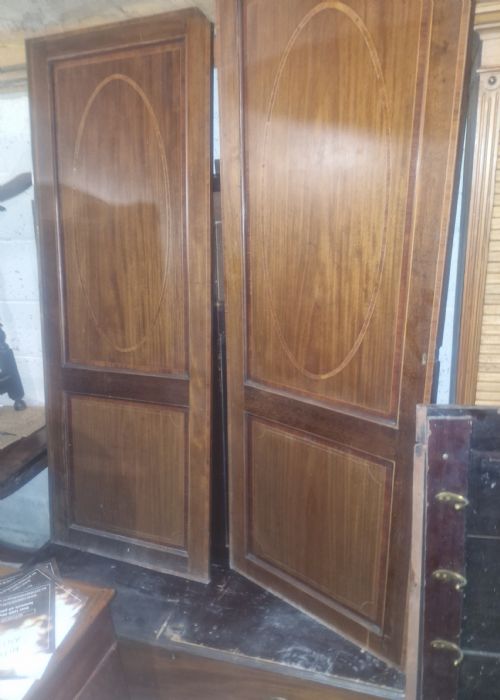
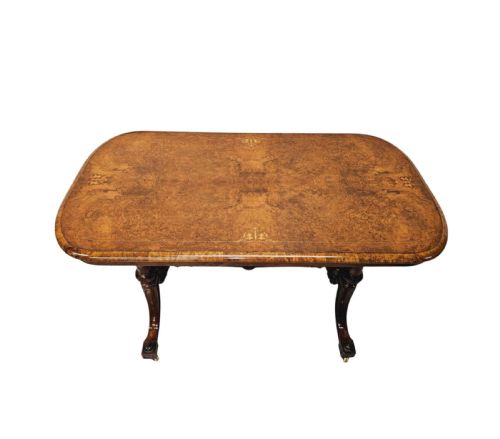
Cabinetmakers constructed the frames using solid timbers such as mahogany, walnut and rosewood, often applying burr walnut or satinwood veneers to the visible show-wood surfaces. Marquetry and delicate stringing formed the decorative inlaid patterns across the backs and rails.
Detailed craftsmanship involved contrasting woods to create floral or geometric motifs within the panels. Upholstered sections utilised traditional stuffing and springs secured within show-wood frames.
What varies in quality
The refinement of the marquetry and the choice of timber set finer examples apart from standard production pieces. Rich burr walnut veneers and crisp, detailed wood inlay indicate a higher standard of workshop output.
Proportion and the handling of the show-wood frame determine the visual success of the piece. Substantial mahogany or rosewood structures with integrated carving demonstrate superior nineteenth-century joinery.
The Victorian Inlaid Sofa Glossary
- Inlay
- A technique where pieces of contrasting wood or other materials are inserted into a recessed timber surface to form a decorative pattern. This method defines the primary ornamentation on nineteenth-century salon furniture.
- Marquetry
- Elaborate wood veneer arranged in pictorial or geometric designs across a panel. Cabinetmakers applied this technique to tabletops and sofa crest rails.
- Show-wood
- The exposed polished timber frame of an upholstered seat. Walnut and rosewood served as the primary show-wood materials during the period.
- Settee
- A medium-length upholstered seat with a back and arms designed for multiple occupants. These forms populated Victorian drawing rooms alongside matching chairs.
- Stringing
- Thin lines of contrasting wood inlaid into the edges of panels or legs. This subtle detail outlines the structural forms of tables and seating.
Victorian Inlaid Sofa: Frequently Asked Questions
What woods were used for inlay?
Cabinetmakers utilised satinwood, boxwood and various darker timbers to create contrasting patterns against mahogany and walnut backgrounds.
These natural wood tones provided the visual depth characteristic of nineteenth-century decorative techniques.
Where should I place a settee?
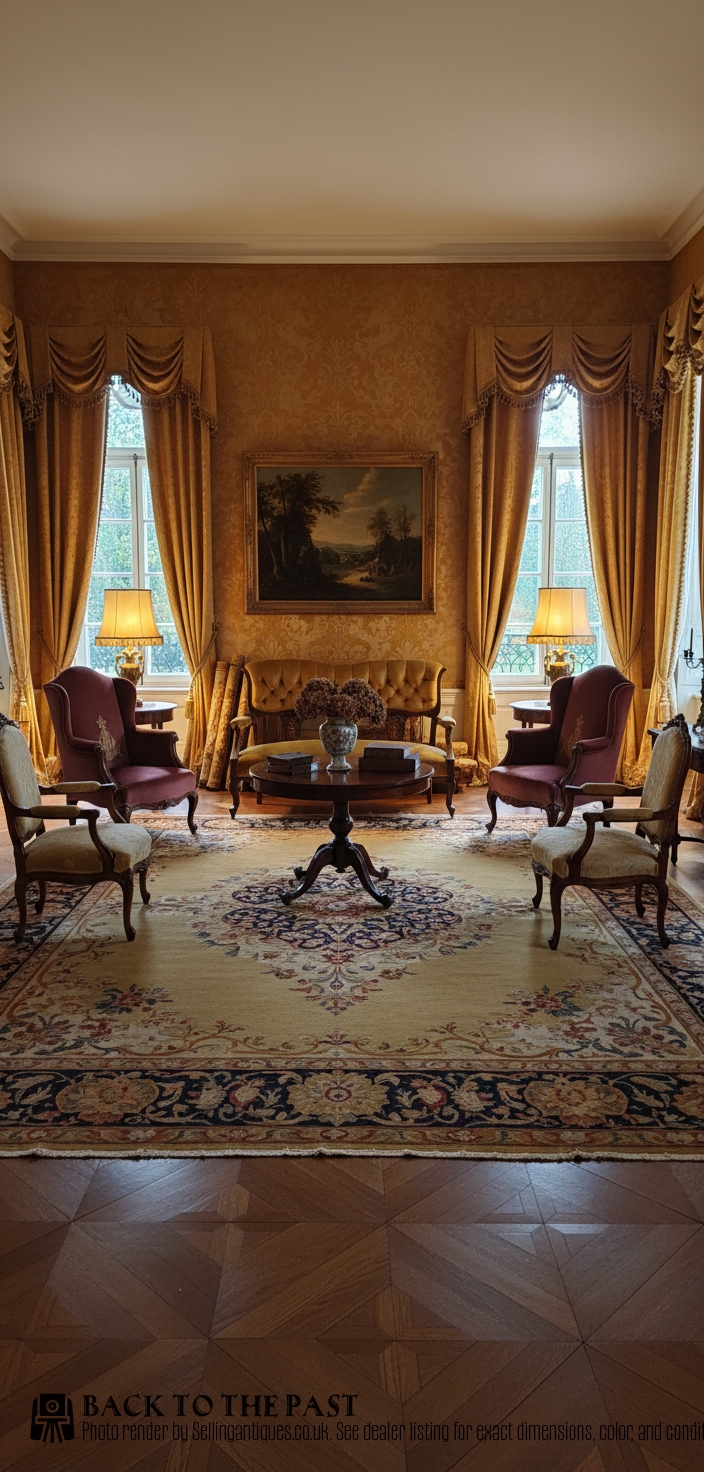
These seating pieces suit formal reception rooms, studies or large hallways where the decorative show-wood back can remain visible.
Positioning them away from direct sunlight protects the polished wood surfaces and sensitive upholstery fabrics.
How do I care for polished wood?
Maintain the timber surfaces by dusting gently with a dry cloth and avoiding harsh chemical cleaning products.
Keeping the room at a stable humidity prevents the natural veneers from drying or lifting over time.