


Inlaid Mahogany Loveseat
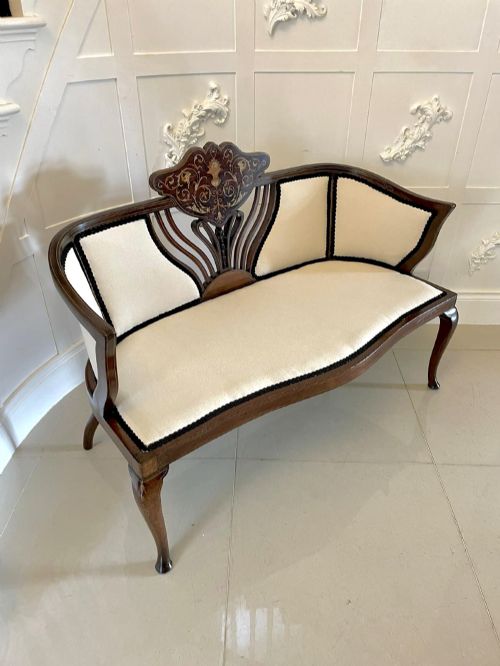
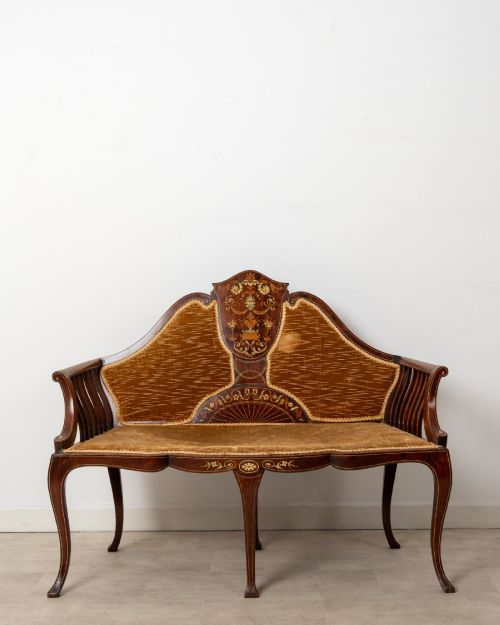
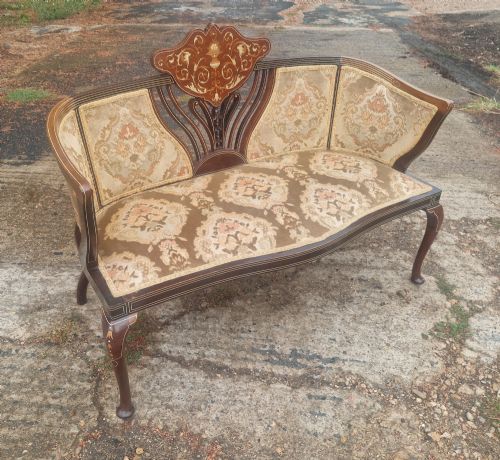
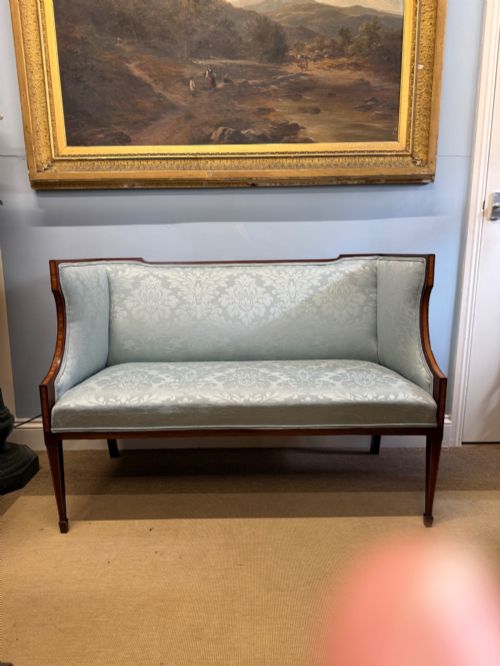
An inlaid mahogany loveseat offers compact two-seater seating shaped by Victorian, Edwardian, and revival tastes.
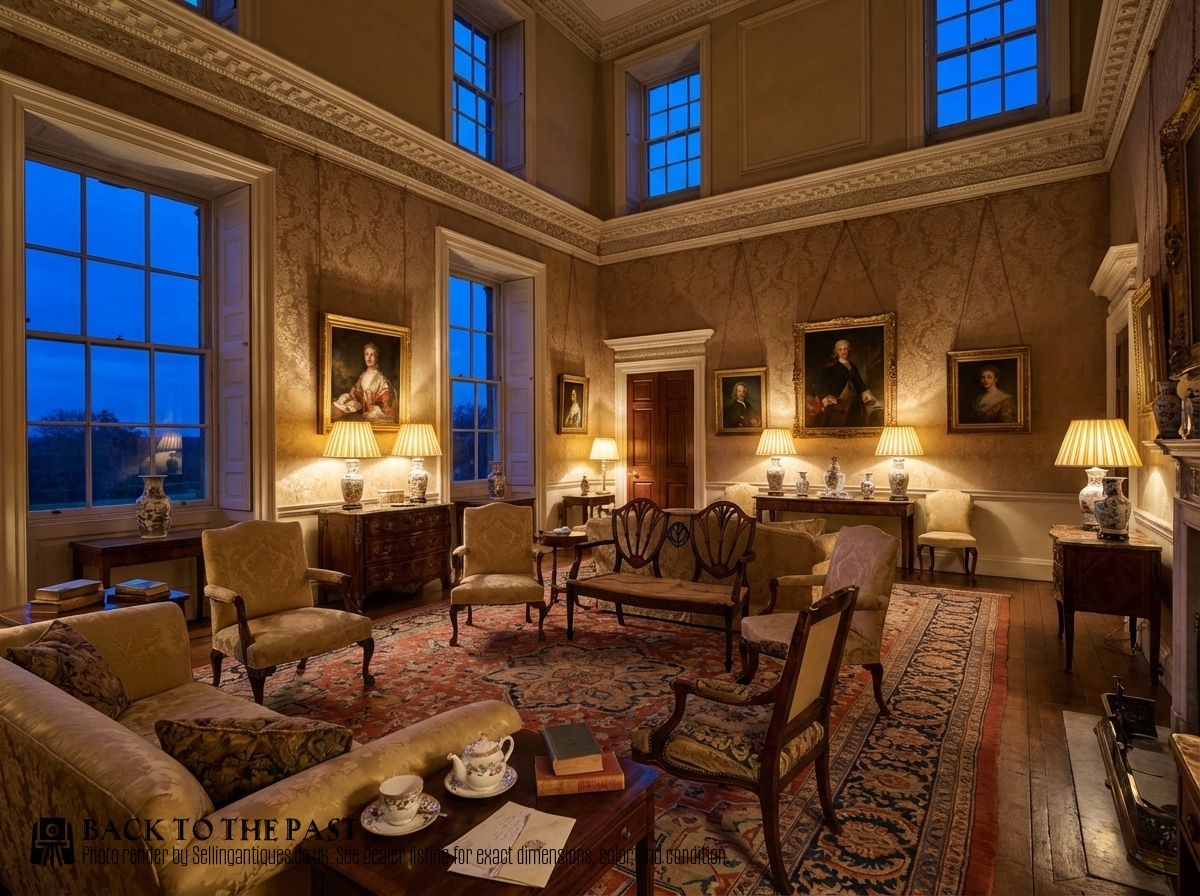
Inlaid Mahogany Loveseat
When you search for an inlaid mahogany loveseat, you encounter two-seater settees and salon sofas produced across the Victorian and Edwardian eras, spanning the late nineteenth century into the early twentieth century. These small-scale sofas appear in various revival styles, including Sheraton Revival, Hepplewhite Revival, and Edwardian Art Nouveau, reflecting the historical tastes of their periods.
The forms range from standard parlour settees to specific pieces like end-of-bed sofas and chair-back settees. Most examples date from the 1880s to 1910, showing the enduring popularity of inlaid parlour seating in domestic drawing rooms during those decades.
How they were made
Construction relies upon a solid mahogany frame decorated with contrasting lighter wood details. Artisans incorporated satinwood, boxwood, and marquetry inlay to create crisp decorative motifs along the crest rails, splats, and frames.
Upholstery forms an integral part of the structure, utilising fabrics such as velvet and standard patterned textiles. Many surviving frames retain or require fabric upholstery to complete the traditional seating surface.
A specialised salon sofa designed to sit neatly at the foot of a Victorian bed makes an unexpected appearance among the standard parlour settees.
What varies in quality
The standard of an inlaid mahogany loveseat depends largely on the crispness and complexity of the inlay work. Pieces incorporating fine satinwood and boxwood details alongside balanced marquetry show greater artisan engagement than simpler frames.
Structural refinement also separates standard production from superior pieces. Hepplewhite and Sheraton revival models with detailed chair-backs or delicate Edwardian Art Nouveau shaping demonstrate more ambitious design than basic salon settees.
The Inlaid Mahogany Loveseat Glossary
- Inlay
- A technique where pieces of contrasting timber are fitted into depressions in the wood surface to form a pattern. Satinwood and boxwood are frequently utilised for this purpose.
- Marquetry
- Elaborate veneer work assembled to form pictorial or geometric designs on furniture surfaces. It appears across various Victorian and Edwardian examples.
- Satinwood
- A durable, lustrous timber native to Ceylon and India, used extensively for contrasting inlay work on mahogany frames. Its pale yellow colour highlights fine details.
- Sheraton Revival
- A late nineteenth-century design movement inspired by the neoclassical furniture of George Sheraton. These pieces often feature delicate legs and refined inlay.
- Chair-back settee
- A small sofa style where the backrest incorporates multiple joined chair backs. The Hepplewhite revival style frequently employs this specific form.
Inlaid Mahogany Loveseat: Frequently Asked Questions
What periods do these settees date from?
The pieces span from the late nineteenth century through the Edwardian era, with dates clustering in the 1880s, 1890s, and early 1900s.
Victorian and Edwardian workshops produced these small sofas in various revival styles alongside contemporary turn-of-the-century designs.
How were these small sofas used?
These loveseats served as compact seating for parlours, drawing rooms, and salons during the Victorian and Edwardian periods.
Certain variations, such as end-of-bed sofas, were specifically shaped for placement within domestic bedrooms.
What is the difference between satinwood and boxwood inlay?
Satinwood provides a warm, golden-yellow contrast against the darker mahogany body, often used for larger decorative panels or banding.
Boxwood offers a very pale, hard material utilised for fine stringing lines and delicate geometric borders.
Do these loveseats require re-upholstery?
Many surviving examples retain period fabric, while others are offered specifically for re-upholstery to match modern interiors.
Checking the underlying frame condition helps determine whether the piece needs new webbing, springs, and top fabric.